




China’s military apparently released the first official footage of its sixth-generation fighter over the weekend – a move that analysts said might suggest Beijing was ahead of its competitors, including the US, in developing the next generation of warplanes.
China Military Bugle, the official press account of the People’s Liberation Army, published a four-minute video on Sunday marking the 10th anniversary of China’s first heavy transport aircraft, the Y-20, entering service.
In the video’s closing sequence, the Y-20’s co-pilot asked the captain: “Who are we refuelling today?” He replied: “First the ‘Master Six’, then the ‘Little Six’.”
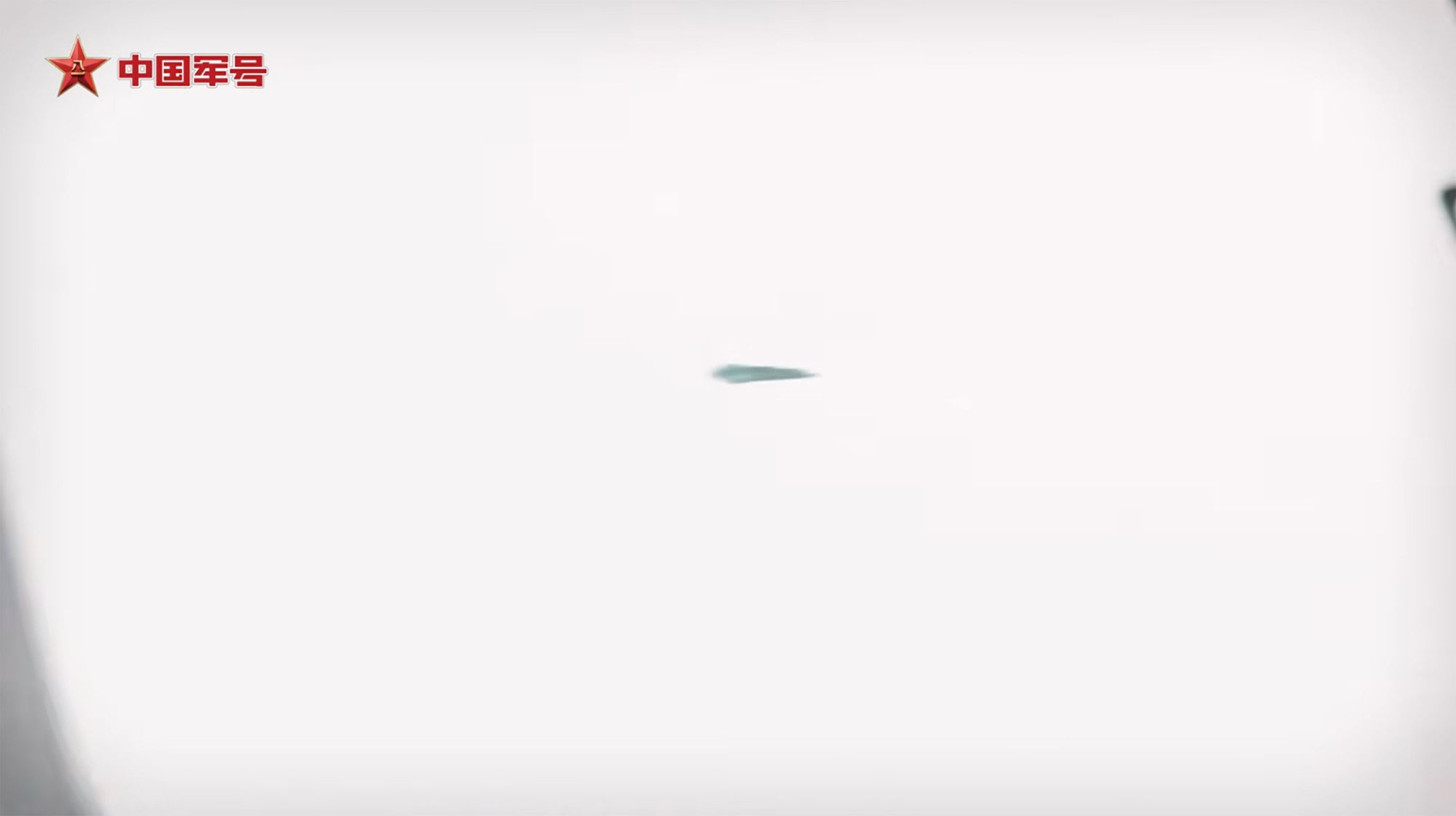
The camera then shifted to the view outside the cockpit window, capturing a fleeting, blurry silhouette of a tailless plane widely believed to be a sixth-generation fighter.
“Master Six” is an informal nickname used by Chinese defence enthusiasts for the H-6 strategic bomber, but the nickname “Little Six” – a clear reference to the sixth-generation fighter – had not appeared in official military media before.
The brief sequence, which generated widespread discussion online, was significant because it was the first implicit acknowledgement of the sixth-generation fighter in official military media.
Numerous unverified videos and pictures taken by civilian observers have been circulating online since late 2024, seemingly showing two next-generation stealth fighters – unofficially known as the Chengdu J-36 and the Shenyang J-50 – being tested.
But that footage was all filmed from the ground, and the PLA and aerospace companies have not made any public comment about the new planes.
Song Zhongping, a military commentator and former PLA instructor, said the video indicated that the sixth-generation fighter was almost certainly equipped with air-to-air refuelling capability.
“And it is highly likely that it has already conducted air-to-air refuelling tests during flight testing,” he said.
Fu Qianshao, a military analyst and former PLA Air Force officer, said the ability to refuel in mid-air was particularly important.
“If a tactical aircraft’s endurance and combat radius approach those of a medium-range strategic bomber, it would be capable of carrying out patrol missions of strategic significance,” Fu said.
Combined with its stealth ability and a larger internal weapons bay, the aircraft could potentially operate beyond the western Pacific and, in some cases, reach the Indian Ocean, which would have significant strategic implications, he said.
The latest disclosure also sparked speculation over how far the programme has progressed and whether the aircraft could enter service earlier than expected.
“Wow, if ‘Little Six’ is already practising aerial refuelling, how far can it be from finalising the design and entering service?” one person commented on social media.
Major military powers, including the United States and some countries in Europe, are working to develop new warplanes with advanced stealth, artificial intelligence and networked combat capabilities.
Fu said China’s programme was progressing much faster than comparable efforts in the US, Russia and Europe.
The US sixth-generation fighter programme continued to face challenges, while China already had at least two prototypes undergoing flight testing, Song said.
“In my view, China’s fighter development ... is now ahead of its competitors,” he said.
“[The US] F-47 is expected to enter service close to a decade behind the first Chinese sixth-generation fighters, with the first two Chinese designs of the new generation having entered flight prototype stages in December 2024, seven years before the projected first flight of their US rival,” Military Watch Magazine said earlier this month.
Meanwhile, the Combat Air Programme, a joint initiative between Britain, Italy and Japan, aims to test a prototype sixth-generation fighter next year and deliver the planes by 2035.
Canada has also expressed an interest in the programme, as has Germany after it scrapped a plan to develop its own fighter with France and Spain. -- SOUTH CHINA MOIRNING POST


