Alex Doran, a 28-year-old corporate strategist, is cheering for the US national team and was pleasantly surprised by the size of its initial win against Paraguay last week, while acknowledging that his team is unlikely to go all the way.
While he does not expect to attend a match in person involving tickets costing thousands of US dollars, he has been watching avidly online and hopes to see some matches at fan zones set up around Washington.
“I’m a little uncomfortable with large crowds because you can never predict what they’ll do,” said Doran, noting the potential presence of pickpockets. “But that’s also what makes it exciting.”
Any concerns about being around so many people, however, did not extend to the recent Ebola outbreak.
“No, that hasn’t really been on my mind. I hope the epidemiologists will let me know when I have to worry about it.”
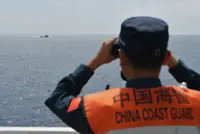
As the World Cup overlaps with the spread of the deadly Bundibugyo Ebola strain, the outbreak has highlighted fundamental vulnerabilities in global disease defences, including China’s and the world’s slow response and the corrosive effect of denialism.
Also in the mix are the impact of massive US aid cuts under the President Donald Trump administration and the scapegoating of African nations, according to medical, public health and international crisis experts.
At the end of the first week of the world’s most lucrative sporting event, the disease has delivered something of an assist: Ebola spreads through direct contact with infected bodily fluids rather than through the air, making it less contagious than Covid-19.
But the latest Bundibugyo Ebola strain has also revealed that lessons from the 2020-2023 pandemic have largely gone unheeded.
“It’s not just the US. We’re talking about the entire world, including China,” said Yanzhong Huang, senior global health fellow at the Council on Foreign Relations.
“We’re less prepared than we were in 2019 for the pandemic the size of Covid-19, with Sars and Covid.”
The widely accepted playbook for an effective pandemic counter strategy includes advanced genomic sequencing and pre-emptive vaccine production – the Bundibugyo strain was first identified in 2007 but not considered a major risk – early detection, passive tracking, resilient supply chains and effective communication strategies that favour science over politics, counter misinformation and fight conspiracy theories.
“Rumours and panic are spreading faster than the virus,” said Margaret Chan, then World Health Organization director general, a dozen years ago during the spread of an earlier Ebola outbreak, underscoring that relatively little has changed.
“You cannot build these systems up during a crisis. Instead, they collapse,” she added.
“When a deadly and dreaded virus hits the destitute and spirals out of control, the whole world is put at risk.”
Hosting what is seen as the largest, most complex sporting event in human history inevitably involves trade-offs, major priorities and risk calculations.
This World Cup’s 48 teams and 104 matches over 39 days is up from 32 teams, 64 matches and 32 days in the past. It is also the first time there are three co-hosts, the US, Mexico and Canada, with an entirely new knockout stage.
Relatively speaking, Ebola has been nudged well down the list, however, below unauthorised drones, killer heat, geopolitical tensions, terrorism, crime, high ticket prices and logistical headaches.
“Obviously, public health concerns animate World Cup planning,” said Juliette Kayyem, a senior lecturer in international security at Harvard University and former senior official at the Department of Homeland Security.
“The greatest focus now is on the high probability and high-consequence events. Right now, we are not experiencing a global pandemic with Ebola so most fears are not aligned with the reality of threat, or the risk of transmission.”
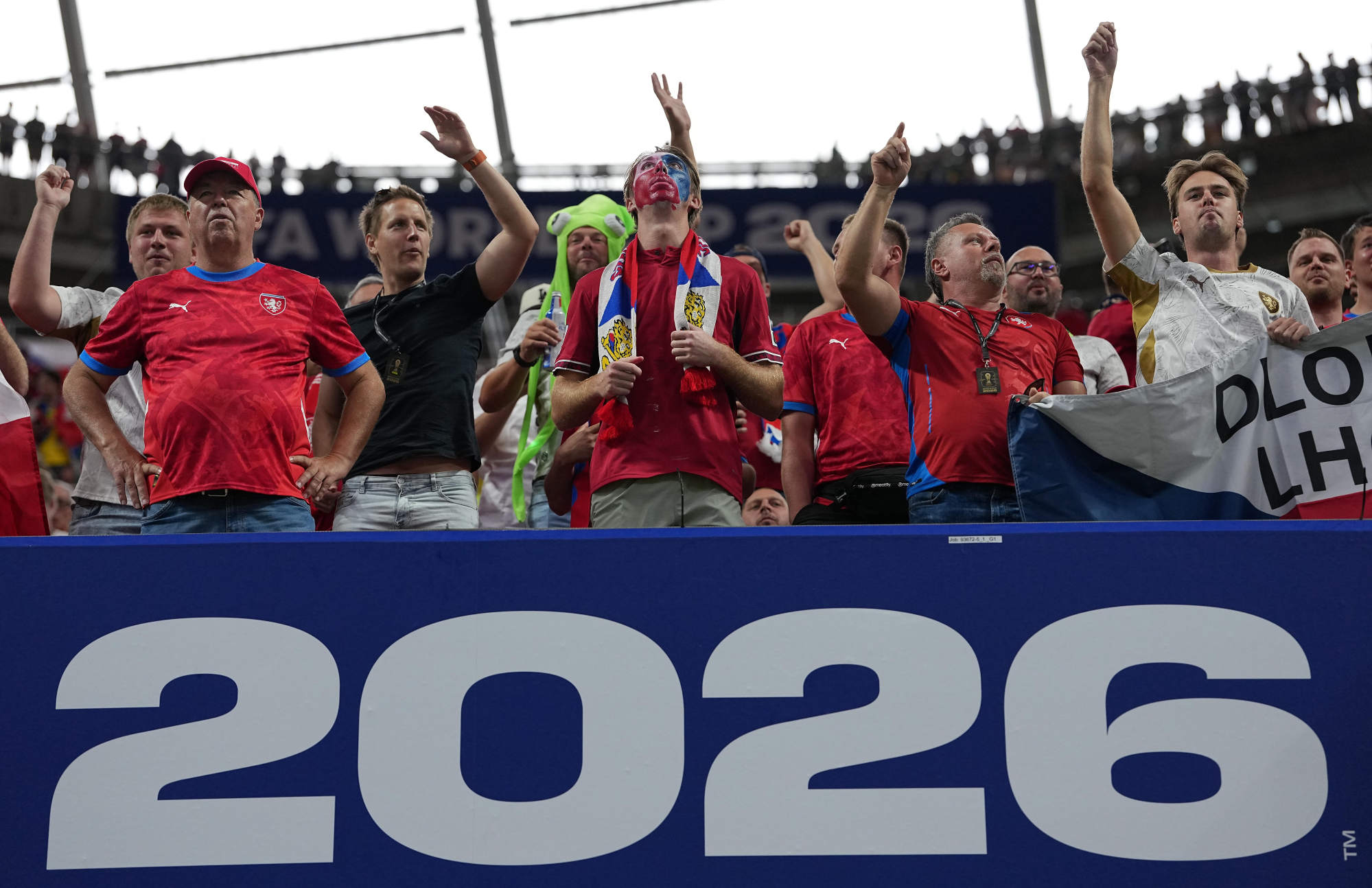
Most of the 6 million expected stadium attendees and hundreds of millions more packed, shouting and screaming, into halls, pubs and fan zones worldwide appear far more concerned with their team’s fate than the rapidly spreading strain centred in remote areas far away in the Democratic Republic of Congo and Uganda.
That said, diseases are dynamic and experts acknowledge that it could fly up the priority list if the virus morphs or safeguards prove ineffective.
While the lack of perceived immediate danger puts a check on fear and social anxiety, it also can breed complacency. So far, some 200 people have died from the disease, with a 24 per cent fatality rate that leaves the body highly infectious.
“Any time you’re bringing together hundreds of thousands of people from around the world, you have to factor public health into your security plans,” said Stacy Thumsuden, a lawyer, nurse and consultant.
“Covid taught everyone how quickly a public health concern can evolve from a headline into an operational challenge.”
The latest outbreak has, somewhat unexpectedly, seen Washington respond faster than expected despite Trump’s wholesale funding cuts to global aid and distrust of multilateral initiatives.
And it has seen Beijing respond somewhat slower, particularly when compared to its 2014 response during the earlier Ebola outbreak – with sport a key factor, analysts said.
In 2014, Beijing sent medical teams and help almost immediately while this time, public health experts say, it waited two weeks after the WHO’s May 17 notification before announcing that it would send a mission, without providing details.
This despite its close ties with the Democratic Republic of Congo, the outbreak’s epicentre; its controlling stake in 15 of the DRC’s 19 largest copper and cobalt mines; the billions of dollars it has pledged for DRC infrastructure and the US-China geopolitical turf battle over strategic minerals.
Washington, meanwhile, has pledged US$50 million towards a vaccine, US$350 million for humanitarian aid to the affected area routed through the UN and another US$180 million for contact tracing, border screening, health clinics and programmes to combat misinformation.
Crowded sports stadiums, fan zones and pubs appear to be important motivators, analysts said.
In 2014, China was months away from hosting the Summer Youth Olympics, proving strong incentives to ensure a medical and publicity crisis did not waft onto its shores, while this time, the US is hosting the largest ever global “beautiful game” extravaganza at home.
Another change is China’s relations with the WHO. A decade ago, China enjoyed strong ties with the multilateral health agency, especially Chan.
This time, Beijing has bridled as WHO Director-General Tedros Adhanom Ghebreyesus has repeatedly criticised China for its lack of transparency and unwillingness to release epidemiological data from the Wuhan wet market and Institute of Virology, adding that without more information, it could not rule out the lab leak theory.
“It seems that China has responded differently,” said Huang. “We still don’t know if their humanitarian mission is going to be comparable to 2014. I think it will be followed by more supplies, more personnel being dispatched to the region.”
“But just the speed, the responding rate, if you compare that with the United States, even though it has withdrawn from the WHO, the support for the region is greater,” he added. “I think they might conclude that the threat is less.”
China’s response has picked up. On June 2, it dispatched an epidemic reaction team to Kinshasa in coordination with local health authorities.
But it remains much smaller and slower than the massive humanitarian air mission it marshalled in 2014, analysts said, while Beijing has yet to provide details about its aid.
Public health experts say another danger is that fear and stigma will redound back on African nations, already struggling to boost their economies and societies, something that China and Chinese-Americans witnessed after 2019.
Somewhat predictably, the Trump administration has conflated a maximalist health approach with its aggressive immigration agenda in its World Cup hosting.
Even as Washington imposed a 21-day quarantine bubble on the DRC team and required infected, exposed or potentially exposed Americans arriving from affected countries to undergo quarantine in Kenya, it has separately blocked or restricted fan entry from Iran and several other countries on security grounds.
“These limits on the DRC are the result of the huge fear over Ebola, and here, epidemiologically, they are a bit too much,” said Dhara Patel, chief executive at Kuon Healthcare, a UK-based blood testing service.
“To ban entry or to funnel all incoming travellers runs counter to the principle that containment should be commensurate with the actual risk. Ebola is not spread by accident, and it is not a good idea to ban whole fanbases.”
Many measures seen as most effective in fighting pandemics have seen backsliding, undercut not only by US and European cuts to WHO, USAID and development programmes but also denialism as communities succumb to “pandemic fatigue”.
“It’s the psychology of avoidance, people just prefer not to even think about it,” said Huang.
“It might explain why Covid-19 has quickly become forgotten, not just in the US but certainly in China. You don’t hear people talk about it.”
While alerts issued by the US Centres for Disease Control and WHO have been adequate, messaging has not been great at the public level, said Patel, noting how difficult it is to communicate complicated and variable health risks to casual fans.
The global tournament, sponsored by the governing International Federation of Association Football (Fifa), has spurred newly found interest in supporting health programmes, analysts said.
“A good part of the rationale for the US stepping up reflects a concern about avoiding an outbreak during the Fifa World Cup here this summer. That same concern probably also explains why, this time, the administration imposed a temporary travel ban on non-US citizens who had been to the DRC,” said Huang.
“That said, I don’t think it’s entirely about self-interest. Despite the gutting of USAID and withdrawal from the WHO, we actually haven’t seen a significant drop in US global health aid,” added Huang.
“So there’s more continuity in the underlying commitment than the headlines about the cuts would suggest.” -- SOUTH CHINA MORNING POST