




Vice-President J.D. Vance went on the offensive to defend the “win-win” US-Iran agreement as critics slammed its vague provisions, even as others welcomed the apparent end to an expensive and unpopular war, no matter how potentially flawed the deal might be.
“We have all the cards,” Vance told reporters at the White House. “Have a little bit of faith in the president of the United States. The idea that he is going to strike a deal that’s been bad for the American people, it’s preposterous.”
Characteristically, US President Donald Trump punched back aggressively at those who criticised the memorandum of understanding (MOU) he signed on Wednesday and questioned what, exactly, the nearly four-month war had achieved.
Those who see problems with the MOU are “fools” and either “jealous, bad people, or stupid”, Trump said on social media.
The conflict, started by Trump and Israeli Prime Minister Benjamin Netanyahu in late February, has seen the US president’s poll numbers sag, gas prices soar, and inflation mount in the lead-up to the November US midterm election.
Iran was also busy on Thursday selling the agreement as a win and an acknowledgement that the hardline regime not only survived the onslaught but ultimately forced the world’s most powerful military to back off.
The agreed upon US-Iran ceasefire is a “message from powerful Iran” that paved the way for peace made possible through “mutual respect", Iranian President Masoud Pezeshkian said on social media.
Iran’s Supreme Leader vows ‘not to submit’ to US
This dovetailed with a statement by Iran’s Supreme Leader, Mojtaba Khamenei, that he authorised the ceasefire talks but that this “does not signify acceptance of the enemy’s views”.
Khamenei, who was wounded in an Israeli strike on his father’s residence during the opening days of the war, has not been seen or heard in public since.
“If the American side seeks excessive concessions, they will not submit to them,” he added.
In a bid to showcase the immediate, tangible benefits from the loose and ill-defined agreement, Vance said on Thursday that some 12.5 million barrels had flowed through the Strait of Hormuz since the MOU’s signing a day earlier.
This was the highest volume since the war started, but compared with some 20 million barrels before February 28.
Industry executives were less impressed by the political posturing, however, aware that shortages, insecurity and commercial disruption would take far more to repair than inking 14 nebulous points on a two-page document.
Under the MOU, most major differences will be negotiated at some future date.
“The vase is broken,” said Fatih Birol, head of the International Energy Agency. “Now all actors know that the Strait of Hormuz was closed once, and it can be shut down again.”

Saudi Arabia and the United Arab Emirates, among others, are accelerating port and pipeline construction amid new-found appreciation of the Strait’s vulnerability even as Birol noted that trust is essential for well-functioning markets.
Vance was supposed to be promoting his second book about his religious conversion this week, but has embraced the defender-in-chief role, giving several interviews and releasing a video.
The MOU was signed separately on Wednesday by Trump and Pezeshkian, without a formal ceremony.
Vance sought in various appearances to counter lingering scepticism, arguing that the US could return to war if Iran broke its word, that the war was justified and provided a lasting check on Tehran’s nuclear weapons programme and that the deal’s US$300 billion reconstruction fund did reward terrorism.
Vessel traffic through the strategic Strait of Hormuz would return quickly to pre-war levels, Vance added.
And Iranians would not collect tolls, the immediate lifting of energy and US dollar sanctions did not destroy US leverage, and the deal was, in fact, far better than a detailed agreement overseen by former president Barack Obama that Trump ripped up.
Some Republicans have criticised the deal as a capitulation, even as others acknowledge that ongoing conflict would further undermine their prospects in the midterm elections.
“This is an American surrender,” said conservative radio host Erick Erickson on Wednesday as details of the deal were released.
“Giving billions of dollars to theocratic lunatics who want to murder us is not a good idea,” added Texas Republican Senator Ted Cruz.
In binding himself to the ceasefire agreement, Vance appears to be calculating that his association with an apparent end to the unpopular war will increase his stature. The vice-president is viewed as a likely candidate to replace Trump in 2028.
But this also carries political risks if the fragile ceasefire falls apart, given his high-profile involvement.
Vance described as ‘architect of deal’, Trump’s ‘right-hand man’
Republican Senator Lindsey Graham of South Carolina termed Vance the “architect of the deal” on social media, while the White House, in a statement, called Vance the president’s “right-hand man and an invaluable member of the president’s talented national security team”.
Democrats were less charitable. “Every American should be relieved this war is ending, but President Trump deserves neither credit nor celebration for this outcome,” said Senator Jack Reed from Rhode Island.
“The coming weeks will determine whether this ceasefire holds and whether genuine negotiations follow. I hope they do. But Trump’s war was a catastrophic mistake.”
Some analysts called on the deeply divided US electorate to move on.
“The task now is not to reward Trump politically, nor to excuse the recklessness that produced this war. It is to prevent the war from returning,” said Trita Parsi, executive vice-president of the Quincy Institute, who called on politicians to learn from and otherwise avoid America’s “endless wars”.
One of the unexpected casualties of the war has been the relationship between Trump and Netanyahu.
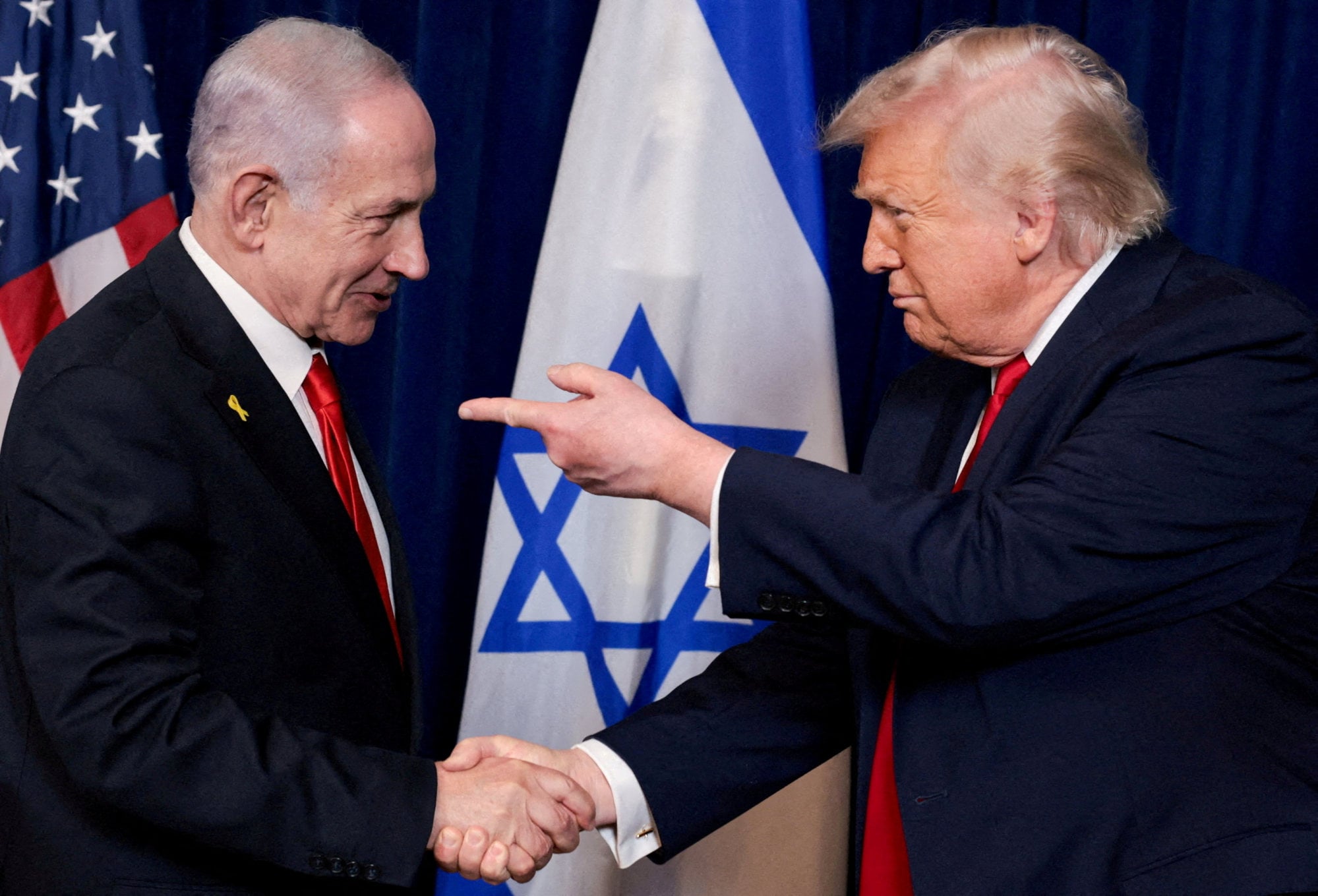
After launching the war together, their interests diverged as Trump sought a ceasefire and Netanyahu pushed for ongoing attacks on Hezbollah, Iran’s proxy in Lebanon, that saw the US president openly slam the Israeli leader as “excitable”, “difficult” and a “very small” partner.
Netanyahu sought to get back in Trump’s good graces as details of the deal were released, touting the “vital relationship” of our “American friends” who have stood “shoulder to shoulder with us in this fight”.
On Thursday, Washington announced sanctions against Lebanese officials it said were aligned with Hezbollah for obstructing Lebanon’s peace process and delaying the disarmament of Hezbollah.
“Treasury will continue to target Hezbollah’s financial networks and hold accountable those who enable the group to undermine the Lebanese state and threaten prospects for lasting peace,” US Treasury Secretary Scott Bessent said in a statement. -- SOUTH CHINA MORNING POST


