
In the first of a two-part series tracing the new trends of illegal betting in Hong Kong amid excitement over the World Cup 2026, Edith Lin looks at how social media has become a new channel pushing the youth to engage in unlawful bookmaking activities.
Ken Chan* started betting on football matches when he was 18.
He started betting through legalised channels, spending a third of his income for a few years.
But he was soon enticed to bet on illegal platforms with their promises of tips and 100 per cent wins.
Chan, who earned around HK$15,000 (US$1,900) each month, said he was initially only looking for betting tips online. But he was soon lured into Telegram groups that offered recommendations and promised a 100 per cent success rate, leading him to illegal betting platforms in 2019.
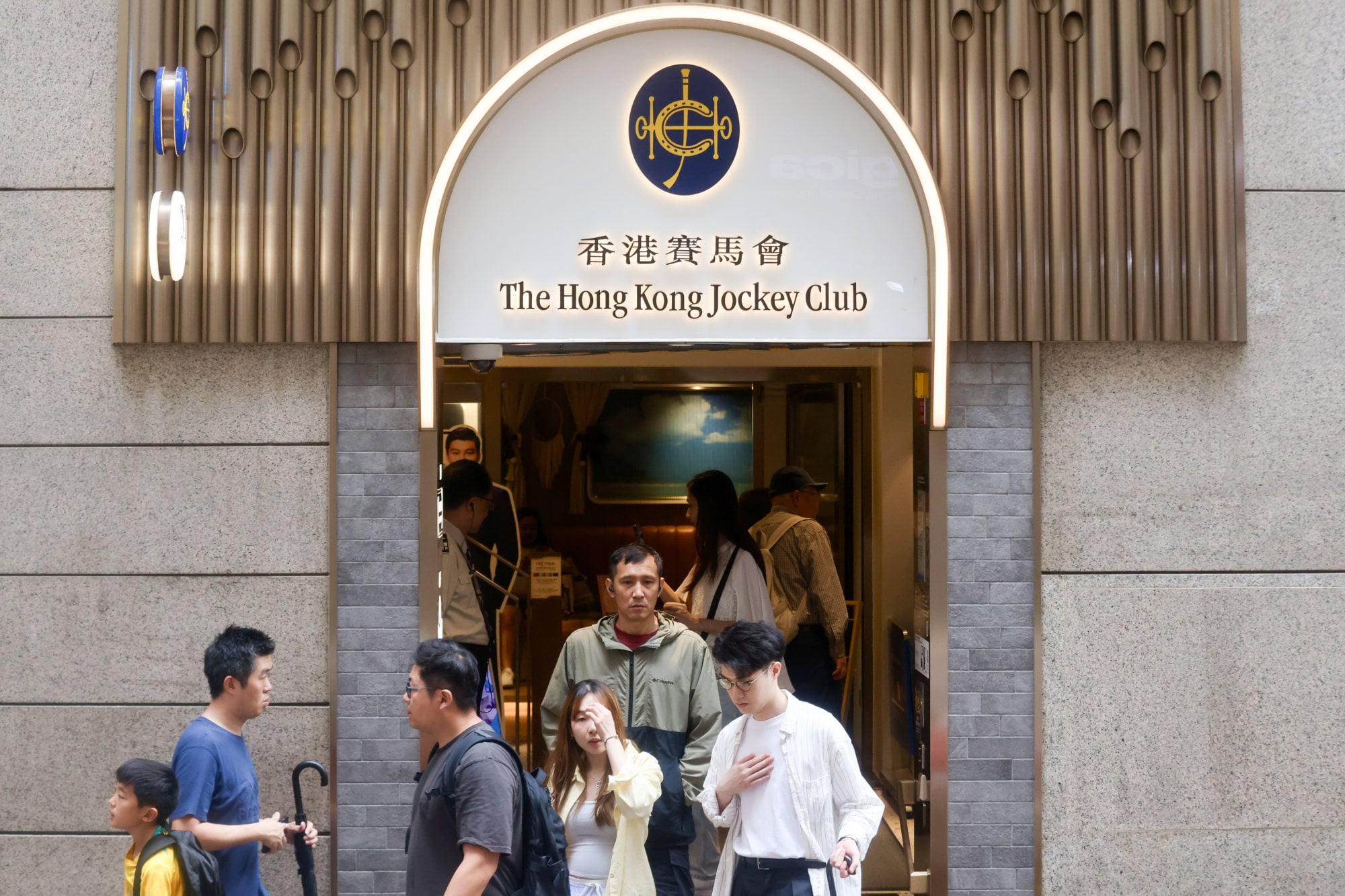
It opened a new world for him, as he could wager on online casinos, basketball and esports matches, with high odds and countless types of bets, whereas the Jockey Club, the sole authorised betting operator, offered only horse racing, football matches and the Mark Six lottery.
“The Telegram groups have made me gamble more. The only common topic in the groups is gambling. Everyone gambles ... When you listen to all the advice and tips, you will be placing bets on dozens of matches. It is difficult to detach oneself,” Chan said.
He also gained access to illegal platforms through social media advertisements.
“Every website has its own welcome rewards. We want to milk them all. If the platform does not bring you luck, you switch to others,” he said.
Chan, who went on to become a steel fixer earning HK$50,000 a month, started increasing his stakes. This turned into a vicious cycle when he started losing his entire salary to gambling each month and, in a bid to win back his losses, began borrowing money from financial companies.
The situation spiralled out of control in 2023 when he failed to repay his debts of over HK$800,000. He went bankrupt and sought help from a counselling centre.
As the global sporting calendar gets busy in June, counsellors specialising in gambling addiction have warned about thriving illegal betting activity emerging on social media and messaging platforms, making it more accessible to younger Hongkongers.
Experts have also suggested regulating these platforms to control the growing illegal gambling sector, adding to existing rules against promoting unlawful bookmaking and betting activities.
The allure of online gambling for youth
Under Hong Kong’s Gambling Ordinance, all gambling activities are illegal except those operated by the Jockey Club. Licensed premises, such as mahjong parlours, as well as social gambling, are exempted.
Hongkongers who bet on unauthorised overseas websites are also liable to be prosecuted under the law, with a maximum penalty of nine months’ imprisonment and a HK$50,000 fine.
Engaging in or promoting bookmaking is also illegal. Upon conviction, an offender can be fined a maximum HK$5 million and imprisoned for up to seven years.
Last year, four counselling and treatment centres, supported by Jockey Club donations, helped 1,594 people with gambling addiction. While 60 per cent of cases were aged between 30 and 59, those under 30 accounted for one-fifth of the total.
Crystal Leung Chui-yee, officer-in-charge at Sunshine Lutheran Centre, one of the counselling centres, said the number of clients it saw under the age of 30 had risen from 54 in 2019 to 82 in 2023, with more young gamblers wagering on illegal platforms.
Around 49 per cent of the centre’s clients bet in online casinos in 2023, up from 6 per cent in 2019. During that same period, those who took part in illegal football betting rose from 20 per cent to 34 per cent, while those who gambled on unauthorised horse racing jumped from zero to 14 per cent.
Noting that the Covid-19 pandemic might have led to an increase in online illegal gambling activities, Leung said the situation had improved only slightly over the past two years.
She observed that the prominence of peer-to-peer payment systems enabled bets to be placed more easily, while instant messaging platforms made illegal gambling more accessible to the younger generation.
“They randomly add users to Telegram groups that provide tips on sports matches and direct them to illegal betting websites, highlighting multiple ways of betting, high odds and betting rebates,” Leung said, noting the insidious example of rebates being offered to users who regularly bet more than a certain amount despite losing.
Augusta Yim Ting-ling, service director at the Zion Social Service Yuk Lai Hin Counselling Centre, pointed to the impact of social media, where gamblers could access illegal gambling platforms.
“Clients say they haven’t deliberately searched for illegal gambling platforms. When they scroll through social media, they are fed with groups offering tips and indirectly gain access to the platforms,” she said.
“[Gamblers] find such groups and links appealing as they provide much information and analysis. Clients who have gambled legally will try their luck [after joining these groups].”

While multiple factors contributed to addiction, including family or peer influence and gamblers’ personal resilience, Yim was concerned that social media could become the greatest risk factor for the younger generation, who frequently used such platforms.
“With so much information on social media, will young gamblers get deeply involved in gambling in a shorter period of time? Previously, it would take a longer time for clients to develop a gambling disorder,” she said.
She noted that most her centre’s clients were in their thirties and forties, and came years after they first gambled as young adults.
Social media as a major risk factor
Multiple overseas studies show that greater exposure to gambling advertising increases gambling participation and leads to a higher risk of harm.
Research from the University of Cambridge also found that social media advertisements by licensed Irish gambling operators reached young men, who have the highest rate of problem gambling, more than other demographics, even when they were not the target audience.
While Hong Kong outlaws bookmaking and its promotion, advertisements for suspected illegal gambling platforms were still easily found on the Meta Ad Library ahead of the summer sports season.
Using the search term “World Cup” in Chinese on the ad library in late April, the South China Morning Post found 22 active advertisements across 14 pages related to suspected underground gambling platforms and links to chat groups.
One advertisement highlighted that users could bet on over 100 matches daily, ranging from football and basketball to snooker and esports – with “very high odds”. Another promoted itself as a long-established platform that was more convenient and user-friendly than the Hong Kong Jockey Club, while offering tips and a rebate for those who had lost money in bets.

After a month, the SCMP checked the 22 advertisements and found that only one remained active. However, most pages were still in the ad library, with six pages showing new advertisements. Some offered betting rewards, early-bird deals, match tips and links to suspected illegal betting platforms.
According to Meta’s policies, advertisers of online gambling and those with landing pages containing online betting promotions require authorisation.
They cannot target people under 18 years old and cannot run online gambling and gaming ads in Hong Kong, among other unsupported markets. They are also responsible for complying with local laws.
An insider said Meta had content moderation teams and automated systems to enforce such policies, involving proactive detection tools and human review.
The source said users could also report problematic content and the company would remove advertisements and disable accounts where appropriate.
A Meta spokesman said its community standards and advertising policies outlined what is allowed on its platforms.
“We enforce strict advertising policies regarding online gambling and games ads, and any ads that violate these policies are promptly removed once identified,” he said.
The dilemma in regulation
And yet, a yawning gap lies between social media platforms’ stated policy and actual enforcement.
Professor Leon Xiao, an assistant professor at City University’s School of Creative Media, said relying on illegal gambling advertisers on social media to comply with the law was ineffective, while users usually scrolled past rather than reported problematic content.
He added that social media platforms tended to act slowly due to revenue concerns.
“We do not think they will act proactively. I think they only act when they are forced to act because, of course, they make money by showing these advertisements,” he said.
“So, unless they are told that they need to stop showing the ads, why would they?”
Last November, Reuters cited Meta’s internal documents estimating that 10 per cent of its 2024 revenue, amounting to US$16 billion, would come from advertisements for scams and banned goods.
Meta later called the projections “rough and overly inclusive”, while a subsequent review showed that many of them “weren’t violating at all”.

Xiao said the Hong Kong government could consider requiring platforms to screen gambling advertisements before releasing them online, but stressed that only concerted enforcement could make regulation effective.
He said advertisers on Telegram could also be subjected to the rule, but noted that regulating content of individual chats might not be feasible.
While Telegram’s website says all data it stores is “heavily encrypted”, it will perform a legal analysis and can disclose user information to authorities upon receiving a valid order confirming a user is a criminal suspect.
A Telegram channel which shared personal details of police officers and their families was suspended in 2019, two weeks after a court order came into effect to deter doxxing attacks amid anti-government protests across the city that year.
The SCMP has reached out to Telegram for comment.
Francis Fong Po-kiu, honorary president of the Hong Kong Information Technology Federation, said regulating social media and messaging platforms could spark controversy.
“There are a lot of grey areas. For example, discussing the matches is not a problem, and to what extent will it be regulated? ... The authorities should be clear about it and avoid adopting a blanket policy for the platforms and affecting freedom of speech,” he said.
According to Fong, police are in direct communication with certain platforms to speed up the removal of illegal content.
Police said they proactively conducted online patrols and gathered intelligence on illegal gambling activities, and would “swiftly request” operators to remove illegal gambling advertisements and websites upon discovery.
However, Fong pointed out that regulation was likely to be ineffective, as users could easily and quickly start new groups, with betting operations set up in places outside Hong Kong where certain gambling activities were legal.
“They may not target Hongkongers, but the entire Chinese-speaking community in Southeast Asia. Nothing much the police can do,” he said, adding that some betting sites used cryptocurrency for transactions, which could further complicate investigations.

Xiao, the assistant professor from City University, stressed the importance of education.
“[Regulation] still helps, to try to do as much as possible to stop people. But you also need to recognise you cannot stop everybody, so there should also be some interventions,” he said.
The Home and Youth Affairs Bureau said police combat illegal gambling activities through prevention, education, intelligence collection and law enforcement.
The force was closely monitoring the trend of illegal gambling and taking appropriate intelligence-led enforcement actions against such activities, the bureau added.
Since Chan sought help from the counselling centre, he has been on a difficult path to recovery. He regularly spoke to social workers and had developed new interests, such as playing bass guitar and joining a football team.
However, staying off gambling was an uphill battle as he faced temptations daily, he said.
He still places bets via the Jockey Club and on illegal platforms, staking a few thousand dollars each month and chatting in Telegram groups that keep him going.
“You can gamble as long as you have a phone. To me, it is even harder to quit than drug addiction,” he said. -- SOUTH CHINA MORNING POST