
BANGKOK: The Thai army is closely monitoring reports of Cambodian tank and military hardware movements along the border, Second Army Area commander Lt Gen Weerayuth Raksilp has confirmed, warning that readiness, speed and equipment would be decisive if a third round of clashes broke out.
Speaking at Prasat Khana in Kap Choeng district, Surin province, on Friday (June 19), Weerayuth noted that images in the news appeared to show Cambodian troops moving tanks and other military equipment. However, he stressed that Thai forces were continuing to assess the situation on the ground.
He explained that all military equipment requires training, preparation and logistical support before it can be deployed effectively. Troops must be ready, while supporting factors such as transport routes and fuel supplies must also be in place.
Thailand keeps watch on all sensitive border areas
Weerayuth stressed that the army was tracking the situation at all times. If a third clash were to occur, every area would be important, including those under the First Army Area, the Second Army Area, and the Navy’s Chanthaburi–Trat sector, as all are considered sensitive zones.
“We have to gather information to assess the situation and prepare our personnel, resources and training. Whoever is better prepared, faster, better armed and able to reach the target sooner will have a greater chance of responding and winning,” he said.
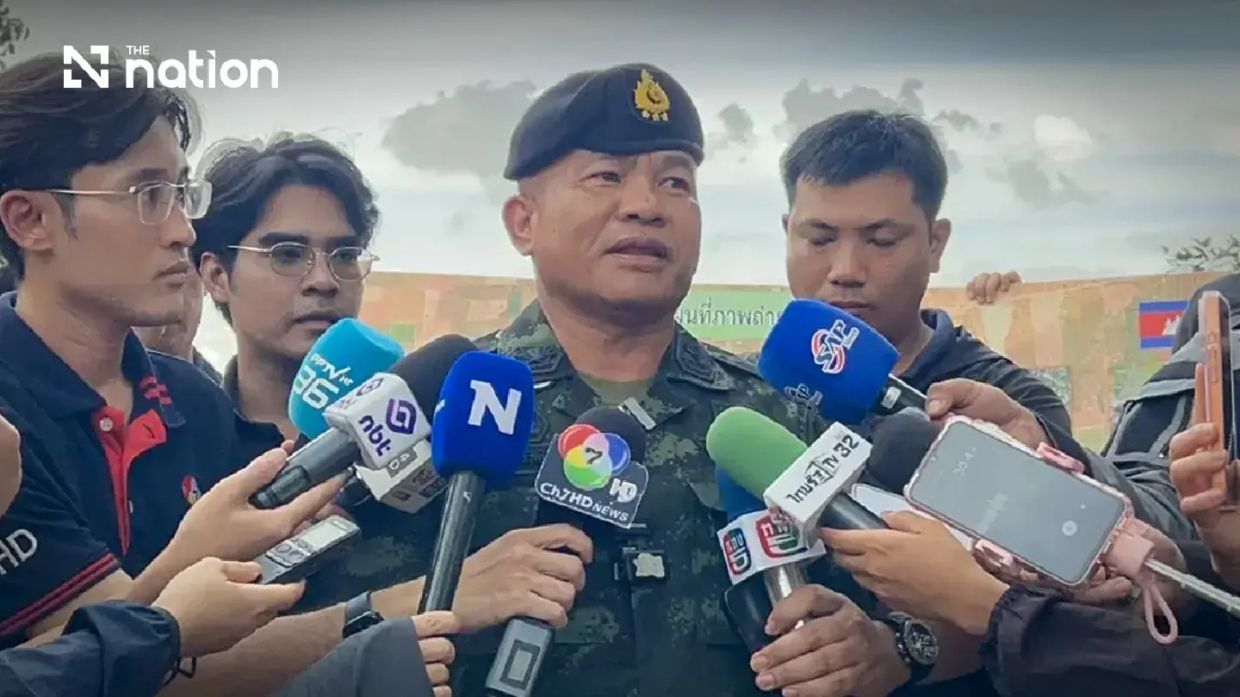
The commander explained that the Second Army Area, through the Suranaree Force, is responsible for more than 400 kilometres of border area, stretching from Chong Bok in Ubon Ratchathani to Boundary Marker 28 in Lahan Sai district, Buri Ram province.
Prasat Khana is an ancient site near the border, located along the same line as Prasat Ta Muen, Prasat Ta Kwai in Phanom Dong Rak district of Surin, Phu Kok Yai, and Chong Bok in Ubon Ratchathani.
Weerayuth described Prasat Khana as the first target seized and brought under military control as part of Operation Century, which began during the second border clash last year. One soldier lost his life during the operation, and Weerayuth visited the soldier’s family on Thursday (June 18) to check on their welfare. He added that stairs connecting the Cambodian side to Prasat Khana had previously been destroyed by Thai forces.
“Some things cannot be disclosed in full because tactical operations require deception and concealment. We cannot reveal everything, but we must have ways to respond and counter any action,” he said.
Road access and information warfare stressed
Weerayuth added that he planned to inspect Prasat Phu Kok Yai at Chong Bok, which has similar characteristics to Prasat Khana. It is the first time in 30 years, he noted, that Thailand has been able to build a road reaching the site and deploy personnel to control the area.
Part of the road construction budget came from the army, while the rest was supported by public contributions.
The commander reiterated that Thai forces currently controlled areas along the entire line. Personnel from all armed forces, along with members of the public, had joined efforts to protect the territory, which he described as a source of national pride.
Media outlets also played a role in reflecting unity across sectors, he added, while road construction helped facilitate military operations.
Weerayuth also underlined the importance of information warfare, noting that all sides needed to work together to counter misinformation and distorted communication from the opposing side.
Troops told to stay disciplined amid provocation
Weerayuth also addressed progress on plans to build a reservoir at Huai Ta Maria in Si Sa Ket province. The project remains in the planning stage with relevant agencies, including budget preparation and proposals that will require government consideration.
He noted that troops had been instructed to maintain discipline and exercise caution when responding to provocation. Any response must be ordered and controlled, although this did not mean personnel were barred from responding.
Unit commanders at all levels have authority to make decisions, but their actions must remain under control, he explained, as some provocations may not justify firing or direct confrontation and could stem from undisciplined conduct by the opposing side.
“We must be more disciplined. Any action we take must succeed and give us an advantage over the opponent. If operations are carried out without control, damage could follow,” he warned. - The Nation/ANN