
US President Donald Trump has named federal housing regulator Bill Pulte as acting director of national intelligence, entrusting oversight of America’s intelligence agencies to a close political ally whose career has been rooted in housing finance rather than national security.
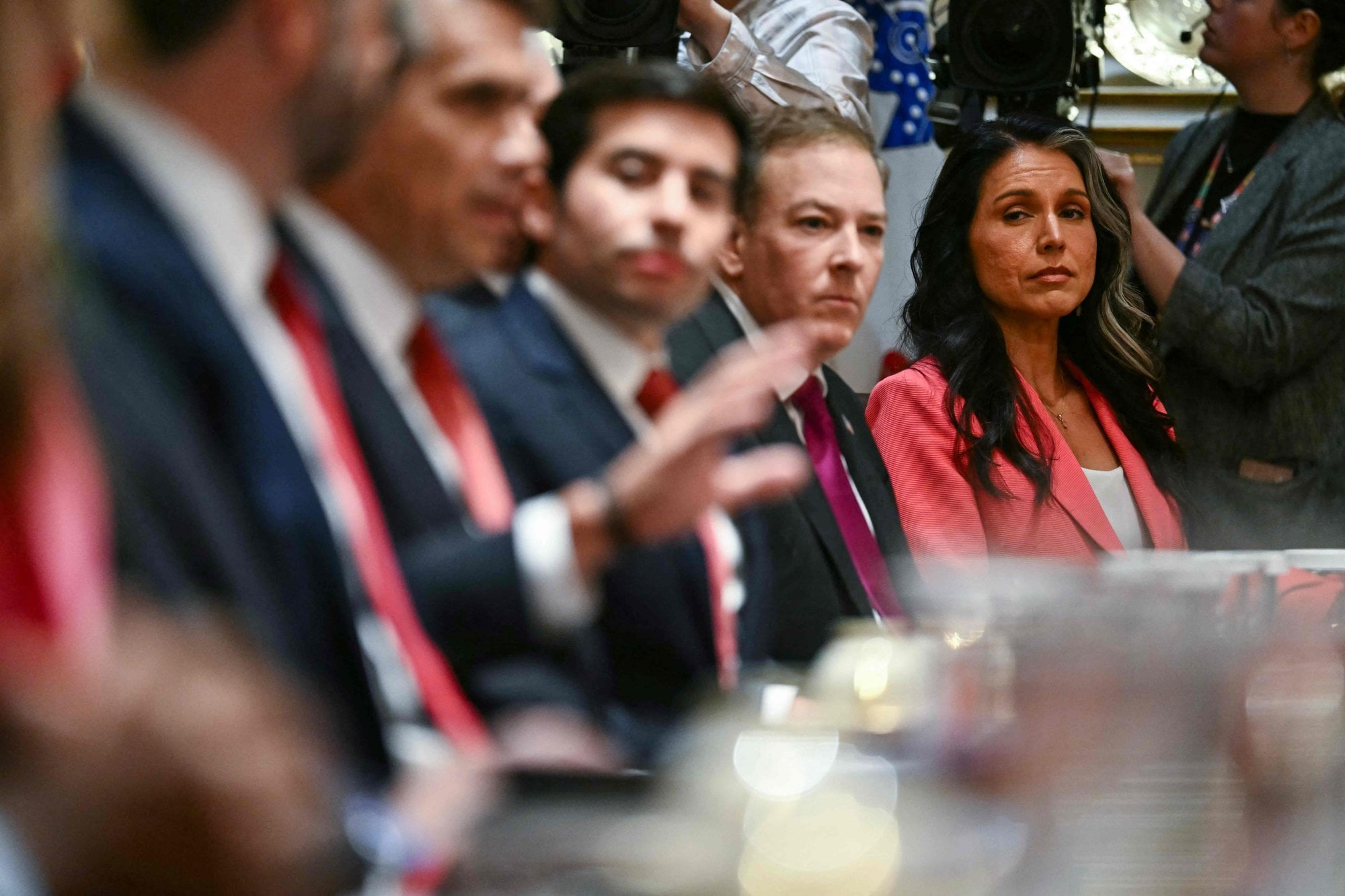
Trump announced the appointment on Tuesday, saying Pulte would replace Tulsi Gabbard, who stepped down last month after citing her husband’s cancer diagnosis.
The move places the 38-year-old director of the Federal Housing Finance Agency at the helm of the nation’s intelligence community that oversees 18 agencies, including the CIA and National Security Agency, while allowing him to retain his existing responsibilities regulating the mortgage market.
The appointment would likely draw scrutiny because it places a Trump loyalist with no known intelligence background atop the group responsible for assessing threats from countries including China, Russia, Iran and North Korea.
Senate Minority Leader Chuck Schumer sharply criticised the decision, saying it “should send a shiver down the spine of everyone”.
“Bill Pulte has proven himself willing to act as a Trump political puppet,” Schumer said. “At a time of growing threats around the world, Trump’s choice makes one thing clear: he is not looking for independent intelligence. He’s looking for political validation.”
Schumer argued that the intelligence community exists to provide objective assessments rather than advance a president’s political interests, adding that Republicans should oppose the appointment because “this job is too important”.
In a post on social media announcing the appointment, Trump praised Pulte’s management of government-backed mortgage giants Fannie Mae and Freddie Mac.
“William has deep experience managing the most sensitive matters in America, the safety and soundness of the Markets, and over 10 Trillion Dollars at Fannie Mae/Freddie Mac,” Trump wrote.
Pulte has emerged as one of Trump’s most outspoken allies since taking over the housing regulator earlier this year.
Beyond overseeing Fannie Mae and Freddie Mac, he has become known in Washington for aggressively targeting figures viewed as political opponents of the president, including former Federal Reserve chair Jerome Powell and New York Attorney General Letitia James.
He has also sought to cast some of his work at the housing regulator in national security terms.

In May, Pulte said his agency had referred several cases to the Justice Department involving individuals he alleged were Chinese and North Korean nationals working at Fannie Mae and Freddie Mac while falsely presenting themselves as US citizens or contractors.
“There were non-citizens working who were posing as either real Americans or, in some cases, contractors,” Pulte said in an interview with Bloomberg Television. He added that five or six individuals had been referred to the Justice Department.
Pulte did not publicly provide evidence supporting the allegations. Employment policies at Fannie Mae and Freddie Mac do not prohibit legally authorised foreign nationals from working at the companies, and both organisations state that they do not discriminate on the basis of national origin.
Who is Bill Pulte?
The grandson of homebuilding magnate William Pulte, he developed close ties to Trump and members of the president’s family through political fundraising and regular appearances at Mar-a-Lago, Trump’s Florida resort.
His rise within the administration has been accompanied by controversy.
While supporters have praised his loyalty and willingness to challenge Trump’s critics, detractors inside and outside government have questioned his confrontational management style and efforts to inject himself into issues beyond housing policy.
Trump said Pulte would continue serving as director of the Federal Housing Finance Agency and chairman of Fannie Mae and Freddie Mac while acting as the country’s top intelligence official.
The White House has not indicated whether Trump intends to nominate Pulte permanently for the role. Any permanent appointment would require Senate confirmation.
Tulsi Gabbard’s departure
The leadership change came as the intelligence community faced mounting challenges, including tensions with Iran, strategic competition with China and a range of security threats at home and abroad.
Gabbard’s departure follows a tenure that occasionally exposed differences between the White House and the intelligence community, particularly over Iran.
Earlier this year, Trump publicly dismissed Gabbard’s congressional testimony that Iran was not actively pursuing a nuclear weapon, saying: “I don’t care what she said. I think they were very close to having a weapon”.
The disagreement surfaced as the administration weighed military action against Iran, an issue that tested Gabbard’s long-held scepticism towards foreign interventions.
While she later backed Trump’s decision-making authority as commander-in-chief, her role became less visible during some of the administration’s most consequential national security decisions. -- SOUTH CHINA MORNING POST