




Beijing could conduct military operations, bolster its electronic warfare strength and roll out trade sanctions in response to Tokyo and Manila’s deepening defence cooperation, according to Chinese experts.
Last week, Manila and Tokyo announced they would launch negotiations on the maritime boundary of their exclusive economic zones and continental shelves around Taiwan, a move that Beijing called “completely illegal and invalid”.
In a report on Wednesday, the Beijing Lande Information Technology think tank said Japan and the Philippines had forged a “quasi-military alliance” and could block the Chinese navy from entering and exiting the western Pacific.
As part of that shift, Japan was moving towards a “planner” role in the US’ Indo-Pacific strategy, it said.
“With the US’ global strategic focus constrained, Japan ... has chosen to strengthen its irreplaceable role in the Indo-Pacific security architecture by actively aligning itself with the Philippines.”
Tokyo and Manila have also agreed to begin negotiations on an intelligence-sharing agreement and to advance the transfer of Abukuma-class destroyers to the Philippines.
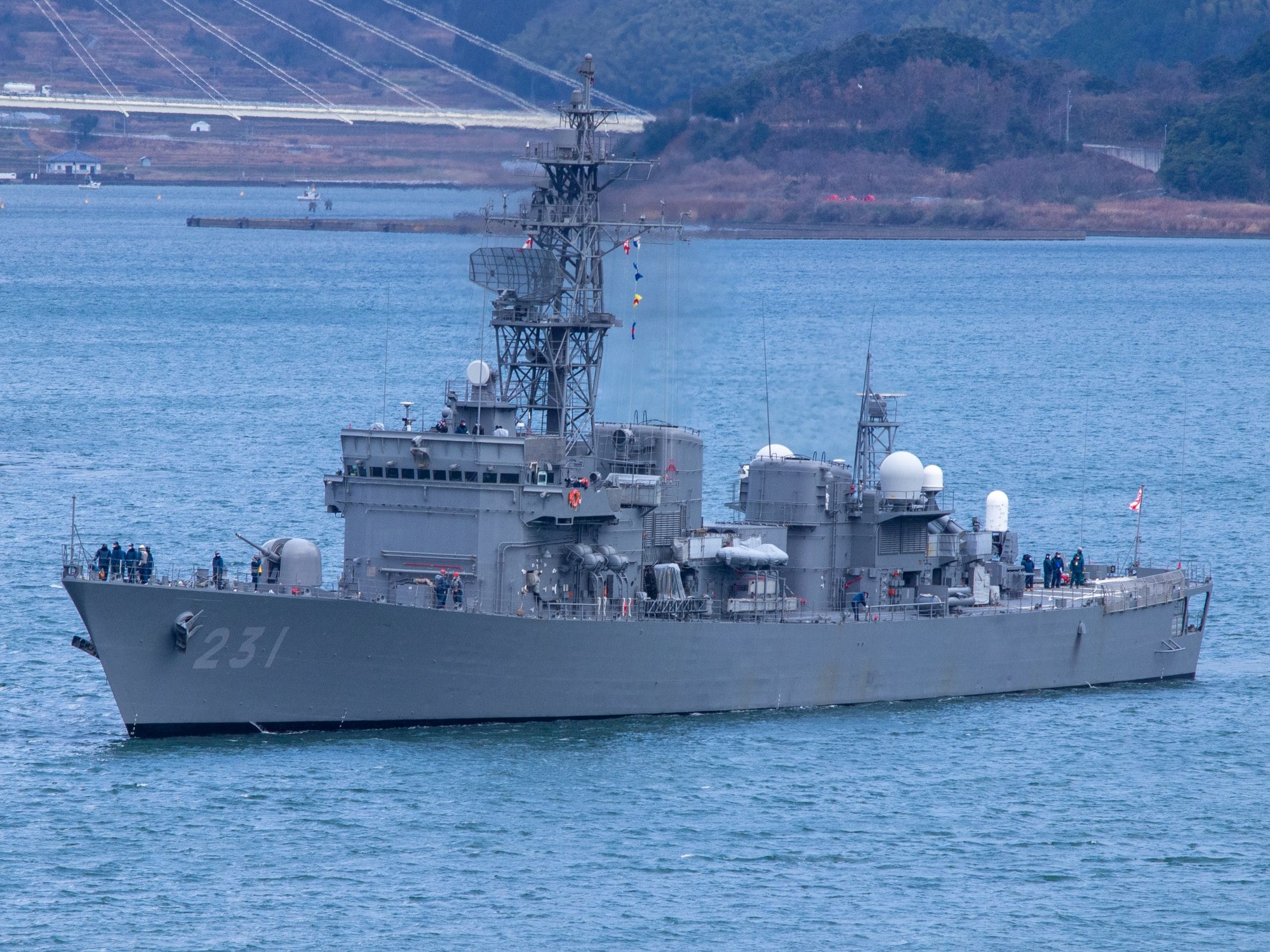
The Abukuma class was designed for anti-submarine warfare, the think tank said, adding that the Bashi Channel between the Philippines and Taiwan would be “a priority target for an anti-submarine blockade” in any “operational scenarios in the Taiwan Strait”.
The report argued that the Philippines’ growing alignment with Japan was an attempt to improve its bargaining power in its disputes with China in the South China Sea.
The think tank also warned that the two nations were already cooperating in logistics, intelligence, equipment development and training.
“The Philippines’ ... hydrographic data and ship movement trajectories in the South China Sea can be synchronised in real time with the Japan Self-Defence Forces, while Japan’s reconnaissance intelligence and air situation warning information in the East China Sea can also be directly transmitted to the Philippine military,” it said.
“This signifies that intelligence exchanges between Japan and the Philippines can be conducted directly without relying on the United States as a relay ... the two countries’ reconnaissance networks in the Taiwan Strait, East China Sea and South China Sea are connected.”
Fu Qianshao, a retired PLA Air Force colonel, said the People’s Liberation Army (PLA) could respond to these developments with a range of strong measures, including “sustained and effective” patrols in the waters east of Taiwan.
“Strong measures must be taken in response, including long-term and effective control by the PLA. Whether through exercises encircling the island [Taiwan], or a sustained PLA presence and navigation in these waters to safeguard China’s rights and interests,” Fu said.
The Lande report said Beijing should also intensify surveillance around the countries.
“We should conduct routine patrols with naval and aircraft fleets through key waterways such as the Miyako Strait and the Tsushima Strait, conduct strategic bomber patrols over the Sea of Japan and the western Pacific, and carry out carrier battle group exercises in the Philippine Sea,” it said.
“The deployments could continuously demarcate the boundaries of the Japan Self-Defence Forces’ activities and create a counter-deterrent against its military deployments in its southwestern islands.”
It also suggested the PLA should bolster its electronic warfare capabilities to disrupt Tokyo and Manila’s intelligence links in a potential conflict.
In addition, the report called for economic sanctions, such as banning the export of dual-use products to Manila and putting Japanese defence contractors onto Beijing’s Unreliable Entity List, a trade and investment blacklist.
Restrictions on imports of Philippine agricultural products could also be considered, it added.
Japan and the Philippines began to bolster their defence links in August last year when they signed the Reciprocal Access Agreement, which granted the Japan Self-Defence Forces a legal channel to conduct military operations in the Philippines.
Earlier this year, Japan took on an operation role in the annual US-Philippine Balikatan military exercises for the first time.
Beijing sees Taiwan as part of China to be reunited by force if necessary.
Most countries, including the United States and its allies Japan and the Philippines, do not recognise Taiwan as an independent state, but Washington is opposed to any attempt to take the self-governed island by force and is committed to supplying it with weapons. -- SOUTH CHINA MORNING POST


