




Despite recent back-to-back visits to Beijing by US President Donald Trump and Russian President Vladimir Putin, no new trilateral framework or major diplomatic breakthrough has emerged.
Yet, according to observers, the summits highlight Beijing’s growing ability to manage its two most important relationships on separate tracks: sustaining a deep strategic partnership with Moscow, while pursuing a more transactional, stability-focused engagement with Washington.
Several analysts said the pattern was reshaping US-China-Russia dynamics, making it increasingly asymmetrical and unpredictable.
They argued it would continue to test Beijing’s capacity to navigate divergent interests against the backdrop of protracted conflicts in Ukraine and the Middle East, energy market turbulence and an increasingly multipolar nuclear order.
“Major power leaders keep coming to China, and this naturally creates the impression that the United States and Russia, to some extent, need China,” said Yun Sun, director of the China programme and co-director of the East Asia programme at the Stimson Centre.
“This makes China appear to sit at the centre of global power, a pivot of world diplomacy. This view has some merit ... But whether this truly elevates China’s standing remains debatable.”
The contrasting nature of the two summits highlights this asymmetry.
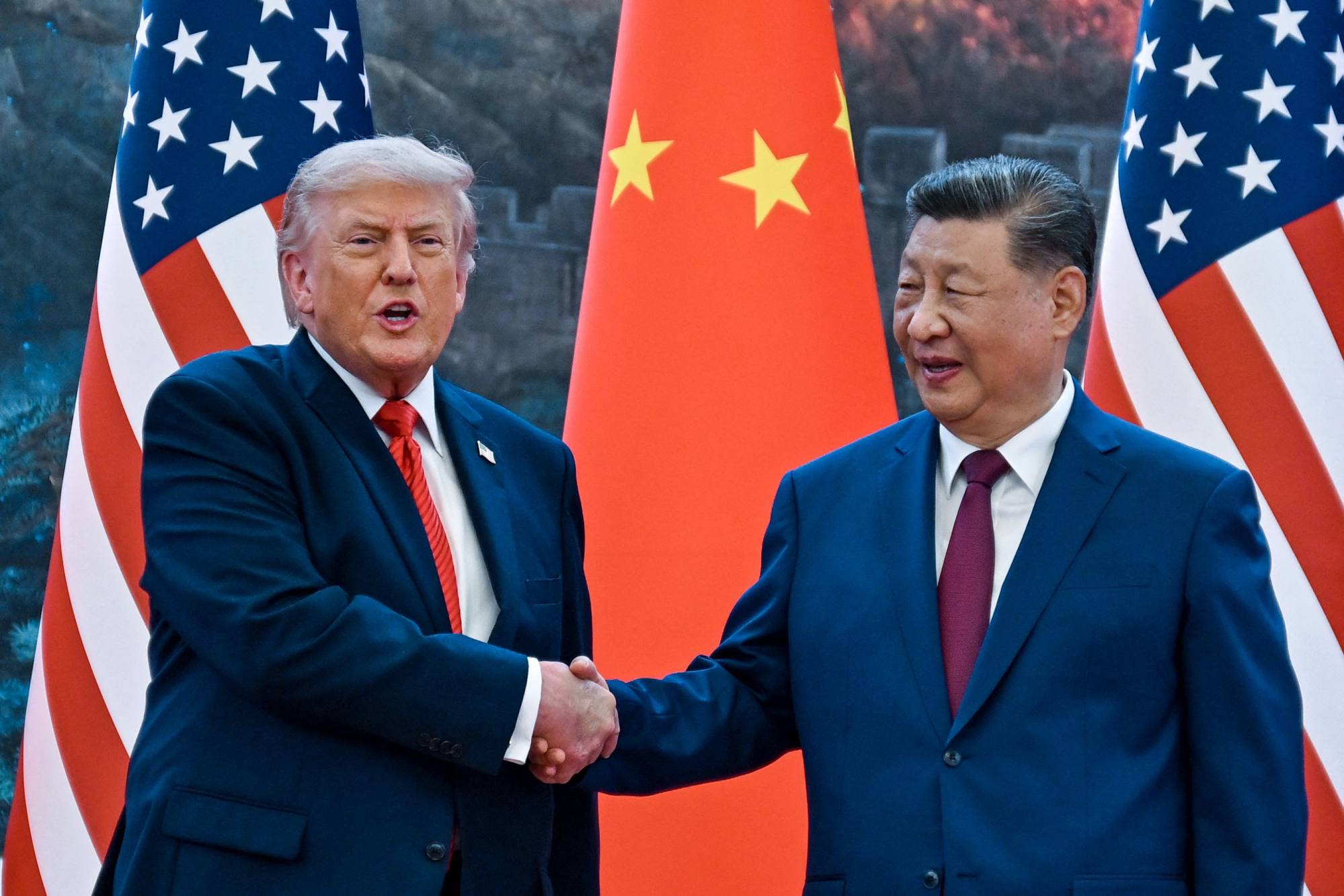
President Xi Jinping’s summit with Trump in mid-May was notable for its friendly tone and introducing the “constructive strategic stability” framing as a guiding concept for managing ties between the two superpowers.
Xi hailed the talks as “historic and landmark”, while Trump described the summit positively and highlighted trade deliverables, such as Chinese purchases of US agricultural products, energy and Boeing aircraft.
Yet Trump’s three-day trip, the first by a US president to China in almost nine years, produced no joint statement and showed little narrowing of differences on Taiwan, technology controls and other sensitive issues.
By contrast, Putin’s state visit four days later – timed to coincide with the 30th anniversary of the China-Russia comprehensive strategic partnership – appeared more substantive and warmer in tone.
Both leaders referred to each other as “dear friends”, reaffirmed their countries’ alignment and signed a joint declaration positioning Russia and China as “important centres of power in a multipolar world”.
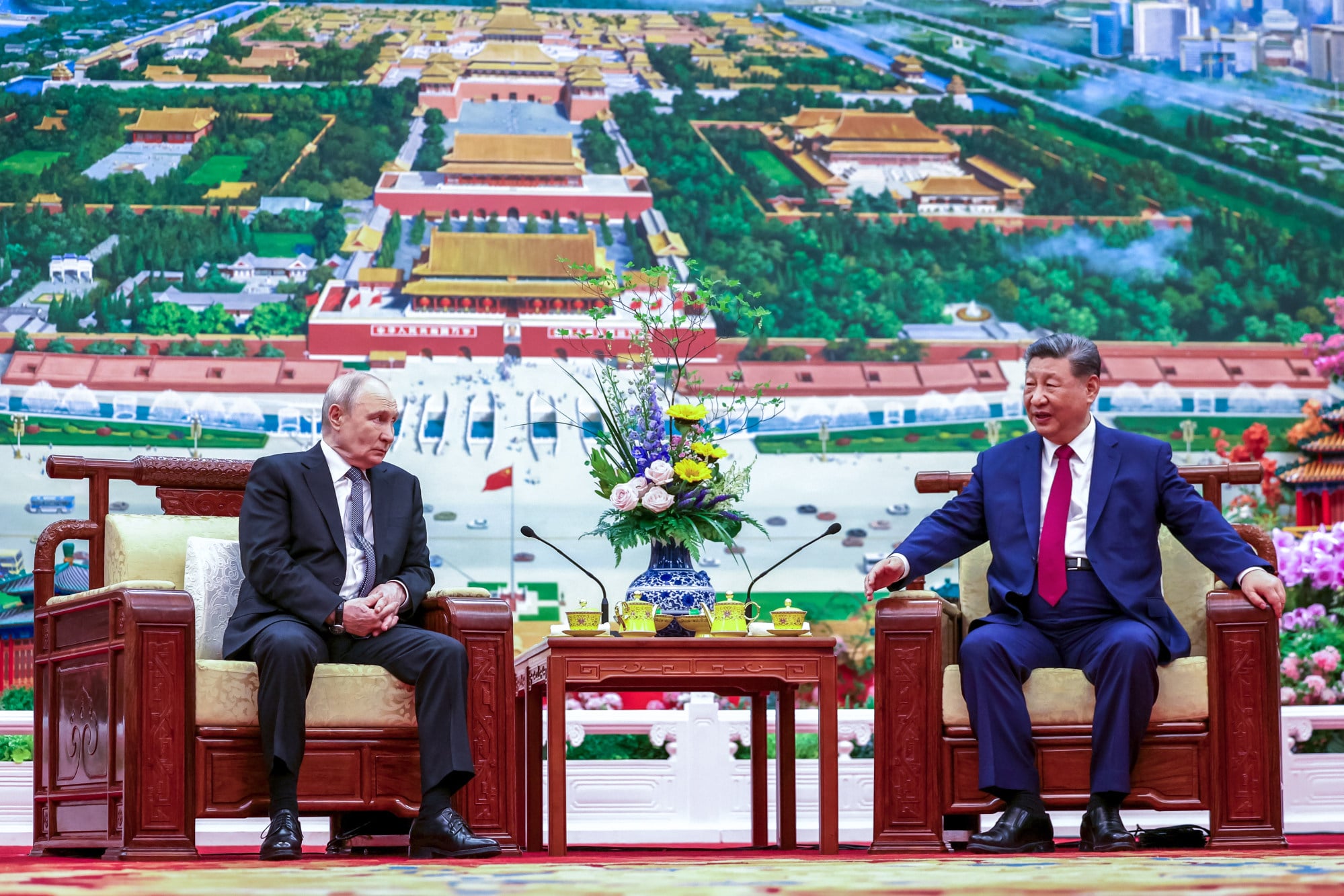
They also extended the 2001 Treaty of Good-Neighbourliness and Friendly Cooperation, issued a separate document advocating a “multipolar world” as a counterweight to US “unilateral hegemony”, and oversaw the signing of more than 20 cooperation agreements spanning trade, technology, energy, education and infrastructure.
Despite Russia’s growing economic and diplomatic dependence on China since the invasion of Ukraine more than four years ago, Putin has doubled down on the partnership, reiterating opposition to Taiwanese independence and echoing Beijing’s concerns about Japan’s “accelerated remilitarisation” amid deteriorating Sino-Japanese ties.
Sun described the present US-China phase as one of “mutual assured disruption” in which both sides recognised their ability to harm each other’s interests and were therefore “more willing to sit down and discuss ‘rules of engagement’”.
Sun also played down any negative impact of a temporary stabilisation in US-China ties on Beijing’s relations with Moscow.
“China will not abandon strategic coordination with Russia because of a single Trump visit,” she said. “China does not see the need to balance between the US and Russia in a causal sense, but treats the two relationships as parallel tracks.”
Mark Katz, a professor emeritus at George Mason University in Virginia, said the sequence of events enhanced the image of both leaders courting Xi, even if the timing was partly coincidental.
“With Trump and Putin seeking different things from Xi, the question now is whether Xi will side with one more than the other, or attempt to be even-handed between them.”
From Moscow’s perspective, Katz said Putin’s visit was about locking in China’s support amid Western isolation and seeking reassurance that any US-China stabilisation would not come at Russia’s expense.
“Putin will not be pleased if Xi ‘balances’ between the US and Russia instead of supporting Russia against the US.”
During the China-US summit, Trump told Xi that Russia-Ukraine negotiations were stalled and pressed him to bring Putin and Ukrainian leader Volodymyr Zelensky to the table, the South China Morning Post reported.
China has declined to condemn Russia’s invasion and it opposed war-related Western sanctions on Moscow. The joint Sino-Russia declaration said Moscow “positively assesses the objective and unbiased position of the Chinese side regarding the situation in Ukraine, and welcomes China’s aspiration to play a constructive role”.
Artyom Lukin, a professor at Russia’s Far Eastern Federal University in Vladivostok, highlighted Beijing’s current communication advantage, but warned against overstating its significance.
“It’s hard to say whether Beijing is becoming the central diplomatic hub. However, what is clear is that Beijing communicates better with Washington and Moscow than those two do with each other,” he said.
“This does currently give some advantage to China, but I would not overrate the significance of that. It’s up to Moscow and Washington to enhance their bilateral diplomacy at any moment – it’s still a possibility.”
On nuclear issues, Trump proposed a three-way US-Russia-China nuclear arms control deal during the summit with Xi, calling Moscow’s nuclear arsenal a shared concern for Washington and Beijing.
“I got a very positive response. This is the beginning,” he told reporters aboard Air Force One after the meetings with Xi.
Most analysts, however, remain sceptical.
Katz noted that China had long rejected caps on its arsenal until it approached approximate parity with the US and Russia.
He argued that China was not likely to accept Trump’s proposal and, “Putin may share Trump’s desire for a three-way negotiation, but may see no point in calling for this so long as Xi rejects it”.
Lukin said the idea of extending arms control beyond the US-Russia axis made sense in a more multipolar environment, but he doubted a three-way structure including China would hold.
“It is increasingly clear that the US-Russia axis is unlikely to remain the central nuclear strategic balance for long,” he said.
Beijing has repeatedly rejected demands from Washington to join talks with Moscow about reducing their nuclear arsenals, saying Chinese nuclear forces maintain a minimal level required for national security.
Sun of the Stimson Centre also raised doubts about Trump’s proposal, suggesting it was less about genuine cooperation and more about pressuring Beijing.
“All countries agree on the ultimate goal of a ‘world without nuclear weapons’,” she said. “But consensus on the goal does not mean a workable path exists.”
The Iran conflict and disruptions in the Strait of Hormuz – which featured prominently in both summits – add another layer of both strain and opportunity in the triangle.
Short‑term energy market volatility has boosted Russia-China hydrocarbon trading, with bilateral volumes rising about 20 per cent in the first four months of the year, mainly driven by the Middle East situation.
“The Iran conflict definitely serves to strengthen the Russia-China partnership in the area of hydrocarbons,” Lukin said. But he cautioned that China’s rapid shift towards electrification would cut its long‑term dependence on oil and gas.
“I would not overrate the long-term significance of oil for Sino-Russian ties,” Lukin said. “China and especially Russia need to find new anchors for their geoeconomic strategic partnership that go beyond oil and gas.”
Katz highlighted the asymmetry in energy dynamics, pointing to prolonged disruptions in the Strait of Hormuz benefiting energy exporters such as Russia and the US, while pressuring importers such as China, potentially increasing China’s reliance on Russian supplies and giving Moscow slightly better negotiating leverage.
“If Hormuz is closed for an extended period, China may see buying more oil and gas from Russia as preferable to buying it from other sources, such as the US,” he said.
“If China wants to avoid greater dependence on Russia, it may have to be more assertive about insisting that Iran not limit shipping through the Strait of Hormuz,” Katz said. “At present, though, China does not seem prepared to pressure Iran on this, even though it would be in China’s interests to do so.”
Sun noted the three countries had differing priorities on Iran.
“The US faces domestic political pressure and concerns over rising oil prices, while China prioritises energy security amid anxiety about limited reserves,” she said.
Sun added that Washington wanted Beijing to cut Iranian oil imports, while China insisted that the US must also act.
“The goals may align, but the paths diverge. These differences limit prospects for meaningful trilateral coordination.”
She added that the Iran crisis might not deepen China-Russia alignment.
“China continues to import Iranian oil, and it is unclear whether Russia truly wants Iran to stop fighting. The US and China share a goal [about preventing wider escalation], but China and Russia may not,” Sun said.
Zheng Yongnian, dean of the school of public policy at the Chinese University of Hong Kong, Shenzhen, offered a more optimistic view of China’s role in the great-power triangle.
In an interview published on May 21 by Greater Bay Area Review, a social media account affiliated with his school, he argued that China had a more central position in the triangle than it had during the Cold War.
“In terms of formation, China today in many respects occupies a position similar to that of the US after World War II. It is hard to simply say who is first and who is second if we look at comprehensive strength,” he said.
Zheng denied that China had made long-term choices between the US and Russia, emphasising that China should avoid bloc politics and not fall into binary alignments but should leverage practical diplomacy to expand influence and manage relations with both powers simultaneously.
“In recent years, Western opinion has often criticised China’s ties with Russia, portraying China as ‘standing together’ with Moscow. But in fact, China has never simply chosen sides,” Zheng argued.
Lukin was particularly cautious about the depth of Sino-Russian ties, citing limited evidence that Beijing was prepared to treat Moscow as a true ally.
“In the abstract, China wants a strong Russia. However, the question is, if China is willing to make substantial commitments towards Russia, is Beijing ready to share its diplomatic, financial, technological resources with Moscow?” he said.
“In other words, is China going to treat Russia as an indispensable ally, rather than just a partner? So far, I’ve not seen evidence of that.”


