Panamanian President Jose Raul Mulino on Thursday rejected suggestions that US pressure had shaped his government’s handling of a dispute over ports near the Panama Canal, as Panama seeks to stabilise relations with Beijing and renew a key maritime agreement.
“The decision we made regarding those two ports was genuinely Panamanian,” Mulino said during his weekly press conference, after China accused unnamed “third parties” of interfering in bilateral ties.
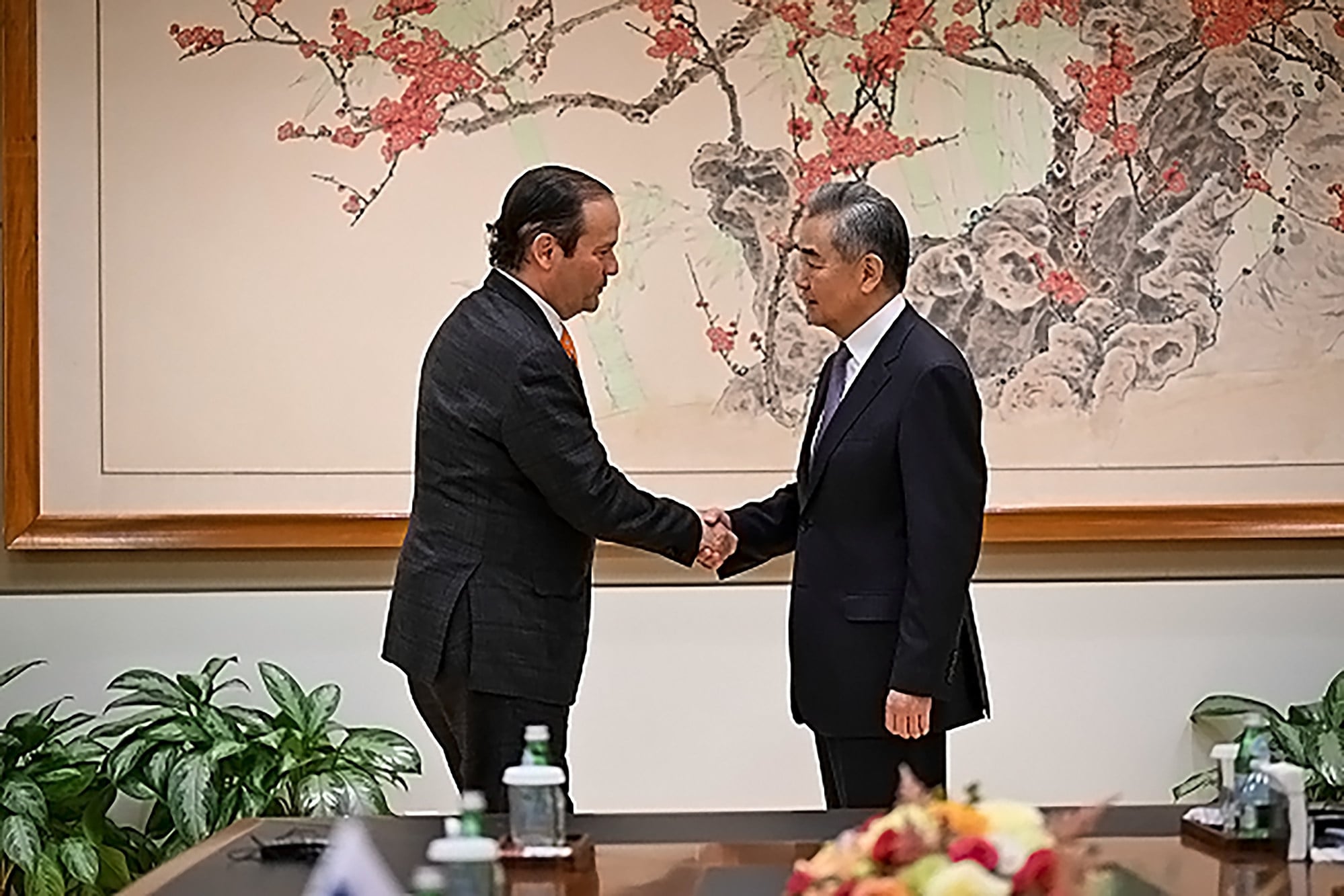
Mulino also expressed hope that tensions with Beijing could ease following talks this week in New York between Chinese Foreign Minister Wang Yi and Panamanian Foreign Minister Javier Martinez-Acha, which he described as a “transcendental step”.
The diplomatic outreach comes amid one of the most serious strains in China-Panama relations since the two countries established ties in 2017, driven by a dispute over the operation of ports near the strategically vital canal and growing pressure from Washington over Beijing’s regional influence.
“China has always maintained that China-Panama relations are not directed against any third party and should not be interfered with by any third party,” Wang said, according to a foreign ministry read-out released on Wednesday.
Wang also said Beijing was willing to deepen cooperation with Panama and “eliminate external interference”. Martinez-Acha, according to the Chinese read-out, told Wang that Panama was prepared to resolve differences through dialogue and build stronger mutual trust.
In a social media post after the meeting, the Panamanian foreign minister said he had expressed Panama’s “readiness to advance in technical channels of maritime cooperation” with China.
The two countries are also seeking to renew a 2018 maritime transport agreement that grants Panama “most favoured nation” status in Chinese ports, with preferential tariffs and streamlined procedures for Panamanian-flagged vessels.
Mulino said he remained confident the deal could be renewed before it expires later this year.
The tensions stem from a January ruling by Panama’s Supreme Court that annulled the concessions for the Balboa and Cristobal ports held by Panama Ports Company, a subsidiary of the Hong Kong conglomerate CK Hutchison.
The decision came amid mounting pressure from Washington, where US President Donald Trump has repeatedly questioned China’s influence around the strategically vital canal and even threatened to restore direct American control over the waterway.
Following the ruling, temporary operation of the ports was transferred to subsidiaries of European shipping giants MSC and Maersk.
China subsequently intensified inspections of Panama-flagged ships at Chinese ports, a move Mulino later described as a “political message”. Panama operates one of the world’s largest shipping registries, with more than 8,000 vessels flying its flag.
Mulino again sought on Thursday to distance Panama from the broader US-China rivalry.
“There is no reason for Panama and its relationship with China to become the axis or pivot of problems between two immense countries such as the United States and China,” he said.
In April, Martinez-Acha said Panama respected the sovereignty of all countries and expected the same treatment in return, comments that came as tensions with Beijing escalated over the ports dispute.
The dispute has become the most serious strain in China-Panama relations since Panama switched diplomatic recognition from Taiwan to Beijing in 2017.
Panama later became the first Latin American country to formally join China’s Belt and Road Initiative. But it withdrew from the infrastructure programme last year amid growing bilateral tensions and pressure from Washington.
The dispute has underscored how strategic infrastructure and shipping routes in Latin America are becoming increasingly entangled in US-China competition. Despite the recent friction, both governments have publicly emphasised the importance of maintaining long-term ties.
Wang on Tuesday noted that bilateral trade had doubled since diplomatic relations were established nearly nine years ago, bringing “tangible benefits to the Panamanian people”.
He also highlighted the historical role of Chinese workers in building Panama’s railways and canal infrastructure in the 19th century and said he hoped Panama would continue safeguarding the interests of Chinese companies operating in the country.
According to the Chinese foreign ministry, Martinez-Acha acknowledged the contributions made by Chinese migrants during the early construction of the Panama railway and canal projects.
Already a subscriber? Log in
Get 20% OFF The Star Digital Access
Cancel anytime. Ad-free. Unlimited access with perks.