



US-China ties are at a “historical crossroads” following this month’s leaders’ summit, Chinese ambassador Xie Feng has told a high-profile gathering in New York, while acknowledging persistent twists and turns in the relationship between the two powers.
“Two weeks ago, President Xi Jinping and President Donald Trump had a successful meeting in Beijing. Together, they agreed on a new vision of building a constructive China-US relationship of strategic stability,” Xie told the China Institute of America centennial gala on Thursday.
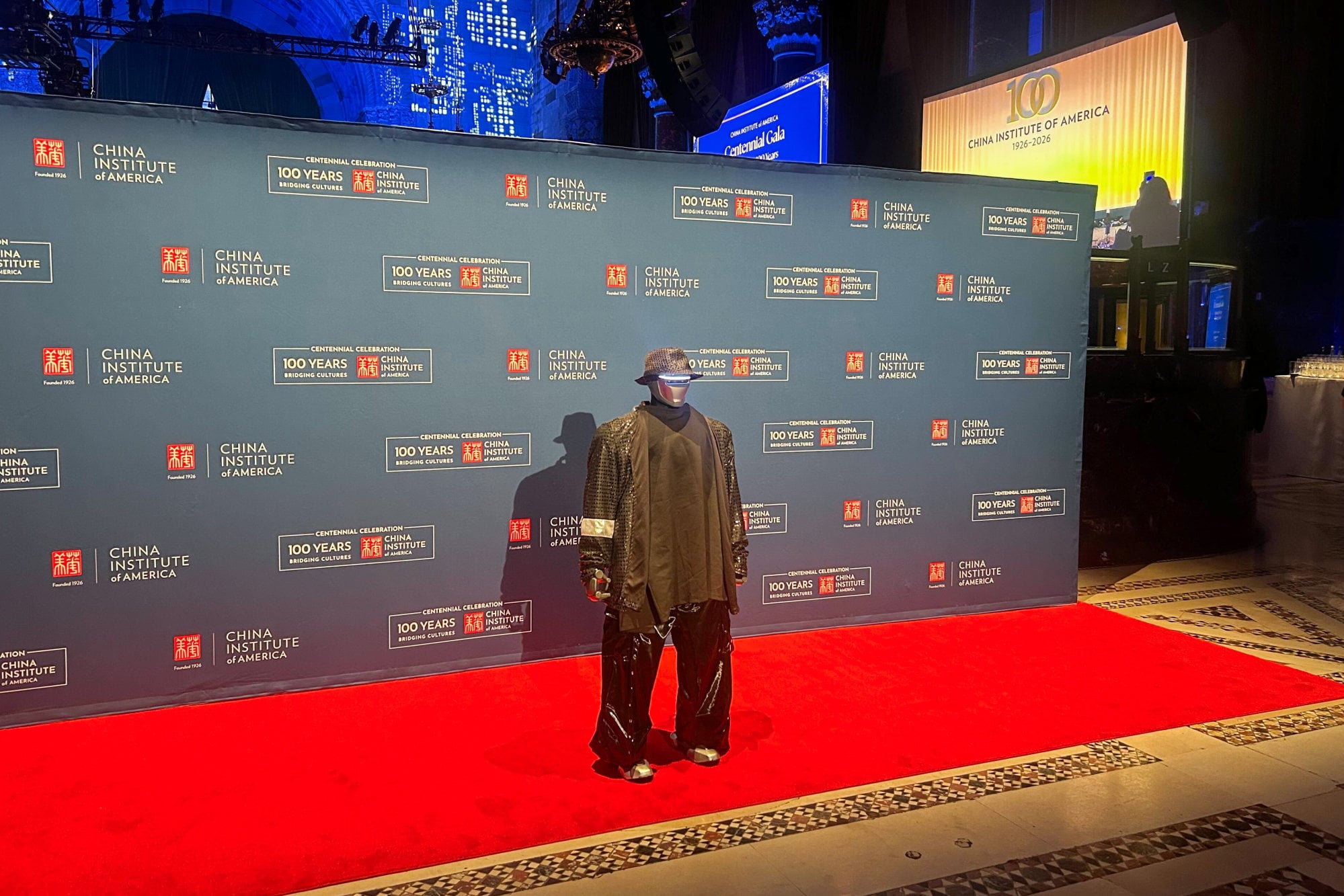
In the midtown ballroom where the ambassador spoke, a robot posed for photos with guests as they mingled, with attendees including Christopher Nixon Cox, grandson of former US president Richard Nixon, Chinese-American actress Joan Chen, television presenter Yue-Sai Kan and fashion designer Vera Wang.
The Nixon, Bush and Rockefeller families were among the honorees at the event, along with the former chief executive of Hong Kong, Tung Chee-hwa, who was represented at the event by his son Andy Tung Lieh-cheung.
“Tonight, our two countries face tensions, new questions, new uncertainty. The work of bridge building has never been finished, and in some seasons it feels harder than ever,” Nixon Cox said in his speech.
The Trump-Xi summit in Beijing wrapped up with few deliverables and no real change on structural issues such as an unbalanced trade relationship, artificial intelligence, semiconductors and tensions around Taiwan.
The US president’s highly anticipated trip to China took place on May 14 and 15 after it was pushed back from March due to the US-Israeli war with Iran. It was the first trip by a US president to Beijing in nine years, following Trump’s 2017 visit in his first term.
There was an appropriate expression of mutual respect when Xi met Trump, Steven C. Rockefeller Jnr said ahead of Thursday’s ceremony.
The outcomes of this year’s summit were vague, with a White House readout touting a newly established bilateral board of trade and another for investment, as well as a commitment from China to buy US agricultural products and 200 Boeing aircraft.
According to David Firestein, president of the George H. W. Bush Foundation for US-China relations, there are some really tough issues on the agenda that were never going to be resolved.
“The two countries simply don’t see them the same way, and that’s a fundamental reality in the relationship,” he said.
Firestein’s biggest takeaway from the summit was that the “tonality shifted in a better direction, a more constructive direction”.
Despite this, Chinese Foreign Minister Wang Yi appeared to take jab at the US during a press conference at the United Nations on Tuesday.
“As we have seen for the recent period of time, the purposes of the UN Charter have been disregarded, the basic norms of international relations have been undermined, and world peace and security are in great jeopardy,” Wang said, without naming the country or Trump directly.
“At this critical juncture, we believe that the Security Council must step forward, and the Security Council must shoulder its responsibilities.”
Wang was in Canadian capital Ottawa on Thursday, having left America without meeting his counterpart, US Secretary of State Marco Rubio, even after the apparent thawing of ties between the two nations following the Beijing summit. -- SOUTH CHINA MORNING POST


