US deployment of the Typhon missile system to southern Japan could directly threaten China’s coastal cities and block crucial naval routes to the Pacific, a Chinese analyst has warned.
The Typhon mid-range missile launcher was expected to be positioned in southwestern Japan next month for joint US-Japan military exercises, Kyodo News reported last week.
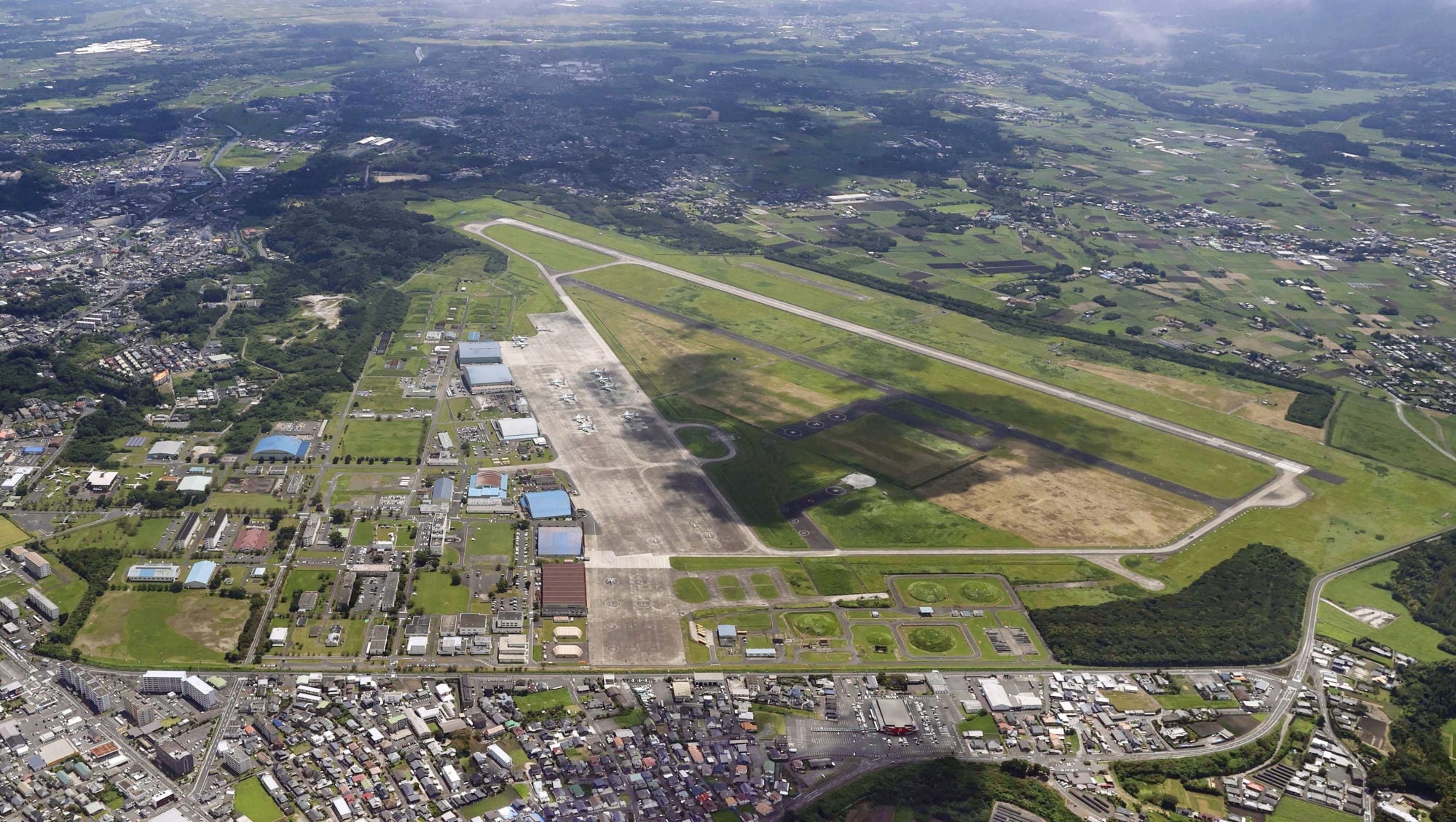
Fu Qianshao, a Beijing-based military analyst, said the reported deployment site – Kanoya Airbase in Kagoshima prefecture – was alarming because of its proximity to mainland China.
“The deployment location is relatively close to the Chinese mainland. If cruise missiles are deployed there with a certain level of launch capability, it will pose a threat to relevant Chinese [land] targets,” Fu said.
Kanoya Airbase – on Kyushu island facing the East China Sea – is closer to China than most other Japanese bases.
Eastern Chinese cities such as Shanghai, as well as areas in Fujian and Zhejiang provinces, fall within the operational range of Tomahawk cruise missiles, which can be launched from the Typhon system and have an estimated range of about 1,600km (994 miles).
The Typhon system is also capable of firing SM-6 interceptor missiles, which have a range exceeding 300km.
Fu said the system could be used to strike naval vessels at sea, with the aim of restricting the Chinese navy from projecting power and breaking out into the western Pacific.
Placing it in Kagoshima meant the system would be capable of helping to blockade the Miyako Strait, a key waterway between Miyako Island and Okinawa Island, he said.
“Clearly, the intention is that in the event of a conflict they could use this approach to strike our land-based targets on one hand, and block vital maritime passages on the other,” Fu said.
The deployment in Japan is likely to further strain already frayed ties between Tokyo and Beijing, which deteriorated over the Taiwan issue last year.
Beijing sees Taiwan as part of China to be reunited by force if necessary. Most countries, including the United States and its ally Japan, do not recognise Taiwan as an independent state, but Washington is opposed to any attempt to take the self-governed island by force and is committed to supplying it with weapons.
The Typhon system was deployed in the northern Philippines in 2024. The move drew sharp criticism from Beijing, which demanded its immediate removal.
This month, the US Army fired a Tomahawk missile from the Typhon launcher during joint exercises with the Philippines, marking the first known live firing of the weapon from the system since its deployment there.
“This missile was previously deployed in the Philippines with the same objective: to blockade relevant straits and prevent our warships from breaking out into the western Pacific,” Fu said.
The US has in recent years strengthened its posture along what it calls the first island chain, a strategic arc stretching from Japan through Taiwan to the Philippines.
Meanwhile, Beijing has also ramped up its Pacific drills in recent years, with the PLA Navy routinely using the Miyako Strait and the Bashi Channel between Taiwan and the Philippines as transit corridors to access the ocean.
Beijing has accused the US of “threatening regional strategic security” with the Japan deployment.
“China urges the US and Japan to listen to the calls of regional countries, correct the erroneous practice, and play a positive role with concrete actions for regional peace and stability,” foreign ministry spokesman Guo Jiakun said on Friday.
The coming deployment would mark the second time the US has positioned the missile system in Japan. It was first staged there last September during large-scale bilateral exercises at the US Marine Corps Air Station Iwakuni in Yamaguchi prefecture. The move drew criticism from both China and Russia.
The Typhon system, along with the High Mobility Artillery Rocket System, will be deployed to the Kanoya Airbase during the Valiant Shield and Orient Shield joint exercises between June and September, Kyodo said, citing sources.
After the exercises, the systems are expected to be moved to a US military base in Japan for storage, according to the Kyodo sources.
Fu noted the Tomahawk’s vulnerabilities, saying its main weakness was a relatively slow subsonic speed, which made it more vulnerable to advanced air-defence systems. The Typhon was also limited in mobility compared with Himars, he added.
“As long as its deployment location is discovered, it is highly likely to become a sitting duck.” -- SOUTH CHINA MORNING POST