BANGKOK: Thai Deputy Prime Minister Sihasak Phuangketkeow told the United Nations Security Council (UNSC) that Thailand has never sought to claim the territory of any country, after Cambodia referred to the Thai-Cambodian situation during a UNSC debate in New York.
Sihasak attended the UNSC open debate on maintaining the purposes and principles of the United Nations Charter and promoting the UN-centred international system under the agenda of maintaining international peace and security on Tuesday (May 26) at UN headquarters in New York.
He attended at the invitation of Wang Yi, China’s foreign minister.
During the session, Sihasak congratulated China on assuming the presidency of the Security Council and said today’s global challenges extended beyond conflict and instability to include declining confidence in the international system centred on the United Nations.
He warned that the idea that “might makes right” and transactional calculations of interests were increasingly replacing established rules and principles.
“In reality, respect for international law and the UN Charter must not become merely rhetoric or tools for pursuing unilateral interests,” he said, adding that trust, confidence and sincerity remained essential for peaceful conflict resolution and sustainable peace.
Thailand proposes three key principles
Sihasak proposed three key approaches that Thailand believes are necessary to preserve the UN-centred international order and multilateralism.
First, he said member states must demonstrate stronger collective responsibility through restraint and adherence to the rules and principles underpinning international peace and security.
While major powers naturally carried greater responsibility because their actions shaped confidence in the system, small and medium-sized countries must also unite to defend the principles of the UN Charter, he said.
“The legitimacy of the international system cannot depend solely on the wishes of powerful nations, but must reflect the confidence of the wider international community,” Sihasak said.
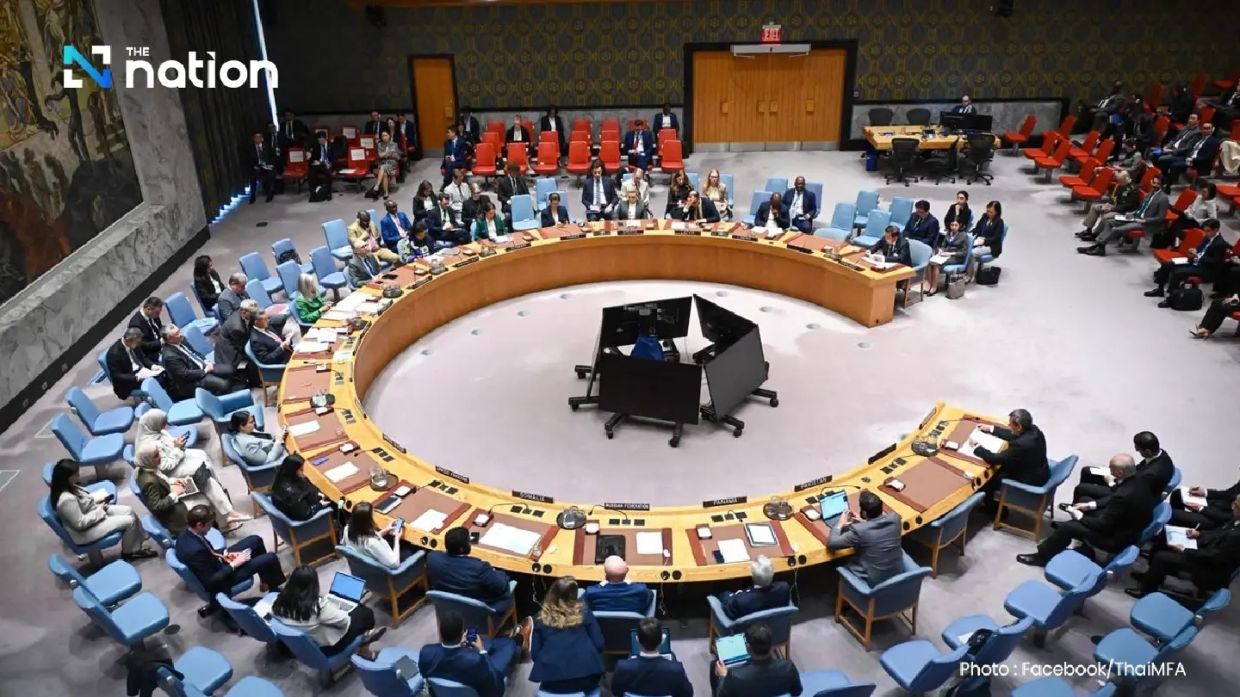
Second, he called for reform and strengthening of multilateral institutions to ensure they remain agile, effective and resilient enough to respond to increasingly complex global challenges.
He said the UNSC should not become a stage for repeating geopolitical divisions, but rather a platform for managing differences before they escalate into confrontation.
Sihasak also urged the five permanent members of the Security Council (P5) to exercise greater responsibility, particularly regarding the use of veto powers in cases involving genocide or mass atrocities, as well as in the process of selecting the next UN secretary-general.
Third, he stressed that strong regionalism and subregional cooperation could reinforce multilateralism.
He added that while the United Nations might not be able to solve every global problem, the world would face far greater danger, division and uncertainty without it.
“We must shape a system where cooperation serves national interests better than confrontation,” he said, calling for renewed confidence in the international system and reforms to keep pace with a changing world.
Thailand responds to Cambodian remarks
Sihasak also addressed Thai-Cambodian relations after Cambodia referred to the issue during the UNSC debate.
He reaffirmed Thailand’s full commitment to the ceasefire agreement between the two countries and said Bangkok was ready to move beyond ceasefire efforts towards sustainable peace.
However, he stressed that lasting peace must be built on trust and sincere cooperation, allowing both countries to open “a new chapter of history” based on respect for international law and the UN Charter.
He also reiterated that Thailand had never sought territorial claims over any country.
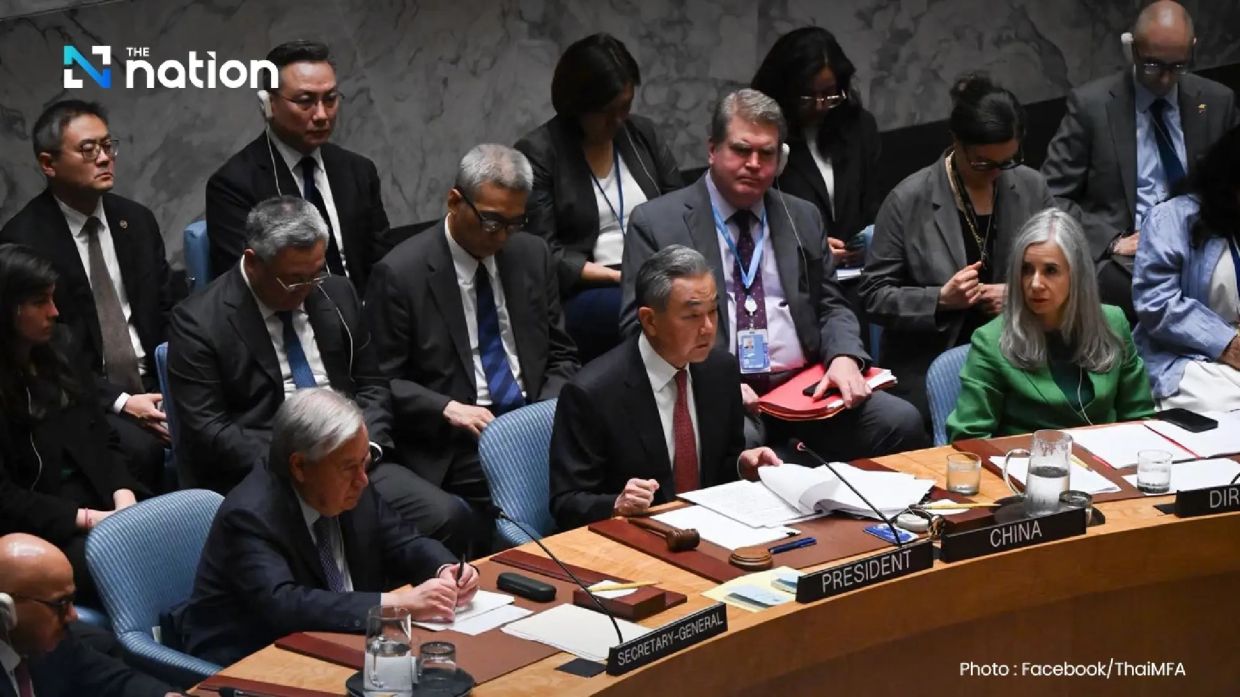
Speaking to reporters after the debate, Sihasak said he had initially not intended to raise the Thai-Cambodian issue because the UNSC was not the appropriate venue for bilateral discussions.
However, Cambodia’s Deputy Prime Minister and Foreign Minister, Prak Sokhonn, had referred to conflict, ceasefire arrangements and territorial matters during the debate.
Sihasak said Thailand therefore had to emphasise that if bilateral relations were to move forward, there must be a ceasefire both on the ground and in rhetoric, including statements made on international platforms.
Thailand wanted not only a ceasefire, but progress towards lasting and stable peace, he said.
He also criticised Cambodia for at times seeking unilateral advantage or diverting attention away from the core issues, describing such behaviour as unconstructive.
“Sustainable ceasefire efforts leading to sustainable peace must come from both sides, with sincerity and genuine intentions. Words and actions must match,” he said.
Thailand urges Cambodia to stop attacks if talks are to progress
Asked whether relations between the two countries had improved, Sihasak said Cambodia understood Thailand’s position clearly because Bangkok had repeatedly stressed that if progress was to be made on issues such as the MOU framework or maritime boundaries under the United Nations Convention on the Law of the Sea (UNCLOS), Cambodia needed to show readiness for constructive engagement.
“If Cambodia wants progress on border issues or maritime matters, it must stop making accusations against Thailand. Otherwise, progress will not be possible,” he said.
Bilateral meetings with US, Costa Rica and China
On the sidelines of the UNSC meeting, Sihasak also held bilateral talks with senior representatives from several countries.
He met Michael George DeSombre to discuss strengthening the longstanding alliance between Thailand and the United States.
The US side congratulated Thailand on the formation of its new government and expressed confidence that a stable administration would create important opportunities to deepen cooperation in all areas, including defence and security.
The two sides also exchanged views on regional developments and international issues of mutual concern, including the Thai-Cambodian border situation.
Sihasak also held talks with Manuel Tovar Rivera, Minister of Foreign Trade of Costa Rica to strengthen bilateral cooperation.
He is also scheduled to visit China’s permanent mission in New York for bilateral discussions with Wang Yi, member of the Political Bureau of the Communist Party of China and Chinese foreign minister, to exchange views on advancing the comprehensive strategic partnership between Thailand and China, as well as discussing regional issues including Myanmar and the Thai-Cambodian border situation. - NationTV