
Hong Kong’s first-time lawmakers have raised fewer questions than their veteran counterparts but recorded a higher attendance rate, a South China Morning Post check has found.
Alan Chan Chung-yee, who is also the chief operating officer of Miramar Group, and athlete turned legislator Vivian Kong Man-wai were among those who submitted the fewest questions to the government.
Political observers attributed the trend to newcomers seeking to balance respect for the executive-led system with their role in providing checks and balances.
The eighth Legislative Council – which began its term in January – held its final general meeting last week before its summer recess, with members currently in Beijing for an unprecedented week-long study trip ending on Saturday.
Latest Legco figures show that lawmakers have submitted a total of 418 questions to the administration since taking office in January. The 40 newcomers averaged four questions each, while the 50 returning lawmakers averaged five.
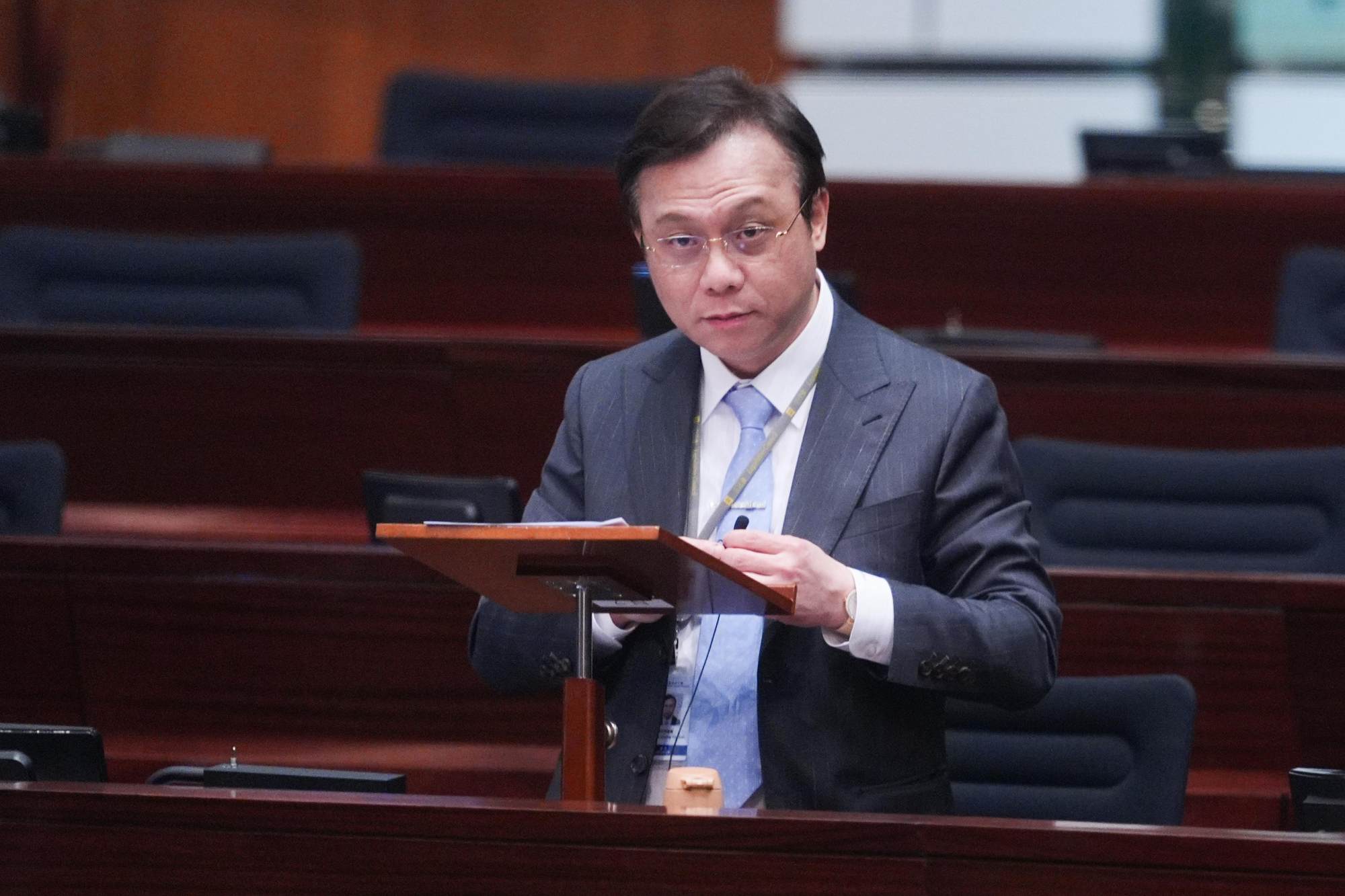
Among the six lawmakers who raised two or fewer questions over the past seven months, five were first-time legislators. These included Chan, who submitted just one question – the lowest overall – on the hotel industry’s reception capacity.
Chan, who represents the Election Committee constituency, said that he had devoted his time to in-depth policy research, stressing that the public should not judge a lawmaker’s performance solely by the number of questions raised.
“I thoroughly study policies from all angles. A few minutes [in an oral question session] would not be enough for me to raise them,” Chan said, adding that he had engaged the public through online platforms. “Why not use a more influential channel to connect with people?”
Chan added that he had directly liaised with government officials on policy matters and referred complaints to them, describing this as a more effective way to resolve problems and serve the public.
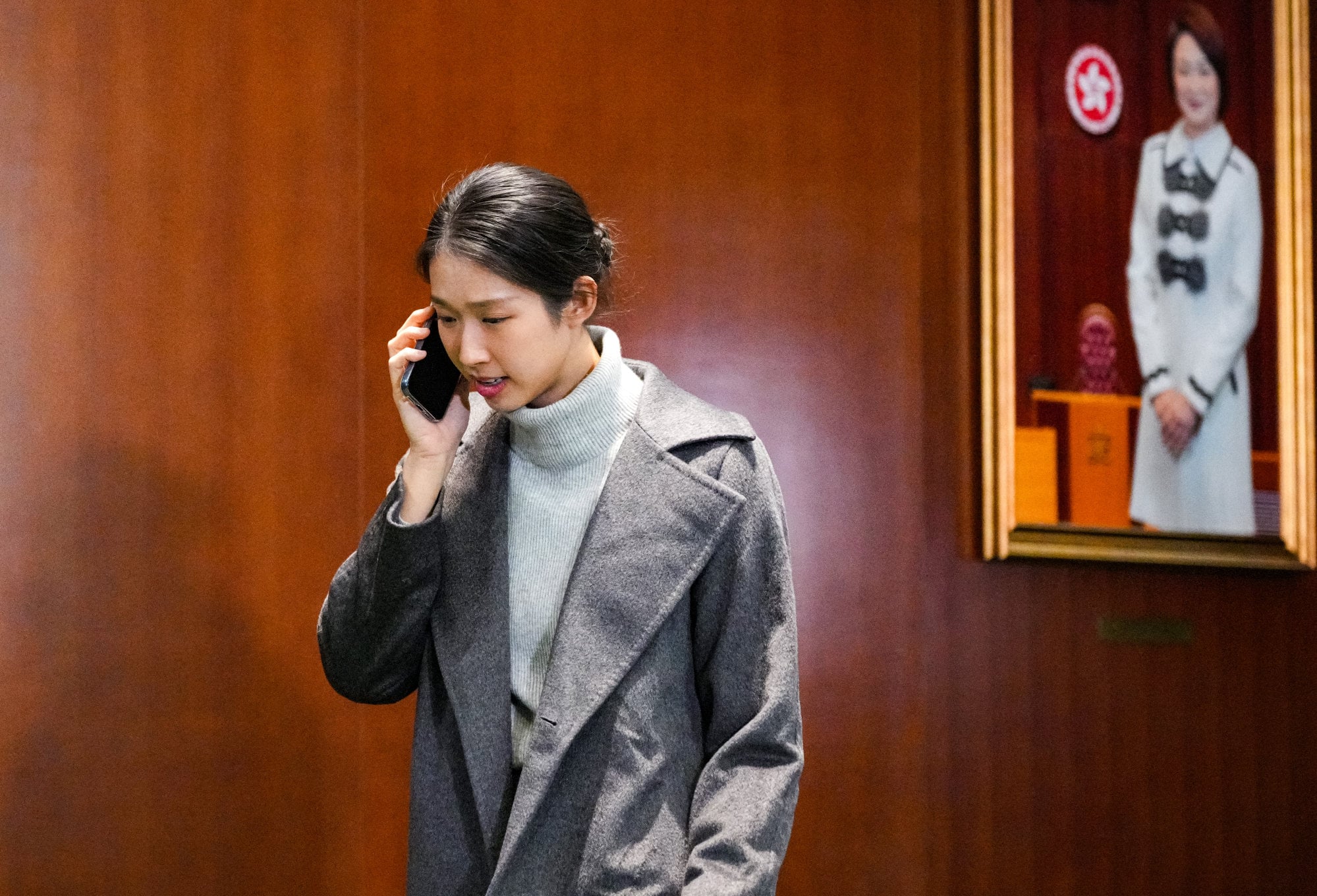
Meanwhile, Olympic fencing gold medallist Vivian Kong, who represents the tourism sector, raised only two questions, focusing on airline fuel surcharges and employment opportunities for elderly and middle-aged people in the tourism industry.
She said she would submit more questions in future, particularly on issues affecting the sector.
“I will continue to listen to the industry’s views, and there are many issues that need to be conveyed,” Kong said. “I have to study and prioritise them; I will raise more and more [questions].”
A maximum of 22 questions can be raised at each Legco meeting on government policies and actions, social issues or specific incidents.
Re-elected lawmakers Kitson Yang Wing-kit and Eric Yim Kong topped the list, with seven questions each.
Another 10 lawmakers raised six questions each, including first-term legislators Mark Chong Ho-fung and Ginny Man Wing-yee.
However, attendance showed the opposite pattern. Nearly 70 per cent of first-term lawmakers achieved full attendance at general meetings, House Committee and Finance Committee meetings, compared with 55 per cent of returning lawmakers.
Michael Ngai Ming-tak, Alex Fan Hoi-kit and Maggie Chan Man-ki were the only three lawmakers with an overall attendance rate below 90 per cent.
Ngai, who attended 78 per cent of meetings, had the lowest attendance rate among all legislators. His absences included a trip to Cambridge University in the United Kingdom to advance bilateral collaboration.
The lawmaker, who also serves as chairman of City University’s council, said he had undertaken several overseas visits to meet foreign officials and forge partnerships with educational institutions.
“Frontline work such as signing cooperation agreements and attending important meetings requires a physical presence, and they inevitably conflict with some meetings,” Ngai said. “However, these engagements help me understand the actual situation during policy formulation, enabling me to put forward more practical and feasible suggestions.”
Ngai stressed that he had attended all general meetings outside of three absences approved by Legco.
Acknowledging public concern regarding lawmakers’ attendance, he said he had adjusted his other public service to actively participate in future meetings.
The code for Legco members, which took effect this year, requires lawmakers to attend meetings proactively. Absences are permitted for valid reasons, such as serious illness or injury, and participation in events organised by Legco, the government or the central authorities.
Lau Siu-kai, a consultant for the semi-official Chinese Association of Hong Kong and Macau Studies think tank, said new lawmakers often needed time to identify the issues they want to focus on.
“I think they are still figuring out how to respect the executive-led system and properly play their role as lawmakers in monitoring the government,” Lau said.
He also said newcomers tend to be more cautious about meeting disciplinary requirements.
“Legco sets out rules on discipline and requires high attendance. New lawmakers are definitely more nervous about this,” Lau said. “They are quite anxious because they have not fully understood the consequences.”
John Burns, an emeritus professor at the University of Hong Kong’s politics and public administration department, cited several recent incidents in which the government publicly rebuked lawmakers for criticism, saying this could deter newcomers from questioning officials.
“If you are a first-time legislator and not quite sure what the new culture is, you would spend most of your time watching to see what is appropriate behaviour.”
But Burns stressed that a credible legislature should not only frequently applaud the authorities but also closely examine their performance.
The SCMP review also found that the media appears to have cooled towards lawmakers from the Election Committee and functional constituencies.
They were mentioned, on average, in 189 and 196 news entries from January to mid-July, respectively, according to the news archive WiseNews. Directly elected lawmakers averaged 298 entries over the same period.
Legco president Starry Lee Wai-king was the most reported lawmaker with 968 entries, followed by veteran lawmaker Ronick Chan Chun-ying with 455 entries.
Mark Chong, who ranked third with 448 entries, received the most media exposure among all first-time lawmakers, who were covered about half as often as returning lawmakers.
By contrast, Julia Lau Man-kwan, Wu Yingpeng, and Ng Wun-kit were the least reported lawmakers, mentioned in only 66, 73, and 74 entries, respectively. All three are first-term members. -- SOUTH CHINA MORNING POST