Hong Kong’s leader will visit Kazakhstan and Uzbekistan early next month to explore and seize new business opportunities, making Central Asia his latest area of focus, with the largest delegation to date travelling with him.
After several years of promoting the city in the Middle East and Southeast Asia amid geopolitical uncertainties, Chief Executive John Lee Ka-chiu said on Tuesday that he was turning his attention to Central Asia.
The delegation he will lead to the two key countries under Beijing’s Belt and Road Initiative – China’s plan to grow global trade – will be the largest of his administration so far.
More than 30 Hong Kong business leaders from sectors ranging from logistics to innovation and technology will join Lee, alongside about 30 entrepreneurs from 10 provinces, cities and autonomous regions in mainland China. The mainland representatives cover industries such as energy, mining, high-end manufacturing and carmaking.
The Hong Kong side will include senior officials and representatives from the Airport Authority, MTR Corporation and local universities, the South China Morning Post has learned.
“The Central Asian region is actively pursuing economic diversification,” Lee said, citing strong growth in areas such as finance, trade, infrastructure, tourism and green development. “There is significant room for collaboration with Hong Kong.”
Lee added that he would meet senior officials from both countries to establish a government-to-government communication mechanism, promote the city’s advantages, build new business networks and explore fresh opportunities.
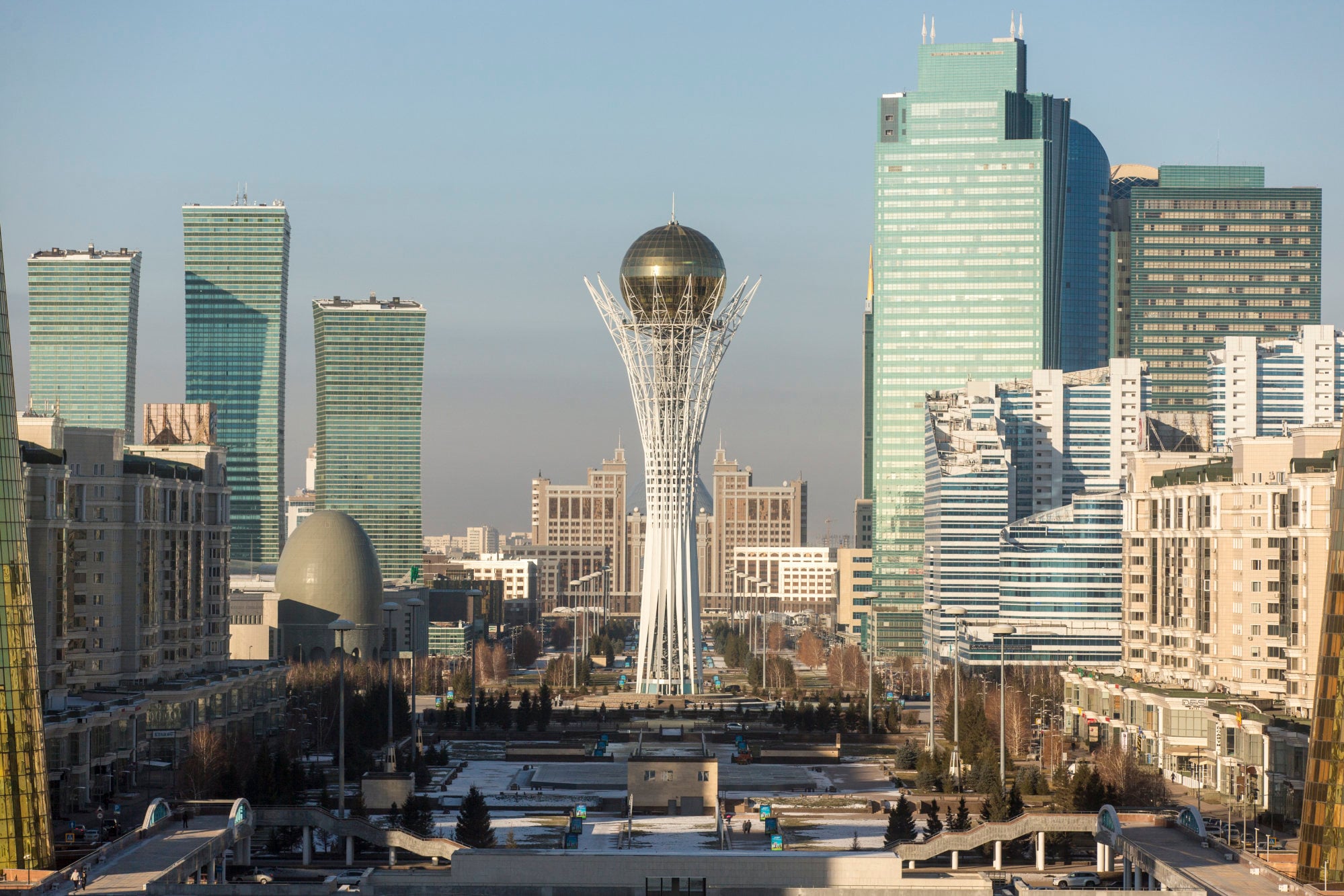
An insider familiar with arrangements for the trip said infrastructure, hospitality and education would be among the key sectors for potential collaboration between Hong Kong and Kazakhstan’s two largest cities, Astana and Almaty.
Citing tertiary education as an example, the source said that, given the government’s efforts to promote its scholarships to attract bright students from belt and road countries, new agreements could emerge between Hong Kong and Central Asian universities to strengthen exchanges.
Lee described the two countries as large markets in Central Asia with rich natural resources, sustained and robust economic growth and huge development potential.
Kazakhstan, a key belt and road partner, is Central Asia’s largest economy and an emerging financial hub, with gross domestic product (GDP) reaching US$302.7 billion last year.
Lee said the country – also a critical logistics and business hub linking Europe and China – was currently Hong Kong’s largest trading partner and export market in Central Asia.
Uzbekistan, located at the heart of the region, has the largest population among the five Central Asian countries and a border that connects them all.
The country recently signed 15 bilateral agreements with Hong Kong covering areas such as infrastructure, healthcare and metal production during a visit to the city by Prime Minister Abdulla Nigmatovich Aripov.
Lee said he would visit Central Asia with three objectives.
The first was to explore more emerging markets and lay down the foundation for long-term trade, enabling local companies to explore new opportunities while attracting Central Asian firms to develop their businesses through Hong Kong.
The second objective was to enhance government-to-government communications and foster more exchanges between the city and Central Asia.
The third was to create what he called a “hub-to-hub model” with Kazakhstan and Uzbekistan.
“Kazakhstan and Uzbekistan are two huge countries in Central Asia and the gateway for foreign capital to enter the region’s markets, while Hong Kong is a channel for foreign companies to enter East Asia and Southeast Asia,” he said.
“By establishing a new hub-to-hub collaboration model, we can create a new channel in bridging Central Asia, East Asia and Southeast Asia. This will be favourable to the development of Hong Kong’s trade and service industries and create more job and value-added opportunities.”
Bruce Pang Ming, director of research at the Trade Development Council, said there were new opportunities for Hong Kong to collaborate with the Central Asian countries, which had been undergoing structural reforms and economic diversification.
These countries, with their youthful demographics and sustained economic growth, would help ensure long-term market vitality, he added.
He said Hong Kong logistics companies could help boost the capacity of these Central Asian nations, which were seeking better integration into global markets, and stronger industrial and manufacturing capabilities to unlock new export opportunities.
Currently, the TDC has a consulting office in Kazakhstan. A council source said it could be upgraded to an overseas office if the coming trip proved fruitful and further assessments indicated promising prospects.
He said the council was well aware that trade in oil‑rich Kazakhstan, Central Asia’s most advanced economy, had become significantly more vibrant following the Russia-Ukraine war, with the country emerging as a key hub for goods flowing to Russia.
Lee has led efforts to explore emerging markets in recent years amid geopolitical tensions.
Avoiding destinations in the United States, which has sanctioned him, and Europe, Lee has made three trips to Southeast Asia since taking office in 2022, covering seven of the 11 Asean members.
He has also led two delegations to the Middle East, visiting the United Arab Emirates and Saudi Arabia in 2023, followed by Qatar and Kuwait last year.
Lee included representatives of mainland enterprises in his delegation for the first time last year in a bid to leverage the city’s role as a “superconnector” to help such companies enter Middle Eastern markets.
Hong Kong authorities subsequently established the GoGlobal Task Force in October, which offers one-stop tailor-made professional services to mainland enterprises seeking to expand overseas. -- SOUTH CHINA MORNING POST