BANGKOK: The deadly train-bus collision near the Airport Rail Link’s Makkasan station has renewed warnings that motorists must never enter a railway crossing unless they are sure there is enough space to clear the tracks completely.
The warning comes after a freight train hit a public bus at a railway crossing on Asok-Din Daeng Road on Saturday (May 16) killing at least eight people and injuring dozens.
Reuters reported that the crash involved a freight train carrying containers and a public bus near Makkasan, with all fatalities occurring on the bus.
Traffic jam turned crossing into danger zone
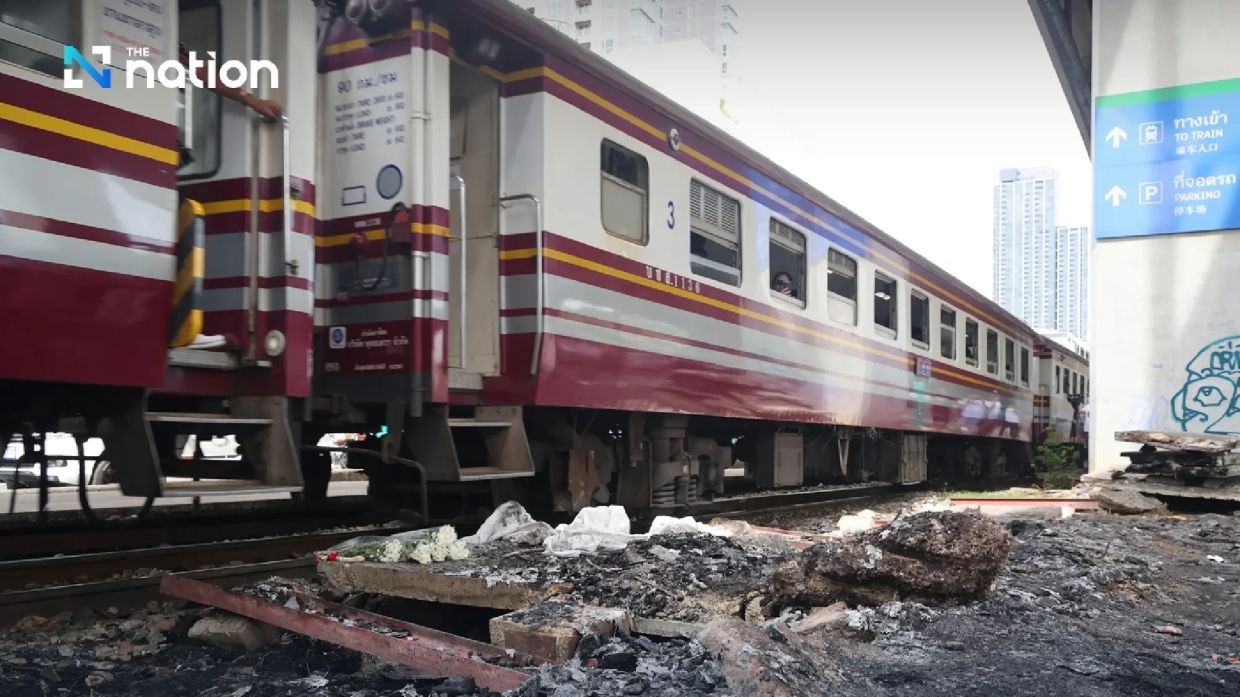
Preliminary reports indicated that the bus had stopped on the tracks at a red light, preventing the crossing barriers from closing fully, while the container train was unable to stop in time, Deputy Transport Minister Siripong Angkasakulkiat said.
A witness said the bus was stuck because traffic ahead was also blocked, underscoring the key safety rule at railway crossings: drivers should stop before the tracks, not on them.
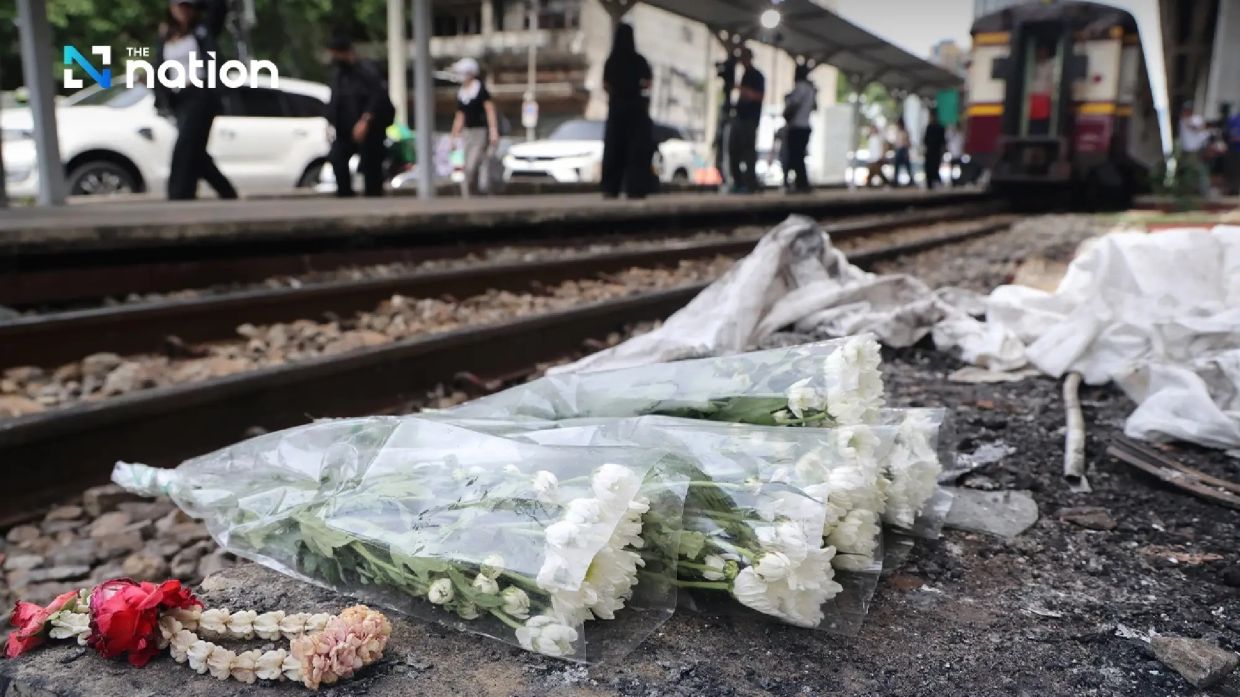
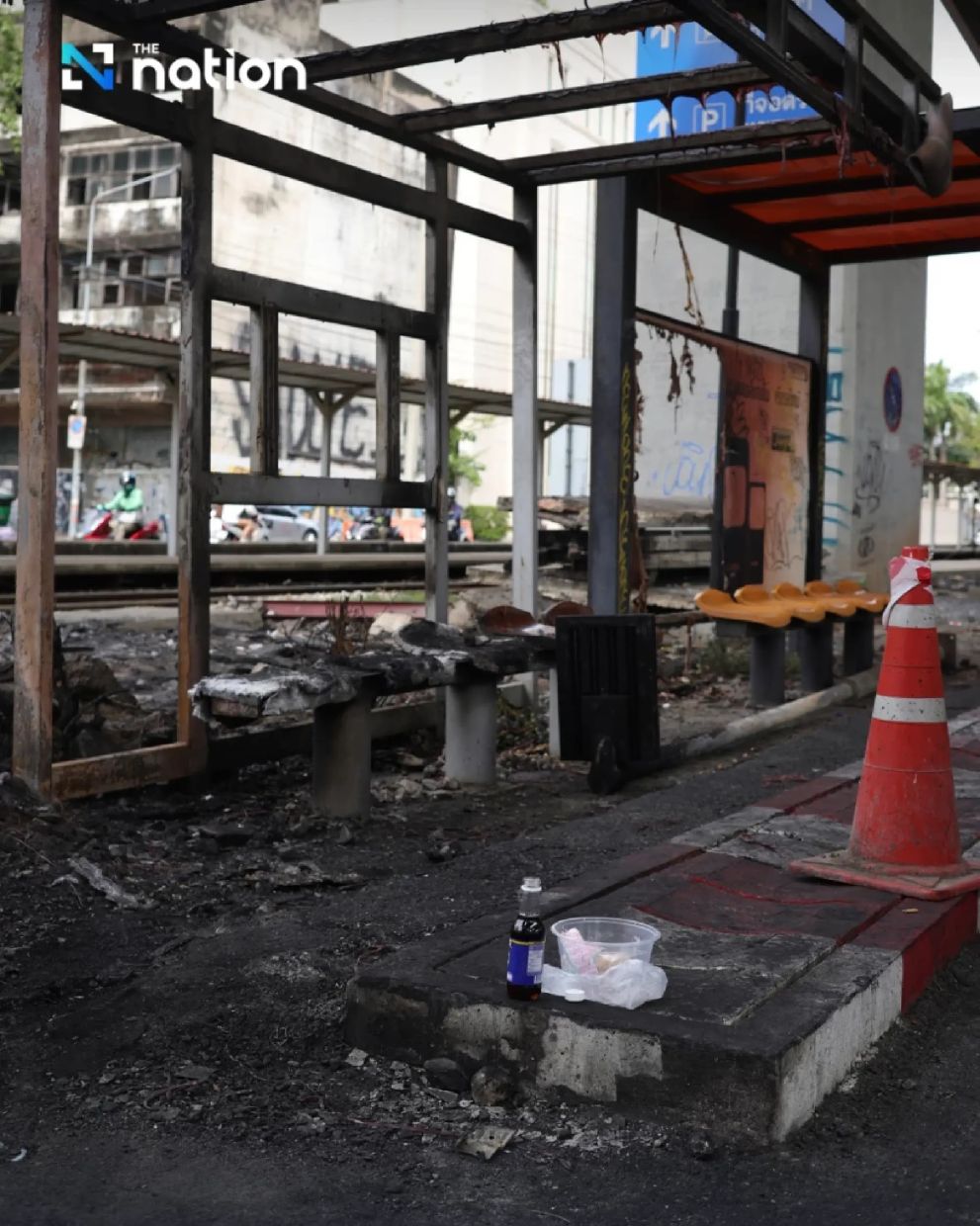
Footage and reports showed the impact dragged the bus and nearby vehicles along the tracks before fire broke out, damaging cars and motorcycles in the area.
Law requires drivers to stop before the tracks
Under the Land Traffic Act, drivers must stop at least five metres from railway tracks when warning signs or signals indicate an approaching train, when barriers are closed, or when the sound of an approaching train is heard. At crossings without barriers or warning signals, drivers must also stop at least five metres away and proceed only when it is safe.
Road-safety reminders also advise drivers not to overtake within 30 metres of a railway crossing, not to tailgate vehicles onto the tracks during congestion, and to leave enough space ahead before crossing.
Drivers are also urged to observe railway warning signs carefully. A train-symbol sign indicates a crossing without barriers, while a fence-symbol sign indicates a crossing with barriers or staff control.
Major train-bus crashes show repeated risks
Although Thailand has no single official tally specifically separating all train-bus or train-public bus collisions, major incidents that drew national attention show how dangerous level crossings can be.
On May 16, 2026, the Makkasan railway crossing crash on Asok-Din Daeng Road involved a freight train and an air-conditioned public bus. Initial reports said eight people were killed and more than 25 injured, while Reuters later reported 32 injuries.
On October 11, 2020, a freight train hit a bus carrying Buddhist pilgrims near Khlong Kwaeng Klan railway station in Chachoengsao. Authorities said the crossing had an alarm but no barrier, and the crash killed at least 20 people and injured dozens.
On April 3, 2016, a train collided with a double-decker bus at a railway crossing near Ngiu Rai in Nakhon Pathom. Three people were killed and many others were injured.
In 2009, a train hit a school transport vehicle at a level crossing in Buriram, killing and injuring students, according to a summary of major train-public transport accidents.
Bangkok still has several level crossings
Data cited from the Department of Rail Transport’s railway crossing database indicates that Bangkok has around 15 to 20 active level crossings, mainly along the Eastern and Southern railway lines.
Key crossings include Kamphaeng Phet 7 Road near Yommarat intersection, Phet Uthai Road in the Asok-Phetchaburi area, Chan Road, Thoet Thai Road, Soi Soonvijai, Srinakarin Road around Hua Mak, and Phatthanakan Road.
The Department of Rail Transport says its DRT Crossing database is designed to support efforts to solve accidents at road-rail intersections by collecting information on crossing locations, physical conditions, road signs, barriers and accident data.
Some level crossings are being improved or removed and replaced with grade-separated routes such as overpasses or underpasses under double-track railway projects, with the aim of improving safety and reducing congestion.
Stop before the tracks, not on them
Safety experts and transport authorities repeatedly stress that railway crossing accidents are preventable if road users obey warning signals and avoid taking chances against approaching trains.
The key message for drivers is simple: do not follow the vehicle in front onto the tracks during a traffic jam. Wait until there is enough space on the other side, then cross in one movement. A few minutes of waiting is safer than being trapped on the rails.
Chinese Embassy offers condolences
The Chinese Embassy in Thailand said in a statement that a train collided with a bus in Bangkok on Saturday causing a fire and serious loss of life and property.
The Chinese Embassy in Thailand expressed deep condolences over the deaths and sincere concern for the families of the deceased and of those injured, and wished those injured a swift recovery. - The Nation/ANN