VIENTIANE: Laos is seeking continued international funding support to sustain its malaria elimination efforts after achieving significant progress in reducing infections nationwide, health officials said during a national consultation meeting held in Vientiane.
The meeting, organised by the Secretariat of the Country Coordinating Mechanism (CCM) together with the Centre for Malariology, Parasitology and Entomology and supported by UNOPS, focused on preparing a draft funding proposal for the new round of the Regional Artemisinin-resistance Initiative malaria elimination grant (RAI5E) for the 2027–2029 cycle.
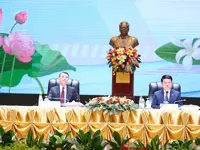
Speaking at the meeting on May 13 at the Lao Plaza Hotel, Deputy Minister of Health and CCM Chair Dr Phayvanh Keopaseuth highlighted the country’s achievements in dramatically reducing malaria cases over recent years.
Malaria infections in Laos dropped sharply from nearly 4,000 cases in 2021 to just 269 cases in 2025, indicating that the Plasmodium falciparum (Pf) strain of malaria is close to being completely eliminated in the country.
The progress reflects years of coordinated efforts by the government, development partners, international organisations and local communities to strengthen malaria prevention, surveillance and treatment services across the country.
Despite the progress, health authorities warned that several challenges remain, particularly in reaching mobile populations and forest workers who remain vulnerable to malaria transmission.
Officials also expressed concern over the declining trend in RAI5E funding support, which could affect ongoing elimination activities.
Health authorities stressed the importance of integrating malaria prevention and treatment activities into the primary healthcare system to prevent the disease from re-emerging in the future.
The consultation meeting brought together senior government officials, representatives of international organisations, development partners and civil society organisations to discuss priorities for the next funding cycle.
Discussions focused on identifying practical needs from the field and prioritising interventions based on findings from the Malaria Programme Review 2025 and the National Strategic Plan 2026–2030.
Officials said the consultation process was aimed at ensuring the funding request, which is due to be submitted in June, reflects broad participation and consensus among all stakeholders while making the most effective use of available resources.
At the close of the meeting, Dr Phayvanh expressed confidence that Laos could achieve its target of becoming malaria-free by 2030 through strong cooperation and shared ownership among all stakeholders.
“I am confident that with the ownership of all of you, we will certainly be able to achieve the goal of a malaria-free the Lao PDR by 2030,” he said.
As Laos moves closer to malaria-free certification, cooperation with Cambodia, Thailand and Vietnam will continue to play a vital role in preventing cross-border transmission and sustaining elimination gains, the World Health Organisation (WHO) said.
Under WHO certification requirements, countries must maintain three consecutive years of zero indigenous malaria cases before being declared malaria-free. - Vientiane Times/ANN