Over 70 Democrats on Tuesday urged US President Donald Trump to keep Chinese carmakers out of America, warning of “irreversible” consequences, just weeks ahead of his high-stakes trip to Beijing to meet with China’s President Xi Jinping.
“We must not cede the American auto industry to a strategic competitor intent on global dominance,” a letter, signed by 73 House Democrats led by US Representative Debbie Dingell, said. “The consequences for American workers, our supply chains, our national security, and our communities would be profound and irreversible.”
Trump will head to China for a summit with his Chinese counterpart, Xi, on May 14 and 15, which had been postponed from late March after the US and Israel went to war with Iran.
Ahead of the trip, Democrats warned that “any effort to lower barriers for Chinese automobiles or otherwise facilitate their entry into the US market would pose a direct threat to American manufacturing, workers, and national security,” adding that it was a firm and non-negotiable priority.
Among the letter’s signatories was Ro Khanna, the top Democrat on the House Select Committee on the Communist Party.
Trump has expressed openness to Chinese carmakers entering the US since returning to office, as long as they build their factories in America and hire local workers.
“If they want to come in, and build the plant, and hire you and hire your friends and your neighbours, that’s great,” Trump said in January at the Detroit Economic Club.
“I love that. Let China come in. Let Japan come in. They are, and they’ll be building plants, but they’re using our labour.”
Tuesday’s letter signalled concerns that the Chinese auto industry does not compete on a level playing field with the US, claiming “it is driven by a state-directed strategy to dominate global markets through government subsidies, below-market financing, and non-market behaviour across the supply chain.”
US lawmakers against any deal with Chinese car industry
John Helveston, an engineering professor at George Washington University, said the lawmakers appeared opposed to any form of deal. He called this an “unfortunate position” to take, given challenges in the domestic market, citing an affordability and innovation crisis in the US auto market.
“There are a number of different deals that could be struck that could be quite beneficial to the US, even while mitigating risks, but it appears that the lawmakers who signed onto this letter are opposed to all of them,” he added.
Potential deals could include American carmakers licensing Chinese technology or forming joint ventures with Chinese firms, Helveston said, adding that security concerns could be mitigated if handled carefully.
He noted that Tesla managed to secure the manufacturing and sale of its vehicles in China, and that this could be reversed for Chinese firms seeking to enter the US market.
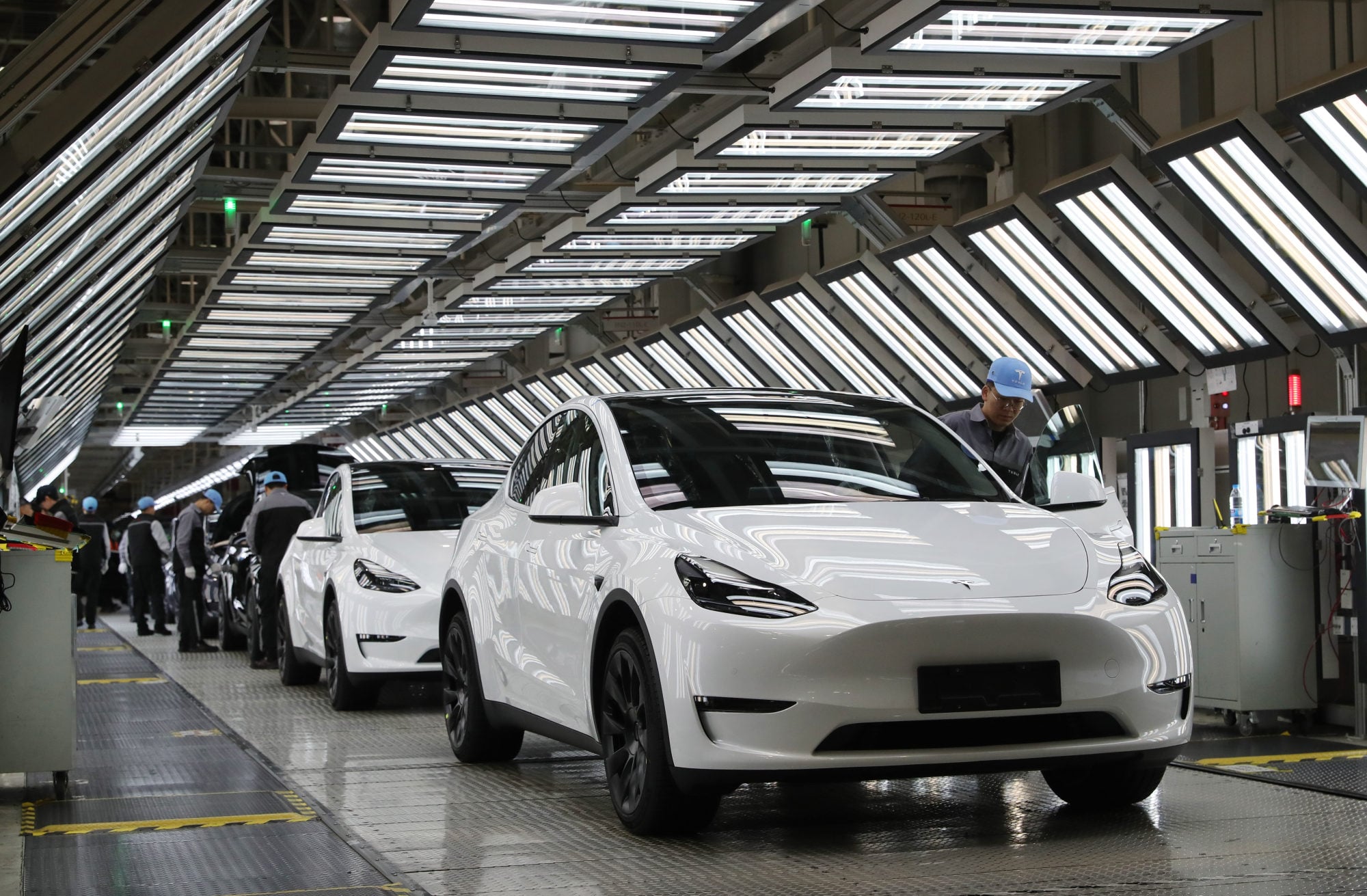
Tesla’s China Gigafactory in Shanghai, which opened in 2019, was unique at the time because it was not part of a joint venture with a Chinese company, making it the first wholly foreign-owned car plant in China.
The issue has historically been bipartisan, even though only Democrats signed the letter, with Republicans previously expressing concerns about Chinese carmakers entering the US market.
“If I had to bet on a vote in Congress over issues related to this, I would expect a near-unanimous vote in favour of the position proposed in this letter,” Helveston said.
Trump is highly unpredictable and expects complete loyalty, added David Hart of the Council on Foreign Relations. “I imagine Republicans don’t want to regret being out front and then be on the wrong side of the White House,” he said.
Elsewhere in the letter, lawmakers raised concerns about “China’s efforts to circumvent US trade protections” by routing vehicles through Canada and Mexico.
Canada, China hit reset button on relations with tariff agreement
Beijing and Ottawa reached a trade deal in January, slashing tariffs on Chinese electric vehicles, boosting China’s global expansion and allowing the vehicles onto Canadian roads.
Canada previously had an additional 100 per cent tariff on Chinese-made EVs, imposed in 2024, following a similar move from the US.
The new trade deal has an import volume cap, allowing 49,000 Chinese-made EVs into the Canadian market with a preferential tariff rate of 6.1 per cent.
Any US-China deal would likely raise concern, said Hart, explaining that the recent Canadian deal explicitly involved small volumes but was perceived as a major opening. “Any entry will be considered a breach of the protectionist dyke.”
According to Helveston, Canada has recognised the superiority of Chinese EVs in both technology and affordability, and American consumers will soon become more aware of this reality as they get closer to the US market.
“Of course, US carmakers are going to be concerned with Chinese EVs being on their doorsteps in both Canada and Mexico,” he added.
The concerns are not confined to Canada. Chinese vehicle imports to Mexico have surged in recent years, making the country one of the largest import markets for Chinese-made vehicles in 2025.
“These developments raise serious concerns that Chinese automobiles could establish a foothold in Canada and seek to move into the United States market,” the signatories stated, adding that “these trends create a clear and urgent risk that Chinese carmakers are looking to use Canada and Mexico as a back door into the United States under the United States-Mexico-Canada Agreement (USMCA).”
The USMCA is a trade pact between the US, Canada and Mexico that replaced Nafta in 2020. In January, Mexico slapped tariffs of up to 50 per cent on over 1,400 products from Asian countries, a move seen as aimed at curbing Chinese imports. -- SOUTH CHINA MORNING POST