Half of Taiwanese not only doubt the US would send troops to defend Taiwan in the event of a cross-strait conflict but also question whether American weapons would prove effective, a poll this week has revealed.
The results highlighted mounting scepticism on the island over Washington’s security guarantees, according to the survey released on Monday by the Taipei-based Democracy Foundation.
The poll found that 57 per cent of respondents did not believe the US would send troops to defend the island if war broke out in the Taiwan Strait – and thereby risk direct conflict with mainland China.
Less than a quarter said they believed Washington would help militarily.
Asked if US forces could provide timely and effective military assistance in a crisis, 55.6 per cent said no – versus 31.5 per cent who believed they could.
Confidence in US-made weapons was equally low: 49 per cent lacked faith in their defensive power, while just over a third expressed confidence.
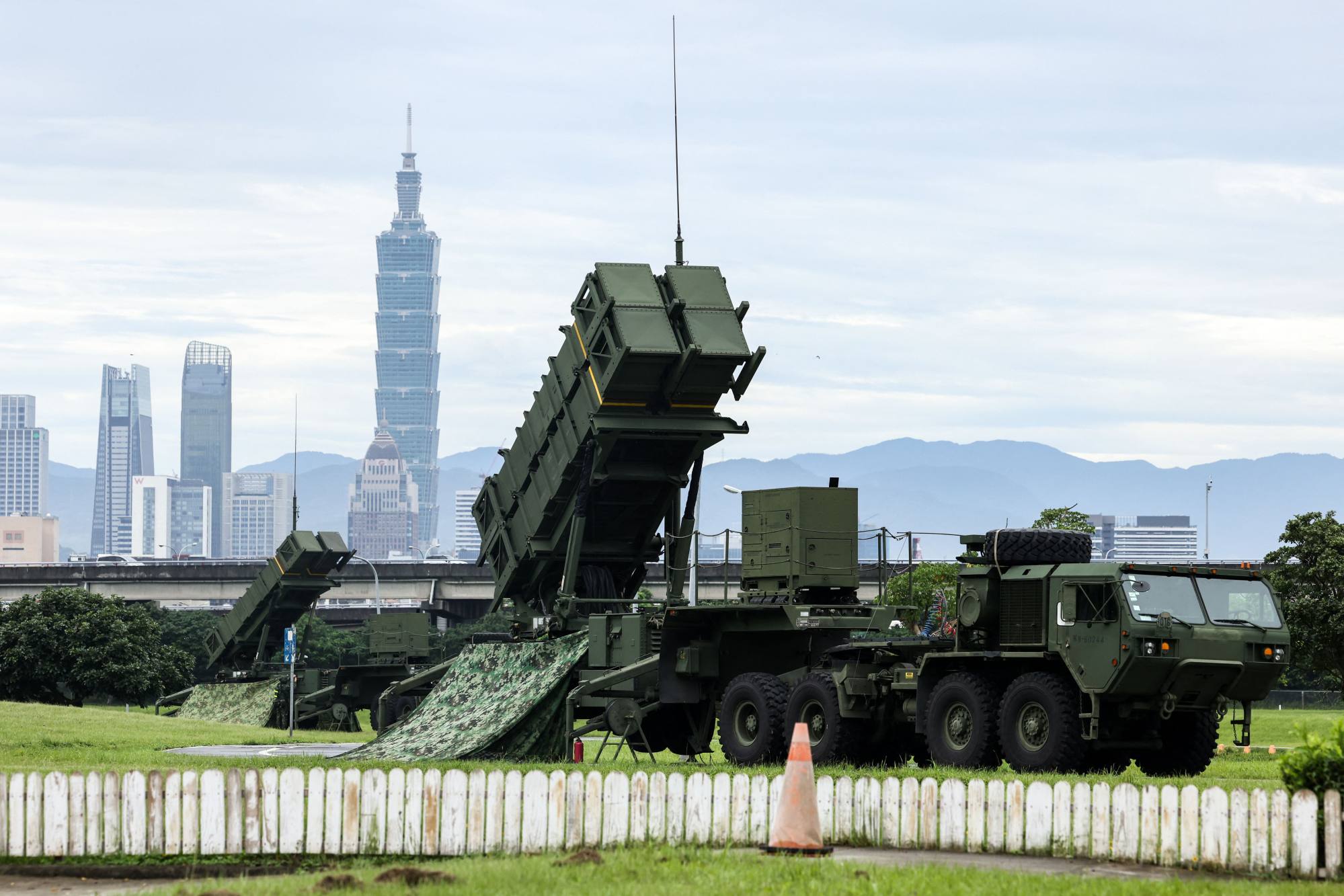
In the face of Beijing’s ever-growing military strength, 57.6 per cent agreed that Taiwan could not truly protect itself by relying solely on buying weapons from the US, while 29.2 per cent disagreed.
Meanwhile, 66 per cent said it would be dangerous for the island to depend entirely on Washington’s protection if US production shortages delayed deliveries, 22.3 per cent did not think so.
The findings come amid renewed debate in Taiwan over US reliability under President Donald Trump, whose transactional approach to alliances and reported willingness to link Taiwan issues to broader dealings with Chinese leader Xi Jinping have fuelled concern in some quarters.
Chang Chun-kai, a researcher at the Democracy Foundation, said Taiwanese perceptions had shifted after a series of conflicts, including the continuing Ukraine war, last year’s India-Pakistan armed conflict and recent US-Israeli military operations against Iran.
“These events have changed how people view US military power, the strength of the People’s Liberation Army and the risks facing Taiwan,” he said.
Chang asserted that many Taiwanese increasingly believed the US now lacked the capacity to sustain strategic operations in multiple major theatres at once.
“When a country cannot simultaneously handle the Middle East and the Taiwan Strait, people begin to question how much practical support it can really provide,” he added.
The poll also suggested a more pragmatic public mood on cross-strait relations, with many respondents favouring dialogue over confrontation.
When asked whether Taiwan proactively achieving peace through political negotiations would amount to surrender, only 17.6 per cent agreed. By contrast, 57.4 per cent described such an approach as “survival wisdom” to protect lives and property.
Asked what course for Taiwan’s future would be most reassuring, nearly half chose proactive negotiations with mainland China to avoid war, compared with about 28 per cent who preferred continuing to trust the US and buying more weapons.
However, respondents stopped short of endorsing cross-strait reunification as the only solution.
Some 57.4 per cent disagreed with the statement that Taiwan proactively facing “one China” and negotiating “reunification” was the only real way to avoid war, while 29 per cent agreed.
Analysts said this reflected a distinction in public thinking: support for dialogue and de-escalation did not necessarily translate into backing for a final-status settlement on Beijing’s terms.
Beijing sees Taiwan as part of China and has never renounced the use of force to reunite it with the mainland. Most countries, including the US, do not recognise Taiwan as an independent state, but Washington is opposed to any attempt to take the self-ruled island by force and is committed to supplying it with weapons.
Foundation chairman Kuei Hung-cheng said wording was important, explaining that many respondents might believe there were multiple ways to preserve peace, including maintaining the status quo, rather than reunification talks alone.
He also pointed to the National Unification Guidelines issued by Taiwan in 1991, during the leadership of Lee Teng-hui, as evidence that discussion of reunification should not be treated as taboo in Taiwan’s political system.
Weng Hsiao-ling, a lawmaker of the Kuomintang – Taiwan’s main opposition party – said the survey showed Taiwanese society was moving from a mindset of “value confrontation” to one of “risk management”.
“The public understands that the United States will act according to its own interests and may not necessarily protect Taiwan,” she said.
Chou Yang-shan, an adjunct professor at National Quemoy University, said recent wars and KMT chairwoman Cheng Li-wun’s visit to mainland China this month had helped shift the atmosphere across the strait.
He was referring to the wars in Ukraine, Iran and Gaza.
Chou said the results indicated a growing desire in Taiwan to regain initiative over its own future rather than leaving decisions to Beijing and Washington.
The poll comes as Taiwan faces intensifying military pressure from the PLA, including regular drills around the island.
Meanwhile, local politics remains sharply divided between those who prioritise deterrence through closer US ties and those advocating reduced tensions through renewed engagement with Beijing.
Observers pointed out that, for now, the survey suggested many Taiwanese wanted both security and peace, yet harboured deeper doubts that either could be delivered by weapons purchases alone. -- SOUTH CHINA MORNING POST