




The Hong Kong government plans to launch a public consultation this quarter on its first five-year blueprint aligned with national development, aiming to gather views on which policies to focus on in the coming years.
Chief Executive John Lee Ka-chiu said on Tuesday that the five-year plan would cover areas such as the economy, investment, industry development, land, housing, transport and infrastructure, employment, healthcare, education and welfare, bringing numerous benefits including abundant development opportunities and enhanced competitiveness.
“The five-year plan is of significant importance to Hong Kong’s economic and social development. It affects residents and all sectors of society, as well as overall well-being. I hope the public will take part,” he said.
“The government’s preparatory work is in full swing, with plans to publish a public consultation paper within this quarter to gather views and help finalise Hong Kong’s first five-year plan to be published this year.”
Lee described the five-year plan as a “prescient, strategic and executable direction document” that would integrate an efficient market with a capable government and provide direction for the city’s future development.
He stressed that the government would ensure measures outlined in each annual policy address and budget align with the five-year plan.
He highlighted several benefits of the plan, including consolidating international roles and accelerating development, in line with China’s 15th five-year plan, which outlines the country’s economic and social development targets for 2026 to 2030.
Under the national plan, Hong Kong has been commissioned to build a commodity trading ecosystem, a high-quality supply chain service centre and a global hub for high-end talent.
Beijing also reiterated its support for Hong Kong to act as an international centre for finance, shipping, trade, aviation and innovation and technology, in addition to the city strengthening its functions as a global offshore renminbi business hub.
The national plan also calls on the government to accelerate the development of the Northern Metropolis, a megaproject that will transform 30,000 hectares (74,131 acres) of land near the city’s border with mainland China into an economic powerhouse and housing hub.
Lee said on Tuesday that the local five-year plan would bring more opportunities to Hong Kong, including business potential from the mainland’s economy and vast domestic market, the sharing of technological achievements, and prospects arising from the Greater Bay Area and the Belt and Road Initiative.
The bay area refers to Beijing’s plan to turn Hong Kong, Macau and nine neighbouring Guangdong cities into an integrated economic and business hub, while the Belt and Road Initiative is a scheme by China to enhance trade and economic integration across Asia, Europe and Africa.
Lee added that the plan would also step up Hong Kong’s game, with a focus on nurturing talent, applying innovation and technology in the market, and promoting industry development.
The plan would also promote the city’s integration into and contribution to national development, while supporting the successful implementation of the “one country, two systems” principle.
“Hong Kong can leverage the unique advantages arising from both national and international opportunities, strengthen its role as a bridge between the mainland and the world, and promote high-quality development, allowing residents to share the fruits of progress,” he said.
Directions, strategies and targets outlined in the five-year plan could help build consensus on future development and promote social harmony, he added.
Lee said the plan would mobilise social forces to use resources more effectively and accelerate development, enabling residents to seize opportunities and businesses to formulate market strategies.
Noting that mainland authorities typically took 18 months to two years to prepare China’s five-year plan, Lee said Hong Kong was on a tight schedule with a substantial workload.
While all bureaus had begun thematic studies, he said the government’s collaborative mechanism with the Legislative Council would help gather public opinion.
The government earlier set up the mechanism with the legislature to craft the city’s own plan, where the Constitutional and Mainland Affairs Bureau and relevant Legco panels would form joint platforms to research and discuss certain topics to gather opinions.
Legco president Starry Lee Wai-king and two chief coordinators in the legislature said in a statement that lawmakers would fully support the government’s work on the five-year plan.
Underscoring the legislature’s role as the most important platform for gathering public views and a key member of the city’s governance team, they said lawmakers had formed multiple groups to conduct the necessary research.
“Lawmakers will proactively reach out to different sectors in society and invite experts, industry representatives, civil groups, among other stakeholders, to participate. Lawmakers will gather consensus, offer recommendations and serve as a robust partner for the government,” the statement said.
The statement added that legislators would continue to visit the Northern Metropolis, after the two visits in the past month, to understand the latest situation and offer precise recommendations.
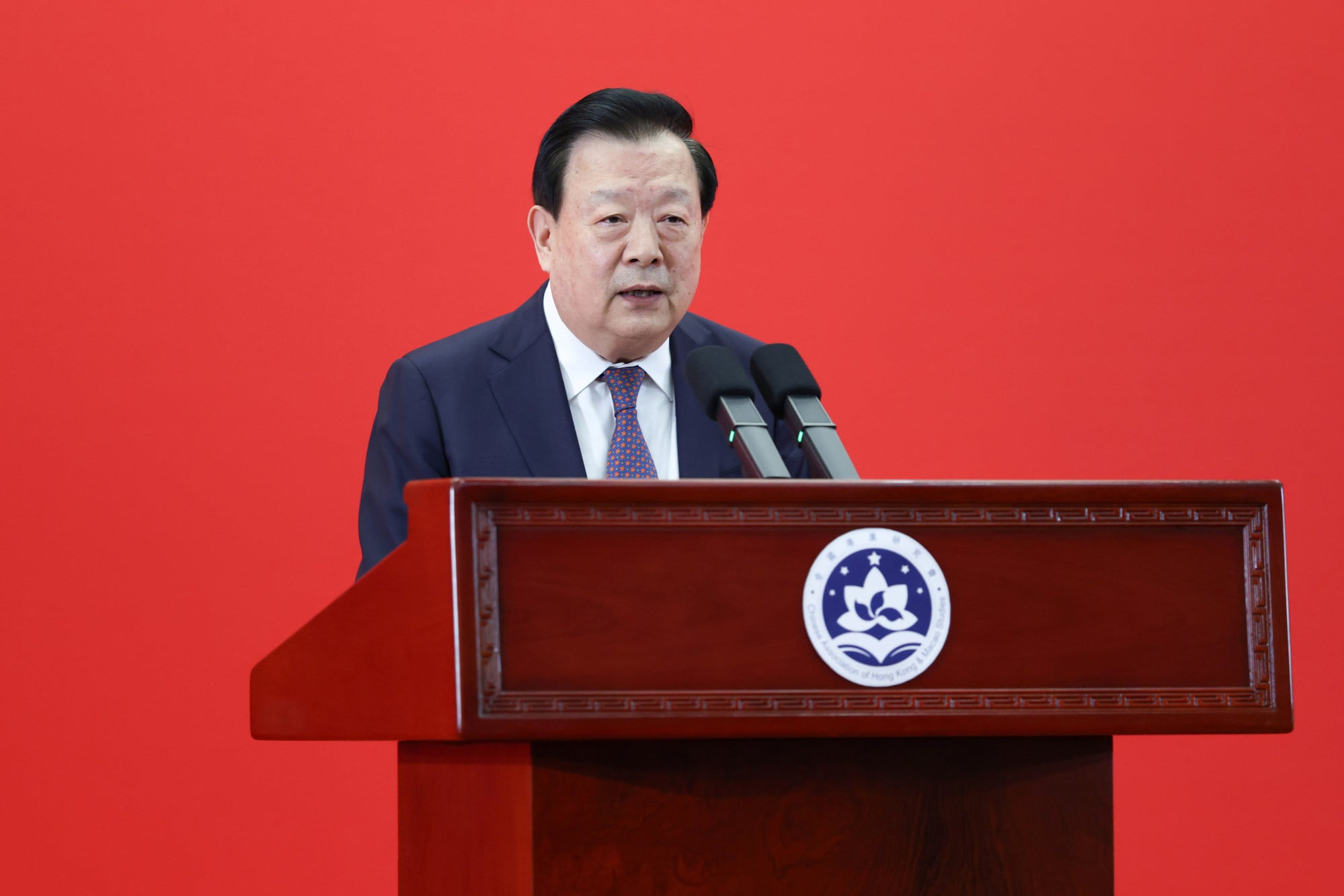
Lau Siu-kai, a consultant to the semi-official Chinese Association of Hong Kong and Macau Studies think tank, said the consultation paper should follow the framework of the national five-year plan.
“The plan should make reference to the changes in the internal and external landscapes and outline development directions and high-priority policies. It should also include the results to be delivered in five years,” he said.
While residents would still have channels to voice their views, Lau said he believed the government would not organise a large-scale public deliberation, targeting stakeholders in specific areas instead.
He added that the administration might also engage universities and think tanks to conduct studies, while it would also consult its advisory committees, experts and stakeholders on relevant issues.
Last Thursday, Xia Baolong, director of the Hong Kong and Macau Affairs Office, met Chief Secretary Eric Chan Kwok-ki, Financial Secretary Paul Chan Mo-po and newly appointed Secretary for Constitutional and Mainland Affairs Janice Tse Siu-wa in Beijing to discuss how Hong Kong could align with national policies.
In a statement on Tuesday night, the government said Xia also met a delegation of permanent secretaries and heads of departments, led by civil service minister Ingrid Yeung Ho Poi-yan, who were in Beijing for a study trip.
Yeung said the civil service, “particularly the permanent secretaries, will proactively align their work with the national 15th five-year plan”, steadfastly uphold the executive-led system and defend the bottom line of security and development. -- SOUTH CHINA MORNING POST


