
Alibaba Group Holding has struck its first external partnership for its flagship consumer artificial intelligence app, linking it with China Eastern Airlines in a move that pushes its agentic capabilities beyond the company’s own ecosystem and into real-world services.
The company said the fresh collaboration allowed users of the Qwen app to manage the full flight booking process – from search and ticket purchase to seat selection and check-in – within a single natural-language chat interface. It also acted as a proactive intelligent companion, anticipating user needs and suggesting options, it added.
The Qwen app, Alibaba said, would expand into airline loyalty services and other travel-related offerings, adding partners both within and beyond Alibaba’s ecosystem to deepen real-world use cases and strengthen its position in applied AI. Alibaba owns the South China Morning Post.
“Expanding from the strong momentum within the Alibaba ecosystem, integrating China Eastern marks the first time our agentic capabilities are available to external partners, making everyday life easier for even more users with new use cases,” said Wu Jia, president of Qwen app.
The deal underscores the e-commerce and AI giant’s effort to push forward adoption of its AI stack – spanning infrastructure, cloud services, foundation models and both enterprise and consumer-facing applications – to justify its heavy investments.
Alibaba in early 2025 pledged to invest 380 billion yuan (US$55.6 billion) in AI and cloud over three years, and has already spent more than 120 billion yuan in the sector in the four quarters through September.
Alibaba aimed to generate US$100 billion in annual external revenue from its combined cloud and AI businesses within five years, top executives said in March.
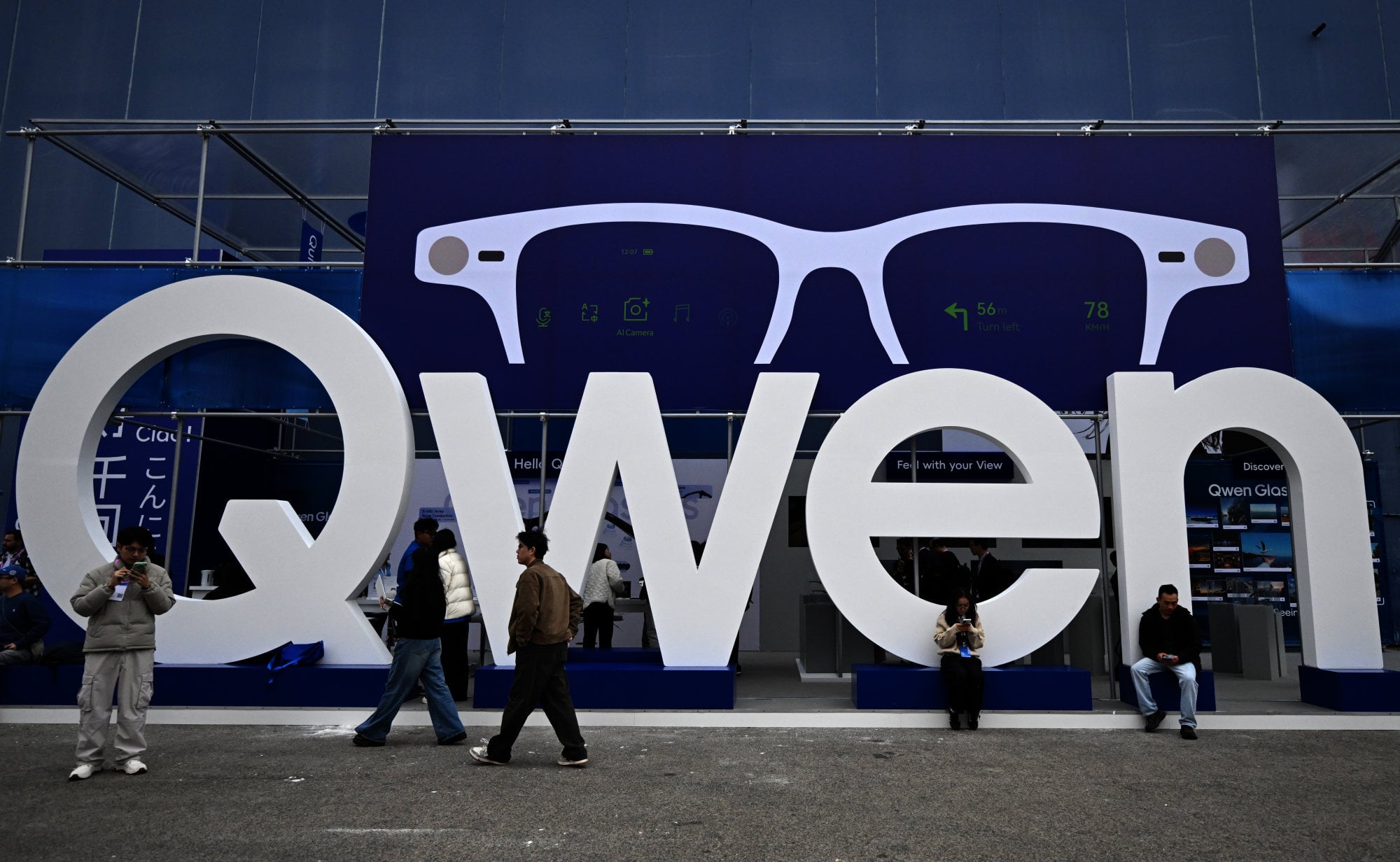
Qwen app, which was given a human face this week after Alibaba unveiled a dimpled girl as its digital avatar – echoing a similar move by ByteDance’s Doubao – has been integrated across Alibaba’s ecosystem including with Taobao, Alipay, delivery app Shangou, Amap and ticketing platform Damai.
Alibaba said its AI-driven shopping features had attracted more than 140 million users by February, while AI-assisted travel bookings during the Chinese New Year holiday surged more than eightfold, pointing to rising demand for AI-enabled services.
Pivoting to AI, Alibaba in March established the Alibaba Token Hub (ATH) Business Group, which brings all its core AI teams and products together under one umbrella. The business group is built to drive the creation, delivery and application of tokens, the basic units of data in AI applications.
In April, it set up a high-level technology committee led by CEO Eddie Wu Yongming, to streamline operations around AI. -- SOUTH CHINA MORNING