SINGAPORE (The Straits Times/ANN): Maritime hubs like Singapore are critical in ensuring trade carries on at a time when disruptions in the Strait of Hormuz cascade across the global economy, said Deputy Prime Minister Gan Kim Yong on April 21.
Delivering the Singapore Maritime Lecture at Suntec Singapore Convention and Exhibition Centre, he noted that the crisis in the narrow waterway is not just regional but also a “systemic shock” that has had an impact on energy prices, transport costs and production chains.
DPM Gan, who is also Trade and Industry Minister, told attendees at the opening of the annual Singapore Maritime Week that maritime hubs, therefore, play a stabilising role by maintaining connectivity in a volatile environment.
The ongoing bottleneck in the Middle East, he added, has underscored the importance of maritime hubs that can provide flexibility, which allows trade to be redirected quickly and efficiently.
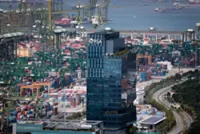
Singapore’s port is one such example, he said, noting that it is the world’s busiest transshipment port and connected to more than 600 others across the globe.
When Tuas Port is completed in the 2040s, it will allow Singapore to handle greater volumes of containers and deepen its port connectivity, while enabling it to respond more effectively to disruptions, he added.
“In a more volatile world, such connectivity is not just an economic asset. It is a crucial part of resilience, not only for ourselves, but for the rest of the world,” said DPM Gan.
Beyond physical connectivity, maritime hubs will also shape the standards for the future of seaborne trade, particularly in the realms of digitalisation and decarbonisation.
In doing so, they will ensure that “the next generation of maritime systems remains open, interoperable and connected”.
This, in turn, provides “clarity for investment decisions, enables coordination across borders and prevents fragmentation from leading to disconnection”, he added.
On top of that, maritime hubs build trust, which carries a premium, especially in an increasingly fragmented world, said DPM Gan.
They are also a source of influence, which will become even more important when artificial intelligence is scaled up.
AI systems depend on trusted data, from shipping movements to port operations and logistics chains, that can be shared across the sector, he said.
While shipping relies on infrastructure, he said the industry also depends on confidence in certain foundations, such as abiding by international frameworks and ensuring that rules are applied consistently.
Singapore’s maritime ecosystem is built on foundations such as a strong rule of law, as well as transparent governance, he said.
DPM Gan stressed that the country continues to be a “steadfast steward” of the United Nations Convention on the Law of the Sea (UNCLOS), which sets out the right of transit passage through straits used for international navigation.
It remains committed to upholding UNCLOS as the legal framework for navigational rights and freedoms in the maritime realm.
These are existential for Singapore as a maritime hub and are also important to other nations that depend on maritime connectivity and trade, he added.
But the rules-based maritime order is now increasingly fragile. -- The Straits Times/Asia News Network