

Australia to raise defence spending to 3% of GDP by 2033


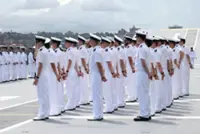
Sailors stand on board HMAS Canberra, facing the Sydney Opera House and the Sydney Harbour Bridge, ahead of the Kakadu International Fleet Review, a biennial maritime exercise marking 125 years of the Australian Navy, in Sydney, Australia, March 21, 2026. - Photo: Reuters

SYDNEY: Australia on Wednesday (April 15) said it would raise defence spending to 3% of gross domestic product by 2033 from about 2% currently, in response to the most "complex and threatening" circumstances since World War Two.

The expansion would be achieved through an additional A$14 billion ($10 billion) in expenditure over four years and A$53 billion over the next decade, the government said.
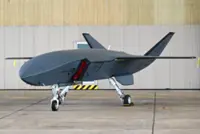
Australia has been looking to develop its defence capabilities amid concerns over rising global geopolitical tensions and China's tussle with the US for influence in the Indo-Pacific.

The Trump administration in the US has called on Canberra to lift defence spending to 3.5% of GDP.

Australia's centre-left Labour government will outline the spending in the Integrated Investment Programme due to be released on Thursday, with the biennial National Defence Strategy.

"Australia faces its most complex and threatening strategic circumstances since the end of World War Two," Defence Minister Richard Marles is expected to say in a speech in Canberra on Thursday to launch the latest strategy.

"International norms that once constrained the use of force and military coercion continue to erode."

"The result is that we are now seeing the biggest peacetime increase in defence spending in our nation's history."

Australia's defence spending currently sits at around 2% of GDP.

The government has already committed an additional A$50 billion in spending over the next decade to reach 2.33% in 2033-34.

Taken together, it means Prime Minister Anthony Albanese's government has committed an additional A$117 billion in spending over the next decade.

The government said the money would be spent on "capabilities that increase the ADF's (Australian Defence Force) ability to deter and respond to current and emerging threats, while also investing in the longer term to build a more self-reliant ADF."

Australia will pay for the expanded expenditure through bigger defence appropriations and accessing private capital, Marles is expected to say. - Reuters

($1 = 1.4000 Australian dollars)

Follow us on our official WhatsApp channel for breaking news alerts and key updates!

Next In Aseanplus News

Thai Cabinet approves Thai Help Thai Plus for 43 million people, registration opens May 25
Asia airlines need help to cope with fuel surge, trade body says
Taiwan opposition vote to impeach president fails
Penang Pakatan remains open to working with Barisan, says Chow
Singaporean tourist rescued by helicopter in South Korea after allegedly entering restricted area
Barisan to continue maintaining understanding in Unity Govt, says Zambry
StanChart to cut more than 7,000 jobs as bank steps up AI adoption
Indonesia signed letter but made no commitment to US on airspace access: Defence minister
Brunei strengthens tour guides’ Islamic practices understanding
Court acquits former Perlis MB's son of RM19,505 false claim charge

Others Also Read