
With one of the world’s highest benchmark interest rates among major economies, Brazilian importers who buy from China are turning to a state-owned Chinese credit insurer to sustain trade flows that reached US$158 billion in 2024.
Facing working capital lines that cost upwards of two per cent a month, equivalent to roughly 27 per cent a year according to market calculations, mid-sized importers are securing deferred payment terms directly from Chinese suppliers through credit limits backed by Sinosure, the China Export and Credit Insurance Corporation. No Brazilian bank is involved, and no domestic credit line is consumed.
Sinosure is one of the world’s largest trade credit insurers, with a total insured volume of US$1.02 trillion in 2024, up 10 per cent from the previous year.
Short-term export credit alone exceeded US$860 billion, covering roughly one in four dollars of China’s total merchandise exports.
The insurer does not move money. It guarantees payment to Chinese exporters if a foreign buyer defaults.
Under the standard structure, a defaulting buyer has 30 days to settle before the supplier can file a claim.
If Sinosure pays out, the importer’s credit limit is frozen, and the debt is referred to international collection.
The scale of the instrument reflects the depth of the credit problem it is addressing. Brazil’s Selic rate stands at 15 per cent, among the highest of any major economy, the International Monetary Fund said.
In a 2023 assessment of emerging-market trade finance, the World Bank also estimated the country’s trade finance deficit at US$49 billion, part of a broader financing gap for small and medium enterprises, estimated at about US$600 billion.
Overseas buyers have no direct channel to apply for credit limits or submit financial documentation to Sinosure, whose systems are built around Chinese exporters.
That gap created a market for consultancies that navigate the process on behalf of foreign importers.
Axton Global, a firm operating in 82 countries, is one of them, handling applications, uploading financial data, negotiating with suppliers and securing credit limit approvals that typically take about 21 days.
Igor Sokolov, a managing partner at Axton Global, said the difference in risk appetite between Sinosure and commercial credit insurers such as Coface or Atradius is substantial.
“A company that might get a US$100,000 credit limit from Coface can often get US$1 million from Sinosure with the same financial indicators,” he said.
Most of Axton’s Brazilian clients have annual revenues of between US$1 million and US$5 million. Sokolov said the profile is a deliberate reflection of how the instrument was designed.
“The majority of our clients have annual turnover from one to five million dollars. It is not 10, 20 or 100 million. These are small and medium-sized companies. And yet they use Sinosure a lot.”
Sinosure’s approvals favour high-value manufactured goods over raw materials and agricultural inputs, a bias that shapes which Brazilian importers benefit most from the instrument.
“If you have two importers with the same financial indicators and one imports solar panels and the other imports raw materials, the solar panel importer can get five times the credit limit,” Sokolov said.
Brazil’s solar panel imports from China rose 13 per cent in the first quarter of 2025 to a new quarterly record, according to trade ministry data.
The sectoral preference reflects an explicit strategic choice, Sokolov said.
“They don’t want to export raw materials. They want to keep as much value added in the supply chain in China and export finished goods. The more value stays in China, the more favourable the credit terms.”
That weighting mirrors a long-standing tension in the bilateral trade relationship.
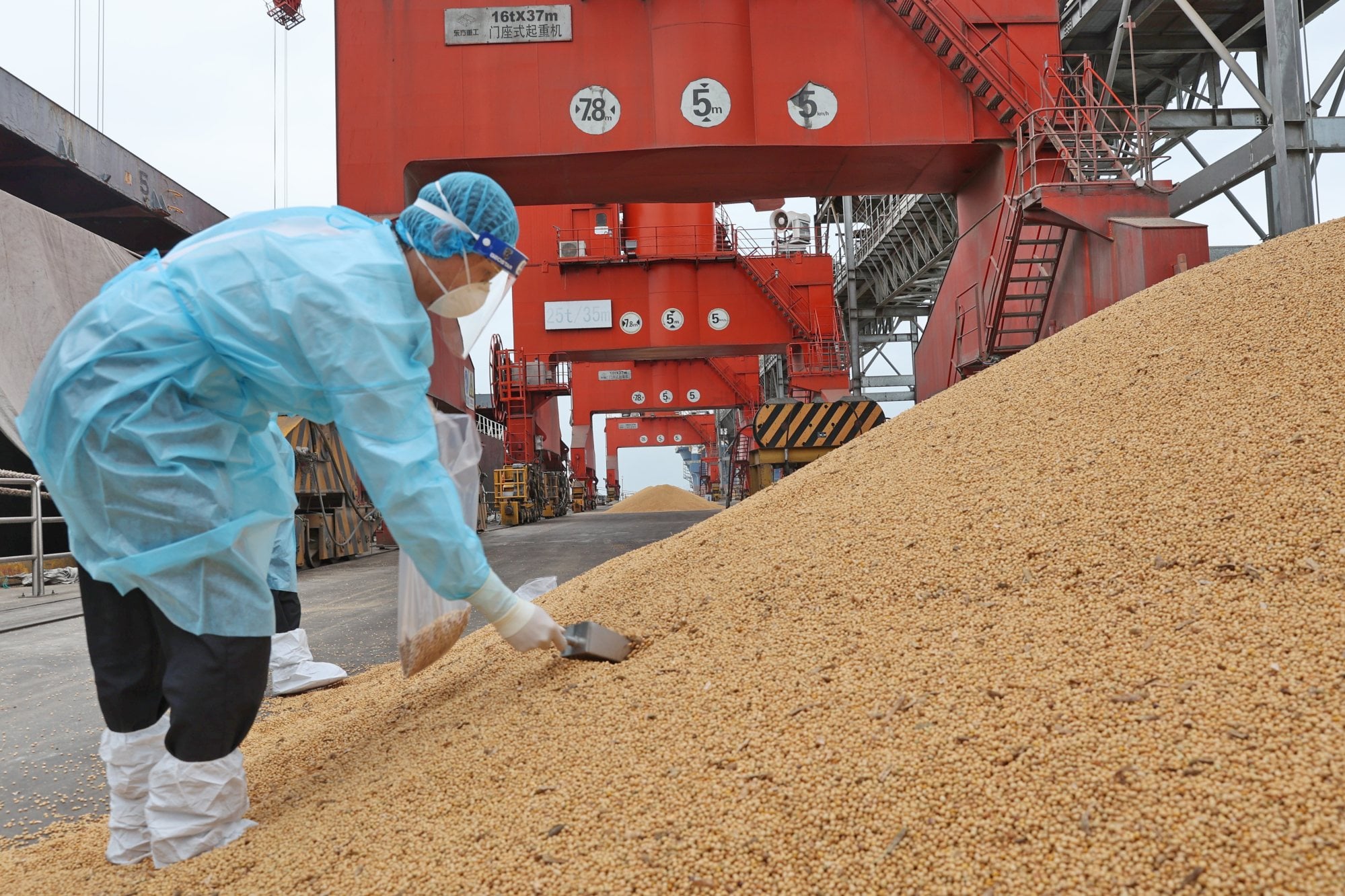
Brazil’s exports to China remain concentrated in raw commodities, including soybeans, iron ore and crude oil, while Chinese exports to Brazil increasingly consist of finished manufactured goods.
Sinosure’s tiered approval structure reinforces that asymmetry, offering better credit terms to Brazilian importers of Chinese industrial output than to those handling primary goods.
For companies importing manufactured goods from China, the structure has reshaped how they manage working capital.
Grupo Versa, a Sao Paulo-based trading and distribution company that handles about US$90 million a year in imported goods spanning tyres, auto parts and ventilation equipment, has used Sinosure-backed credit across several product lines.
Fernando Otsuzi, president of the group, said the company’s options before adopting the structure were limited.
“Either you had credit directly from the supplier, which you build over years of relationship, or you went to the banks,” he said. “And when neither was available, you paid in advance.”
Using a Sinosure credit limit, the group extended payment terms with Westlake, a major Chinese tyre manufacturer, sufficiently to receive goods, clear customs, invoice clients, and collect payment before the supplier fell due.
“We doubled our purchasing capacity with that supplier,” Otsuzi said. “We have been operating with positive cash flow on those transactions.”
He said the process took about 45 to 50 days from first contact to first transaction. Sokolov said the depth of Sinosure’s presence inside China makes the structure familiar to suppliers from the outset.
“Sinosure has more than 30 offices across China. Every large city has a representative. Suppliers can communicate with the insurer in their own language, with their own account manager,” Otsuzi added.
“For a Chinese exporter, this is the best available scenario short of full prepayment.” -- SOUTH CHINA MORNING POST