




Hong Kong is poised to launch the world’s first open-source human-AI agent collaboration network, along with a series of everyday artificial intelligence products to assist citizens with activities such as applying for schools and analysing horse racing.
The Hong Kong Generative AI Research and Development Centre (HKGAI) said it would soon offer on an open-source basis a human-AI agent collaboration network named “ClawNet”, designed to ensure AI agents “only do things that are allowed”, according to a presentation by the centre on Monday.
The HKGAI is a government-backed research hub established under the city’s InnoHK innovation programme and led by academics from the Hong Kong University of Science and Technology (HKUST).
Under the network’s proposed governance framework, AI agents would be assigned distinct “social identities” and operational boundaries.
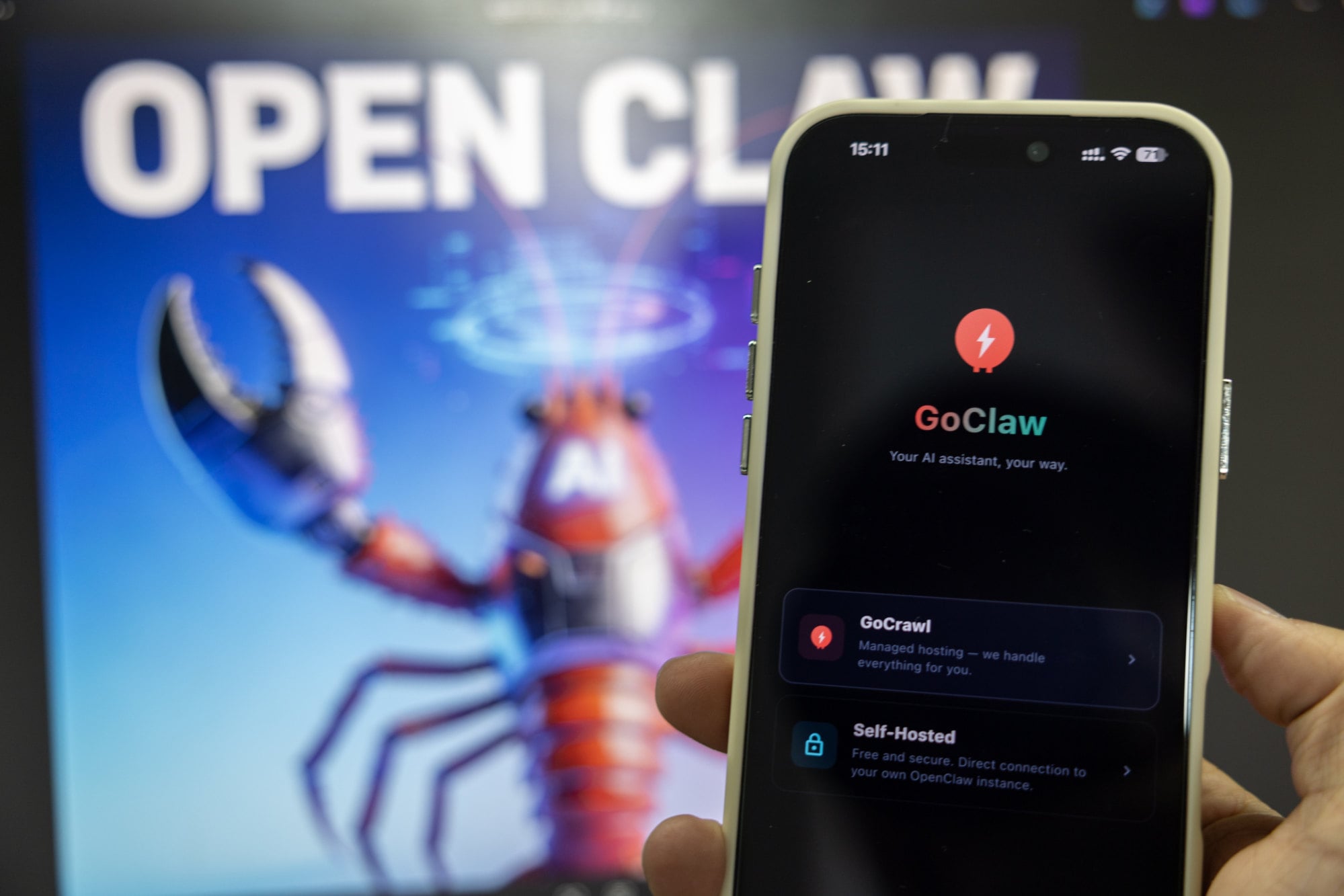
The push for clearer governance comes as Chinese regulators and state institutions have tightened controls on the open-source AI agent tool OpenClaw, citing concerns that such systems can gain unusually broad access to user devices and data.
While humans would retain the power of authorisation and decision-making, AI agents could autonomously execute tasks and collaborate across the network within strictly defined limits, ensuring every action remained traceable, the HKGAI said.
Currently, AI agents operated in silos, serving individual users without a broader social context, according to Zhang Yonggang, a research assistant professor at the HKUST, who spoke at the presentation on Monday.
Zhang argued that without a social identity, there was no way to define an agent’s “authority boundaries”, a gap that rendered effective governance and control impossible.
“AI agents must possess social identities to coexist with humans,” said HKGAI director and HKUST provost Guo Yike. Guo noted that since current legal and social frameworks were solely designed for humans, AI agents required social attributes to be effectively integrated into society.
Guo also announced that HKGAI’s AI chatbot “HKChat” had amassed over 720,000 registered users since its launch last November.
The team also revealed plans to roll out new features, including AI tools for school selection and money-saving tips.
In a nod to local culture, HKGAI developers are working on an “AI horse racing” feature that will provide race data analysis tools and a racing knowledge base.
HKGAI also rolled out an AI writing assistant dubbed “HKPilot” and an AI meeting minutes assistant called “HKMeeting” to government departments. According to the centre, nearly 50,000 civil servants across roughly 100 departments had already participated in the trials.
These deployments underscore the government’s push to modernise public services with artificial intelligence. Hong Kong plans to embed AI into at least 200 administrative procedures by 2027, following targets set in Chief Executive John Lee Ka-chiu’s policy address last September.
The tech upgrade will streamline everything from data analysis and customer service to licence and permit applications.
In his recent budget address, Financial Secretary Paul Chan Mo-po unveiled a HK$50 million (US$6.4 million) grant to boost artificial intelligence education and public awareness. The funding falls under a broader “AI+“ strategy aimed at enhancing the city’s tech capabilities.
Alongside this investment, the Employees Retraining Board will be revamped and rebranded as “Upskill Hong Kong,” shifting its focus towards delivering practical, skills-based AI training for the workforce. -- SOUTH CHINA MORNING POST



