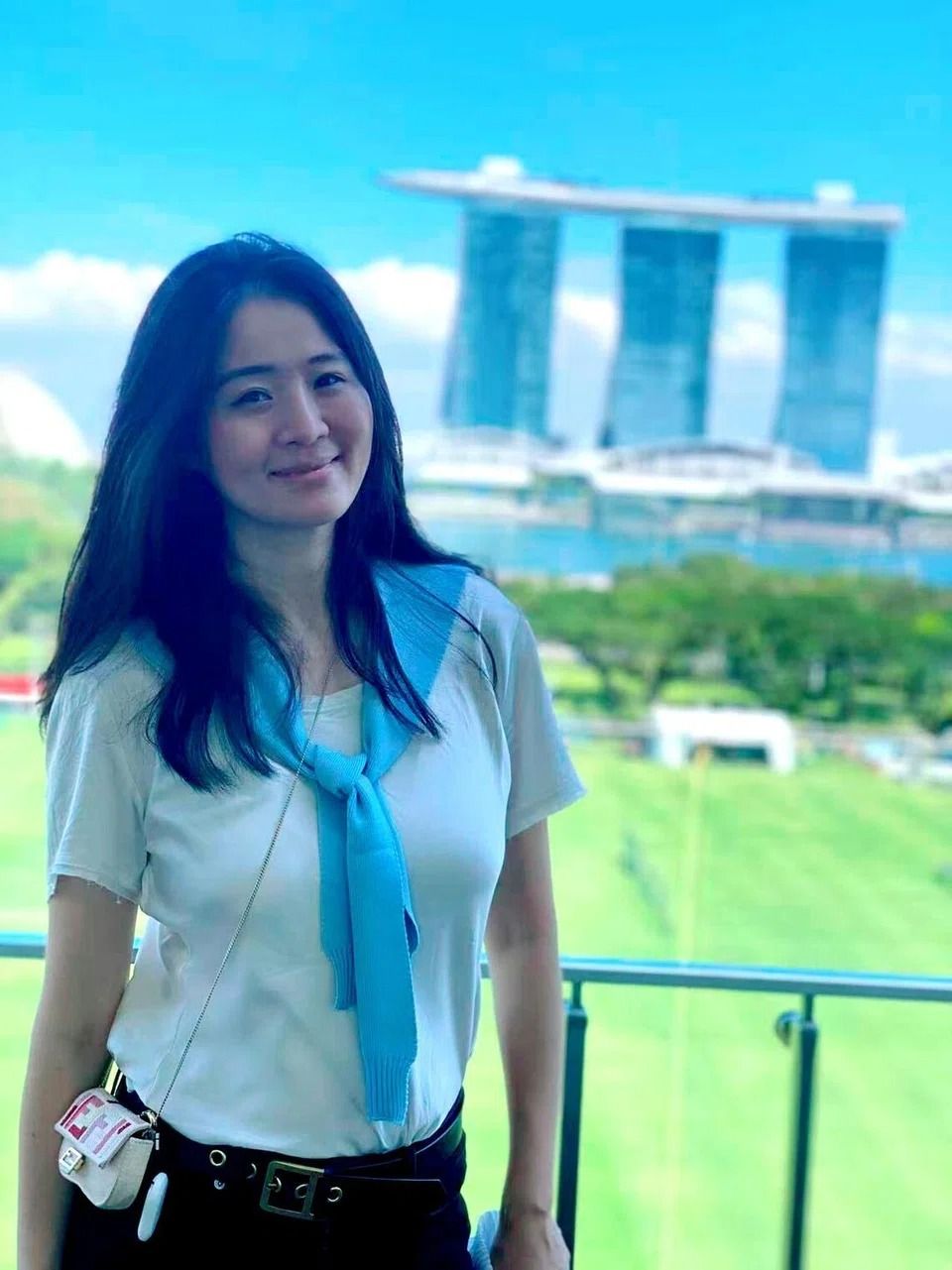
SINGAPORE (The Straits Times/ANN): When musician Ma Huan came to Singapore in 2010 to join the Singapore Chinese Orchestra, she discovered that adapting to a new culture came with unexpected lessons.
Growing up in the northern Chinese city of Tianjin, lively conversations were the norm. However, her Singaporean colleagues gently advised the yangqin (Chinese hammered dulcimer) player to lower her speaking volume, as diners at a hawker centre were looking at her.
That moment was one of many that helped the 42-year-old, who holds a master’s degree from the elite China Conservatory of Music, understand local social norms.
As she adapted to life here, she developed an interest in Singapore’s multicultural make-up, which inspired her to compose various works including a Chinese wind ensemble piece titled A Ditty Of Nyonya.
Her family is now settled here.
Ma, now the vice-chairwoman of the Singapore Yangqin Association, became a Singapore citizen in 2023, together with her 11-year-old daughter. Her husband, a Chinese national working as a sales executive, obtained permanent residency in 2024 and moved over from Beijing.
More immigrants are expected to call Singapore home in the coming years as the birth rate plunges and its population ages rapidly.
With new projected inflow numbers announced in Parliament recently, the Government has also stressed the need to integrate newcomers, whether through structured programmes or community and individual efforts.
On Feb 26, Deputy Prime Minister Gan Kim Yong said Singapore’s preliminary total fertility rate fell to a record low of 0.87 in 2025, and he warned that the citizen population could start shrinking by the early 2040s without new interventions.
DPM Gan committed to continued support for Singaporeans to start families – which he described as a “top priority” – but also laid out a plan for “carefully managed immigration flow” to augment the dismal birth rate.
Depending on demographic trends, the Government expects to grant 25,000 to 30,000 new citizenships annually over the next five years – which means from 17 per cent to 41 per cent more than the average of 21,300 new citizenships granted annually between 2020 and 2024.
The number of permanent residents (PRs) will also see a 21 per cent bump – from an average of 33,000 a year between 2020 and 2024, to about 40,000 a year in the next five years. Individuals must be PRs for at least two years before they can apply for citizenship.
In 2025, about 25,000 individuals became Singaporeans, while about 35,000 became PRs.
These moves reflect the Government’s belief that immigration is crucial to sustain the economy amid a low birth rate.
Apart from a shrinking workforce, there are also concerns about weakening family support networks for an ageing population.
“With fewer citizens, it will become increasingly difficult to meet our national security and defence needs. This raises the deeper question of what Singapore will be 50 or 100 years from now – will we remain vibrant, liveable and relevant? Will we exist?” said DPM Gan.
Anxieties about immigration
Concerns surrounding a growing number of foreigners have surfaced over the years, including in 2011 when anti-immigrant sentiment amid large numbers of newcomers contributed to the ruling party’s first-ever group representation constituency loss in the general election, said observers.
Institute of Policy Studies’ (IPS) Social Lab adjunct principal research fellow Tan Ern Ser said some Singaporeans felt that the actual and perceived competition for jobs and amenities had turned them into “second-class citizens”.
Dr Tan said that this later led to tightened immigration controls and a concerted emphasis on a Singaporean core and policies that stress the privileges of citizenship, which include subsidised healthcare, education and housing.
In his February speech, DPM Gan said the Government will manage the pace of immigration to ensure that the development of public infrastructure, such as housing and transport, keeps pace with population growth.
He also stressed that the Government would maintain a “stable citizen core” and the broad ethnic balance of the citizen population.
He said: “(We will) continue to carefully manage the impact of immigration on our population composition, to preserve the overall texture of our society.”
Singaporeans whom The Straits Times spoke to mostly acknowledged the need for immigration, but shared their concerns about greater job competition and pressure on public resources.
A 37-year-old associate, who wanted to be known only as Ms Ng, acknowledged that having more immigrants helps to maintain Singapore’s vibrancy.
“But at what point does it become to the detriment of citizens? That’s the balance that needs to be struck,” she said, citing crowds on public transport during peak hours.
Many locals interviewed, such as ship broker Hafizan Ahamed Marican, 46, said they work with foreigners. He said some foreigners are more competitive than Singaporeans, while differing cultural norms also add to the tensions.
The way to address these issues, which also relate to identity and belonging, appears to be through integration, which the Government has stepped up and looks keen to do more of.
This is while it maintains a delicate balance in ethnic proportions to avoid rapid shifts that have led to increased social tensions elsewhere, said observers.
Dr Leong Chan-Hoong, who heads the social cohesion research programme at the S. Rajaratnam School of International Studies at Nanyang Technological University, said: “Even though multiculturalism and meritocracy are core elements of Singapore’s identity, it may be premature to assume the public is ready to accept significant demographic shifts driven by immigration.”
The influx of new citizens has so far largely drawn from South-east Asia, with just under two-thirds, or 64.3 per cent, from the region in 2024. This is up from 55.5 per cent in 2014.
Those from other Asian countries fell from 38.5 per cent to 32.8 per cent over the same period, according to the latest population statistics.
The Population in Brief report did not break down the numbers by individual countries. The academics said the other Asian countries include China and India, while Malaysia, Indonesia and the Philippines could be the drivers within South-east Asia.
IPS research fellow Melvin Tay said natives from Asia and South-east Asia share more norms, family structures and social etiquette with Singaporeans, and these factors make it easier for these newcomers to fit in.
Where the newcomers are from also broadly corresponds to Singapore’s ethnic composition, the observers noted.
As at June 2025, Chinese made up 75.5 per cent of Singapore’s population, Malays 15.1 per cent, Indians 7.6 per cent, and others 1.8 per cent.
Growing integration efforts
On the integration front, a new Permanent Resident Journey programme was piloted in November 2025 for selected PRs, said a Ministry of Culture, Community and Youth spokesperson. The ministry plans to offer the programme to all new PRs by mid-2026.
The programme consists of an e-learning module about Singapore’s culture, way of life and social norms, and an experiential component where participants visit a museum or join in a local community event.
A voluntary orientation programme for Employment Pass holders, who are skilled foreign professionals and executives, will also be piloted in the second quarter of 2026.
Dr Tay said: “If Singaporeans see newcomers putting down roots, learning local norms and building real relationships, it reduces the distance and uncertainty that fuel anxiety.”
Singaporeans whom ST spoke to agreed on the need to familiarise the fresh faces with local norms – including simple customs such as “chope-ing” a table – and expressed hope that they would learn the social etiquette here and speak English.
However, current integration efforts can appear top-down and state-driven, said Dr Leong. Integration could be strengthened by starting early through schools and, more organically, through workplaces, suggested academics and Singaporeans interviewed.
Dr Tay suggested implementing longer-term programmes that bring local-born and immigrant children together, such as co-curricular activity training across local mainstream schools and international schools or school-twinning partnerships. -- The Straits Times/Asia News Network