US Central Command (CENTCOM) has urged civilians to keep clear of all port facilities in Iran, an announcement that drew a warning from Iran’s Revolutionary Guards of Gulf-wide retaliatory strikes if those sites are targeted.
On Wednesday, CENTCOM said that Iran was using civilian ports along the Strait of Hormuz to conduct military operations, which would make the ports legitimate military targets under international law.
Civilians should immediately avoid all port facilities, and Iranian dockworkers, administrative personnel and commercial vessel crews should avoid Iranian naval vessels and military equipment, CENTCOM said.
Tehran’s response was swift and defiant. Armed forces spokesman Abolfazl Shekarchi said that if US threats against Iranian ports were carried out, no port, economic centre or location in the Gulf would remain safe, according to remarks carried by the Fars news agency, which is close to the Revolutionary Guards.
“They would all become legitimate targets for our armed forces,” Shekarchi said.
The exchange marks an ever-emerging danger in the Strait of Hormuz - a waterway between Iran and Oman that is crucial for international oil shipping - which has once again become a central flashpoint in the latest Middle East conflict.
The UK Maritime Trade Operations (UKMTO) monitoring centre said projectiles struck three commercial vessels on Wednesday in and around the Strait of Hormuz, including the Thai-registered bulk carrier Mayuree Naree, which caught fire. Three crew members remain missing.
Iran’s Revolutionary Guards said they had struck the Mayuree Naree, as well as a Liberia-flagged vessel, because the ships had ignored “warnings”.
In nearby Iraqi waters, reports emerged of explosive-laden Iranian boats targeting two fuel tankers.
Shipping has effectively ground to a halt since the US launched air strikes against Iran nearly two weeks ago, as the world sees oil and gas prices continue to climb.
US President Donald Trump threatened on Tuesday to hit Iran “20 times harder” with “death, fire and fury” if the country blocks the flow of oil and goods through the passage.
The International Energy Agency (IEA) said on Wednesday that its member countries would release a record 400 million barrels of oil from their strategic reserves to alleviate the disruptions to the global energy market.
“I’m pleased to report that earlier today, the International Energy Agency agreed to coordinate the release of a record 400 million barrels of oil from various national petroleum reserves around the world,” Trump said at an economic event in Kentucky on Wednesday, claiming it “will substantially reduce the oil prices as we end this threat to America and this threat to the world”.
Trump has authorised the release of 172 million barrels from the US Strategic Petroleum Reserve from next week, US Energy Secretary Chris Wright said.
CENTCOM’s warning for civilians to flee Iranian ports coincided with preliminary findings from a US military investigation, which suggested that outdated intelligence led to the February 28 US missile strike on a school that killed over 165 people, many of them children.
On the opening day of the conflict, US forces struck the Shajareh Tayyebeh Elementary School in Minab while targeting an adjacent military base. According to Associated Press and The New York Times, CENTCOM officers relied on outdated Defence Intelligence Agency data from a time when the school building was still part of the military compound.
Trump previously blamed Iran for the school strike.
A CENTCOM spokesperson said: “It would be inappropriate to comment given the incident is under investigation”. White House press secretary Karoline Leavitt said in a statement that the investigation was ongoing.
At a UN Security Council meeting on Wednesday, Iran’s representative, Amir-Saeid Iravani, said that 1,348 civilians have been killed since the war began.
The regional death toll continued to climb. In Lebanon - where Israel has been striking Iran-aligned Hezbollah - at least 634 people have been killed. Israel has reported 12 deaths, and the US has lost seven soldiers.
The opening week of the war against Iran has cost the US military more than US$11.3 billion, according to US reports of a closed-door Pentagon briefing for lawmakers.
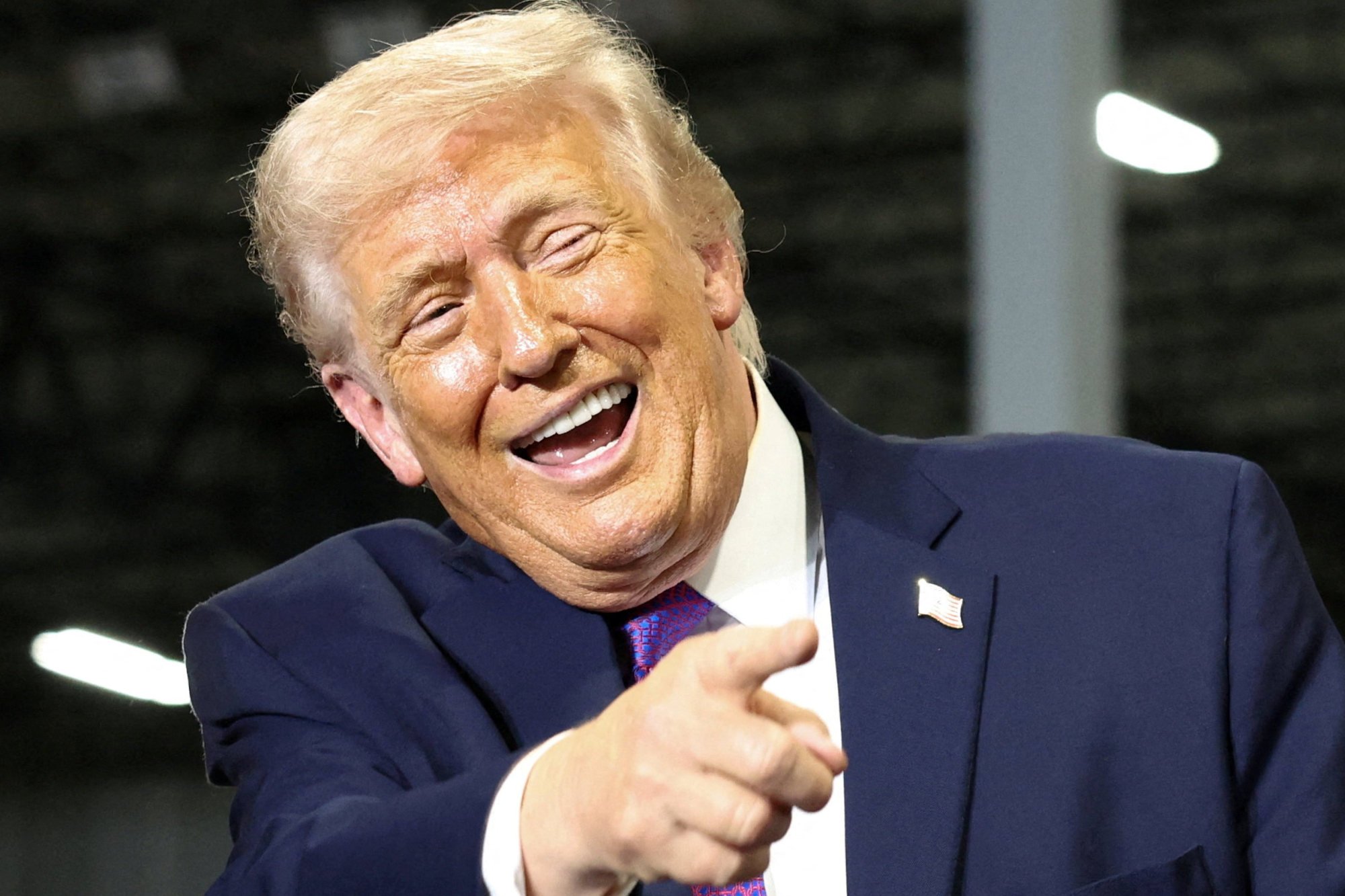
Despite the steep price tag, Trump maintains that the heavy lifting was already done. Speaking at an event in Kentucky on Wednesday, Trump claimed the war “was over in the first hour”, though he insisted the US would remain in the region “until that job is finished”.
Trump portrayed the conflict as nearing its end, claiming that “over the past 11 days, our military has virtually destroyed Iran”. He said that Iran’s “air force is gone, totally gone”, saying it took the “better part of about three hours”.
“They no longer have radar. They don’t have anti-aircraft equipment. They don’t have anything. Their missiles are down 90 per cent. Their drones are down 85 per cent,” Trump said.
“We’re blowing up the factories where they’re made left and right. And frankly, nobody has ever seen anything like it.”
Trump also repeated his claim that the US had destroyed nearly 30 Iranian mine-laying ships and predicted that by the end of his speech, all of them would be gone.
Meanwhile, the Federal Bureau of Investigation (FBI) has in recent days alerted police departments in California that Iran could retaliate for US attacks with potential drone strikes targeting the West Coast, according to a Wednesday report by ABC News.
Iran allegedly aspired in early February to conduct a surprise attack using unmanned aerial vehicles against unspecified targets in California in the event of US strikes against Iran, the FBI reportedly said in its alert sent at the end of February. There was no information on the timing, method, target or perpetrators of the alleged attack, ABC News added.
The FBI declined to comment on the report. California Governor Gavin Newsom said that he was aware of potential drone strikes, and that the state had been “working collaboratively” through the state operations centre and assembled work groups to address drone concerns. -- SOUTH CHINA MORNING POST