Hong Kong should step up education on Chinese history and culture while highlighting security threats to cultivate public awareness about the need to defend the country, experts have said, as the nation’s legislature is set to pass a law promoting ethnic unity.
The expert’s comments came ahead of the closing session of the 14th National People’s Congress (NPC) on Thursday, which is due to pass the Law on Promoting Ethnic Unity and Progress.
The law aims to forge a strong “sense of community for the Chinese nation” and advance “common prosperity” among the country’s 56 ethnic groups.
Among the draft law’s 64 clauses, Article 21 stipulates the role of Hong Kong.
Article 21 states Beijing’s support for Hong Kong in introducing education on the history of the country, its culture and other national studies to guide residents to “consciously safeguard national sovereignty, security and development interests”.
Professor Lau Siu-kai, a consultant to the semi-official Chinese Association of Hong Kong and Macau Studies think tank, said the Hong Kong government should cover ethnic unity in its national education curriculum, regardless of whether the law was included in Annex III of the Basic Law, the city’s mini-constitution.
Article 18 of the Basic Law states that national laws listed in Annex III apply to Hong Kong.
“The new law is about recognising a shared identity as part of the Chinese nation, regardless of differences between places, ethnicities and cultures, to preserve the national community’s integrity and counteract any forces of secession,” Lau said.
He cited examples of campaigns that advocated the independence of Hong Kong, Taiwan, Xinjiang and Tibet.
“To cultivate public consciousness, apart from forging a strong sense of national recognition, Hong Kong’s national education must be frank about the national security threats faced by China, especially those from the United States and Japan,” Lau said.
“Only when people realise the threats can they gain a sense of responsibility and urgency in safeguarding ethnic unity and national security.”
He added that schools, social groups and media outlets should cite the “aggressive actions” of Western powers to explain the threats facing China, noting that public consciousness would take time to build.
Lau also said the Hong Kong government had included promoting patriotism as part of its national education curriculum three years ago, when Beijing passed a new law not included in Annex III that promoted patriotic education.
In 2024, the city government formed a working group on patriotic education, which advised authorities on relevant strategies and implementation.
Tam Yiu-chung, formerly the city’s sole representative to the National People’s Congress Standing Committee, also said he believed the city’s national education efforts in future would focus on Chinese history and culture to help promote ethnic unity.
“China has multiple ethnicities, and it values unity and respect. In many countries, ethnic issues can be a headache when they are not handled properly,” he said.
“Sometimes, external factors also have an impact, such as the cases of Xinjiang and Tibet. Therefore, ethnic unity is of pivotal importance.”
He said national education would be a long-term endeavour, moving people from learning passively to taking the initiative.
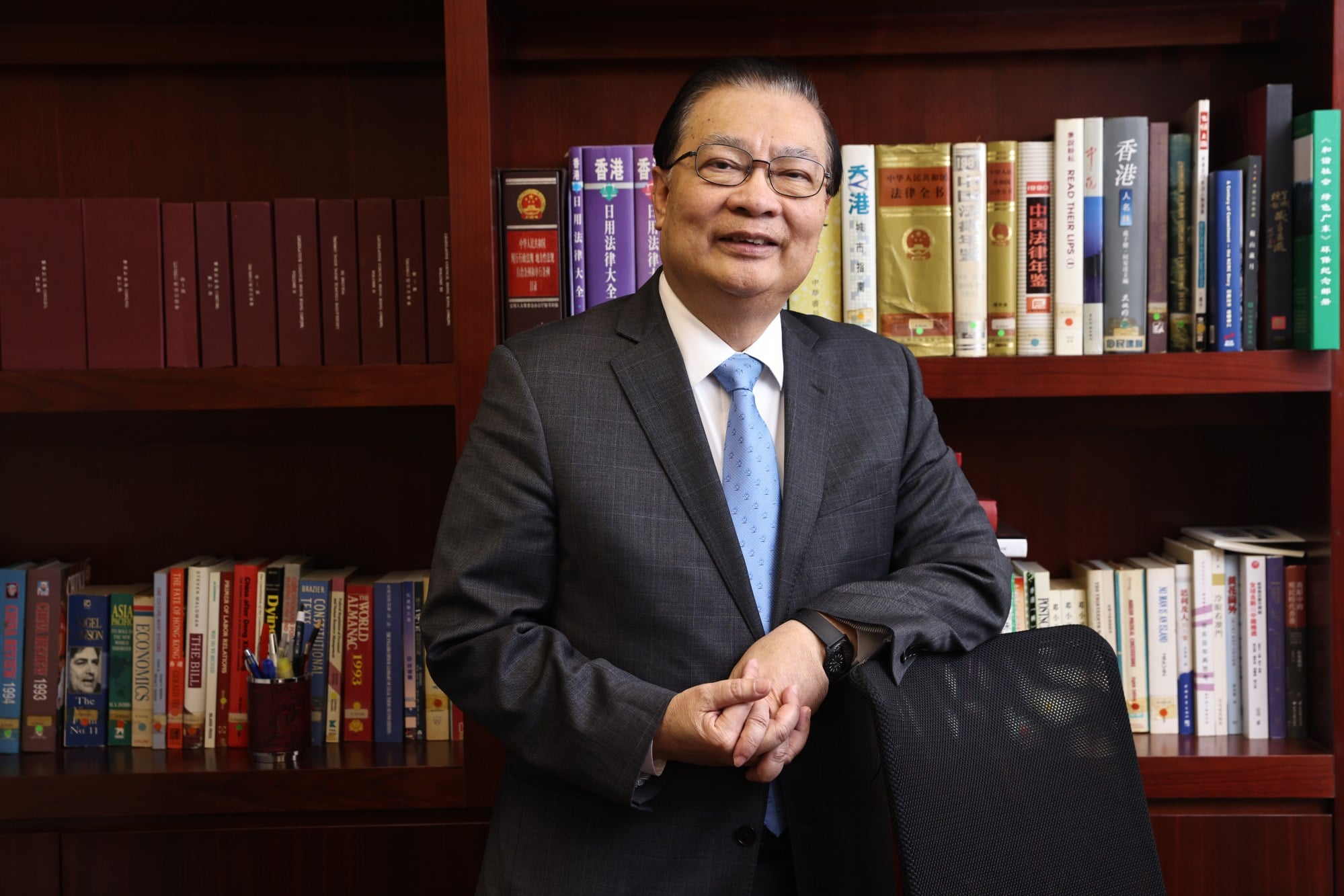
Wong Kam-leung, a deputy to the NPC and chairman of the Hong Kong Federation of Education Workers, said there was no need for the city to enact local legislation to implement the ethnic unity law.
He cited the effective promotion of national education following the NPC’s approval of the Patriotic Education Law in 2023.
“The education sector has already embraced [patriotic education], and current practices are proving effective,” Wong said. “As long as there is a consensus in our society, not every national law requires local legislation.”
Wong called for the strengthening of teacher training for patriotic and national security education, as well as improvements to the quality of mainland China study tours.
Lau Chi-pang, a member of the Chinese People’s Political Consultative Conference, the country’s top political advisory body, said many Hongkongers still lacked a deep understanding of the mainland’s ethnic minority groups.
“For a very long time, when Hongkongers visited the mainland for exchanges or study, their main focus was on how the nation had become stronger and more prosperous,” said Lau, who chairs the legislature’s education panel and sits on the government’s working group on patriotic education.
“But now, attention should turn to areas that were not previously in the spotlight ... for example, the ethnic issue.”
Lau called for a review of the curriculum to focus more on the mainland’s ethnic minority groups, adding that a deeper understanding would help bolster Hongkongers’ sense of national unity, particularly amid rising geopolitical volatility.
The proposed law emphasises Chinese President Xi Jinping’s instructions on ethnic work and national unity. It also sets down core principles, legal safeguards and mechanisms to promote ethnic harmony.
It explicitly linked ethnic affairs policies with an “overall national security perspective”, while emphasising the role of patriotic education. -- SOUTH CHINA MORNING POST