
US President Donald Trump warned Iran against laying mines in the Strait of Hormuz on Tuesday as the US unleashed some of the heaviest strikes of the war so far. Tensions over the critical shipping lane continued to escalate amid soaring global oil prices, with the US claiming it had destroyed 16 Iranian mine-laying vessels.
Trump said that the US was using the same technology and missile capabilities deployed against drug traffickers in the Caribbean and eastern Pacific Ocean to “permanently eliminate” any boat or ship attempting to mine the strait, through which 20 per cent of the world’s oil supply transits.
“If for any reason mines were placed, and they are not removed forthwith, the Military consequences to Iran will be at a level never seen before,” Trump wrote on his Truth Social platform on Tuesday.
The US president’s latest threats came after US media reported that Iran had begun laying mines in the Strait of Hormuz.
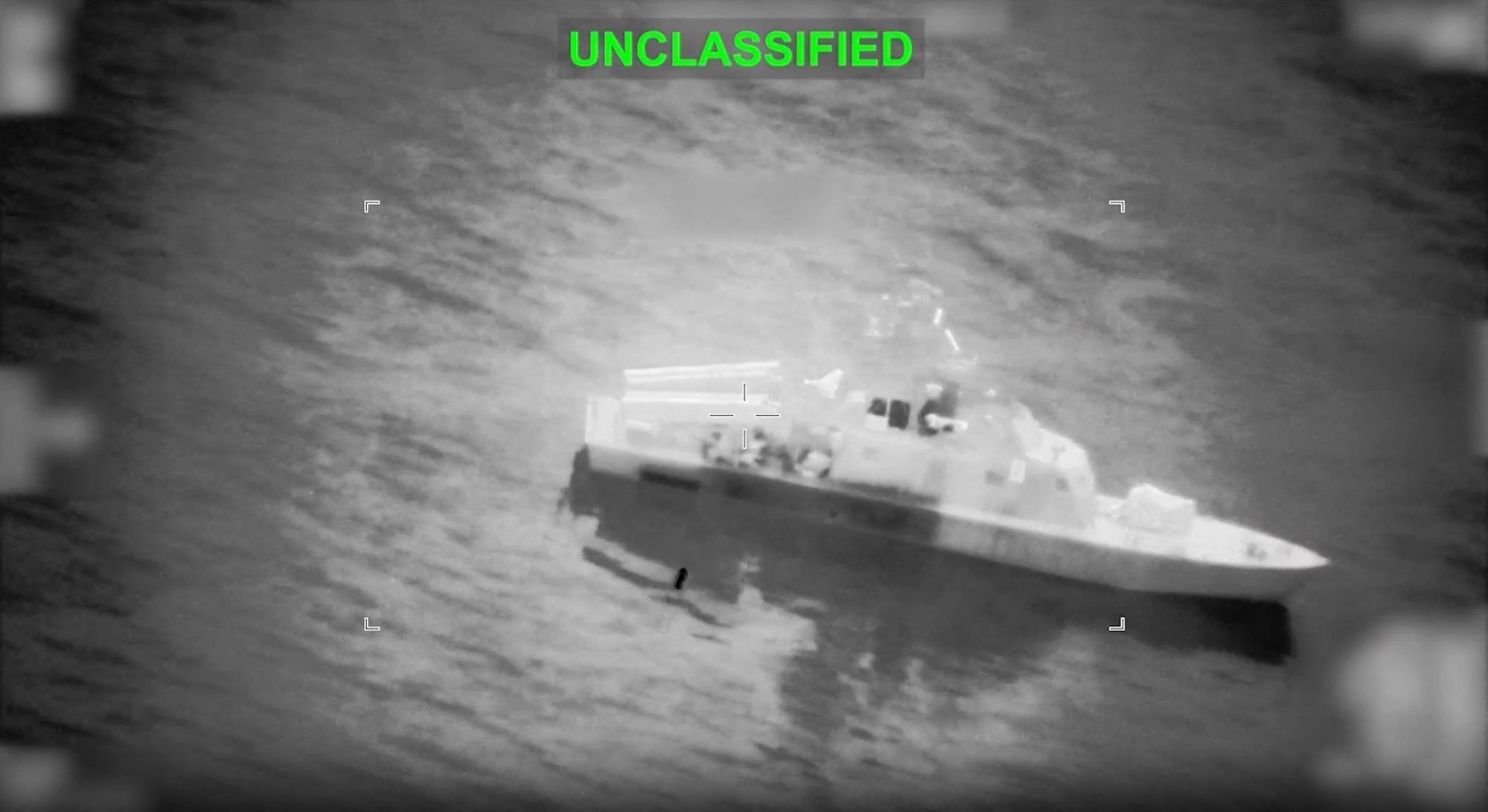
Shortly after his initial warning, Trump posted that he was “pleased to report” the US had “hit, and completely destroyed, 10 inactive mine laying boats”, a number the US Central Command (CENTCOM) later updated to 16.
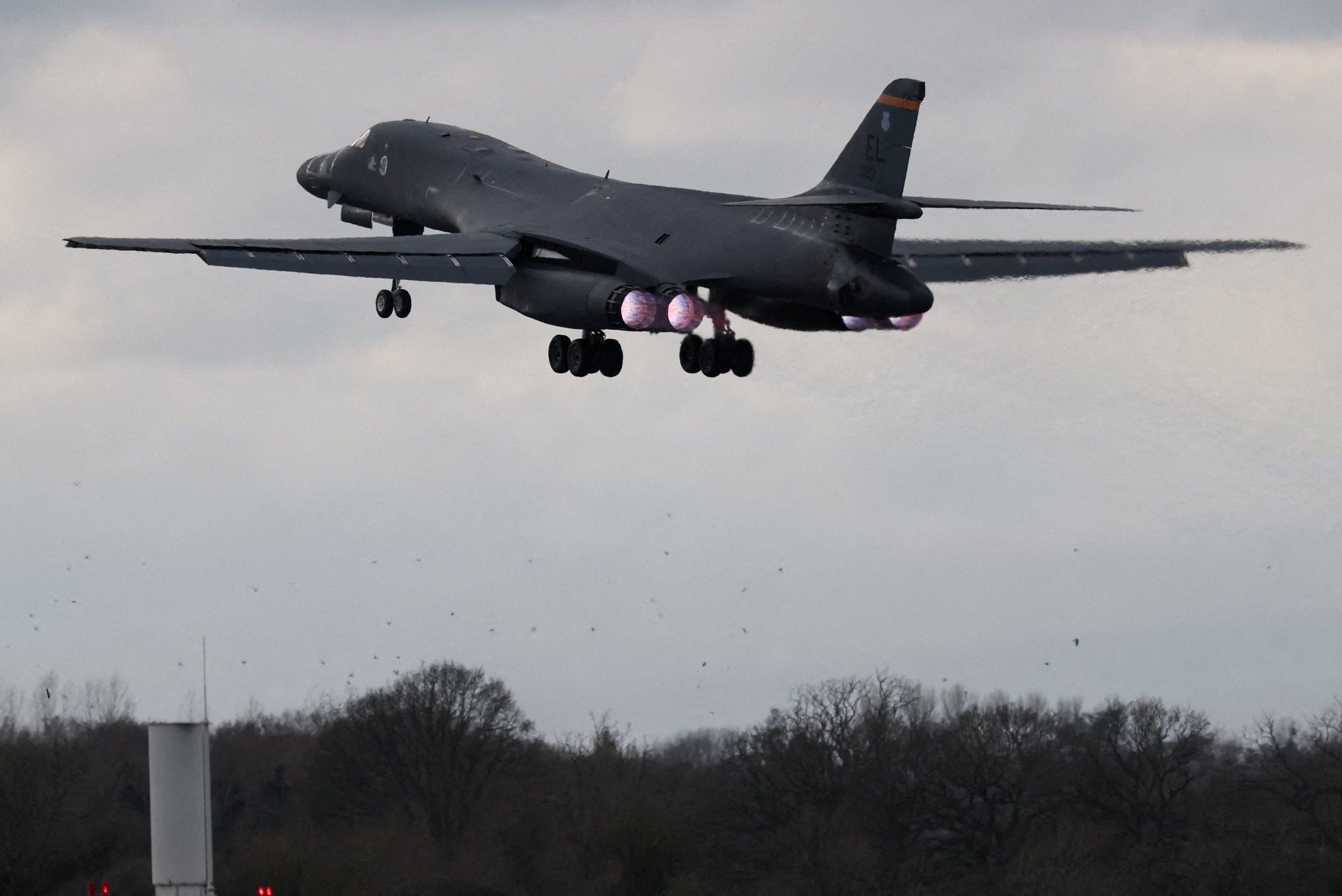
The targeted strikes coincided with a massive expansion of the aerial campaign. US Defence Secretary Pete Hegseth characterised Tuesday as the “most intense day of strikes” inside Iran since Operation Epic Fury began on February 28 in coordination with Israel.
“Today will be yet again our most intense day of strikes inside Iran – the most fighters, the most bombers,” Hegseth told reporters, also claiming the US military was “winning” the war.
“As President Trump declared yesterday, we’re crushing the enemy in an overwhelming display of technical skill and military force. We will not relent until the enemy is totally and decisively defeated,” he said.
Reports on Tuesday said residents of Iran’s capital Tehran experienced some of the war’s heaviest strikes.
But Iran’s leaders have remained defiant after days of bombardment that has targeted the country’s leadership, military, ballistic missiles and its disputed nuclear programme. In response, Tehran has launched waves of drones and missiles not only at Israel and US bases, but also at critical energy and civilian infrastructure in neighbouring Gulf states.
The UK Navy on Wednesday said three vessels transiting the Persian Gulf and the Strait of Hormuz had been hit by projectiles. One attack, on a cargo vessel near Oman, sparked an onboard fire that forced most of its crew to evacuate.
Iran’s Revolutionary Guards this week declared Iran would determine the end of the war after Trump claimed US military objectives were nearly complete and that the war may end “very soon”.
Asked about the war’s timeline, Hegseth said Trump “gets to control the throttle. He’s the one deciding,” adding that “it’s not for me to posit whether it’s the beginning, the middle or the end”.
White House press secretary Karoline Leavitt reiterated Hegseth’s comments, saying Trump would determine when Iran was in a place of “unconditional surrender, when they no longer pose a credible and direct threat to the United States of America and our allies”.
Leavitt told reporters that Trump has made it “unequivocally clear” to Iran that “if they do anything to stop the flow of oil or goods within the Strait of Hormuz, they will be hit by the world’s most powerful military 20 times harder than they have been hit thus far”.
In a Truth Social post, Trump threatened “death, fire, and fury” if Iran attempts to stop the flow of oil through the Strait of Hormuz. While the war continues, Tehran has vowed to block oil exports via the Gulf.
“If Iran does anything that stops the flow of Oil within the Strait of Hormuz, they will be hit by the United States of America TWENTY TIMES HARDER than they have been hit thus far,” Trump wrote.
The strategic waterway between the Persian Gulf and the Indian Ocean is a vital trade route, carrying crude oil and liquefied natural gas.
US Energy Secretary Chris Wright said in a social media post on Tuesday that the US Navy escorted an oil tanker through the strait, but deleted the post minutes later.
“Yes, I was aware of this post. I haven’t had a chance to talk to the energy secretary about it directly. However, I know the post was taken down pretty quickly,” Leavitt added.
She said that while the US Navy had not escorted an oil tanker through the Strait of Hormuz , it was an option that Trump would “absolutely utilise if and when necessary at the appropriate time”.
The president and his energy team were “closely watching ” the markets, speaking with industry leaders, and the US military was drawing up additional options following Trump’s directive to continue keeping the Strait of Hormuz open, according to Leavitt.
“I will not broadcast what those options look like, but just know the president is not afraid to use them,” she added.
Leavitt claimed the recent increase in oil and gas prices was temporary, adding that the military operation could result in lower long-term prices.
“Once the national security objectives of Operation Epic Fury are fully achieved, Americans will see oil and gas prices drop rapidly, potentially even lower than they were prior to the start of the operation,” she said.
The US’ top military officer, General Dan Caine, said one of the core objectives was to destroy Iran’s naval capability, which has been targeted with “artillery, fighters, bombers and sea-launched missiles”.
When asked if Iran was posing more of a challenge than he had expected, Caine said: “They’re fighting, and I respect that, but I don’t think they’re more formidable than what we thought”.
US forces have struck more than 5,000 targets inside Iran, where at least 1,230 people have been killed. Scores have also been killed in Israeli attacks on Lebanon, while Iranian strikes on Israel have killed at least 11 people.
In addition to seven US soldiers killed in the conflict, the Pentagon on Tuesday estimated about 140 American troops have been wounded.
On civilian casualties, Hegseth said: “No nation takes more precautions to ensure there’s never targeting of civilians than the United States of America”.
He also accused Iran of moving rocket launchers into civilian neighbourhoods near schools and hospitals to prevent the US’ ability to strike.
He did not directly address a strike that hit a girls’ school in the city of Minab, which Iranian authorities said left more than 160 dead, mostly children.
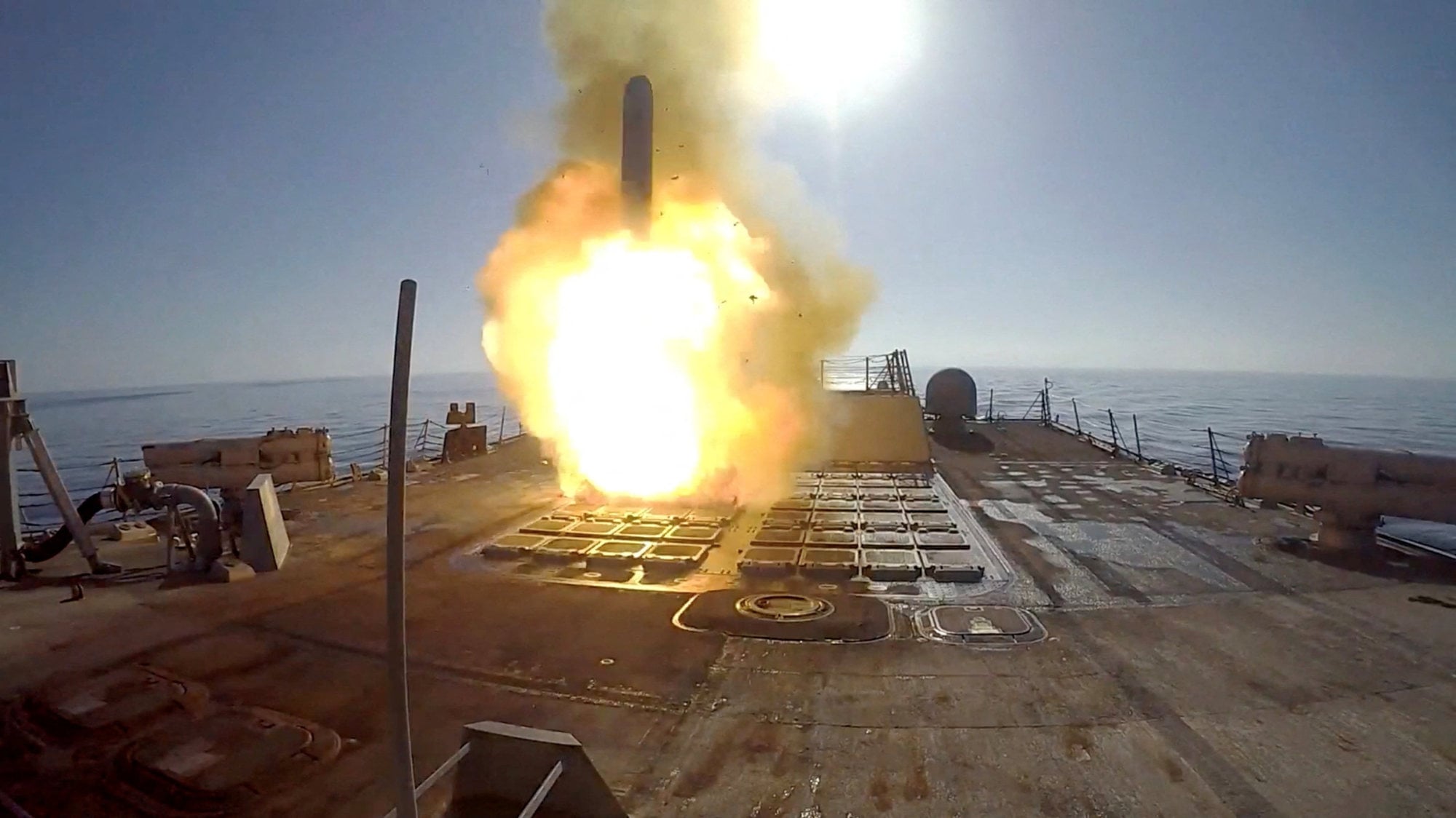
Trump on Monday claimed Iran had access to the American Tomahawk cruise missile, the weapon likely used in the strike. However, the US is the only known country in the war to possess Tomahawks.
“Whether it’s Iran or somebody else ... a Tomahawk is very generic,” he said, adding the incident was under investigation.
Meanwhile, in an attempt to reassure Americans that this war is not Afghanistan or Iraq, Hegseth said the US knows exactly what it’s attempting to achieve in Iran.
“You see, this is not 2003. This is not endless nation-building under those types of quagmires we saw under Bush or Obama. It’s not even close,” he added.
A recent Reuters-Ipsos poll found that only 29 per cent of Americans approved of US military strikes against Iran. -- SOUTH CHINA MORNING POST