




China has pledged to provide a range of supportive measures to promote the diffusion of advanced technology through all levels of the country’s economy, as Beijing seeks to strengthen frontier industries such as artificial intelligence amid an intensifying rivalry with the United States.
In its annual work report, the government urged state-owned enterprises to take the lead in opening their vast industrial ecosystems to emerging technologies, and vowed to supply the necessary funding for all companies – from start-ups to public firms – to pursue new innovations through their “full life cycle”.
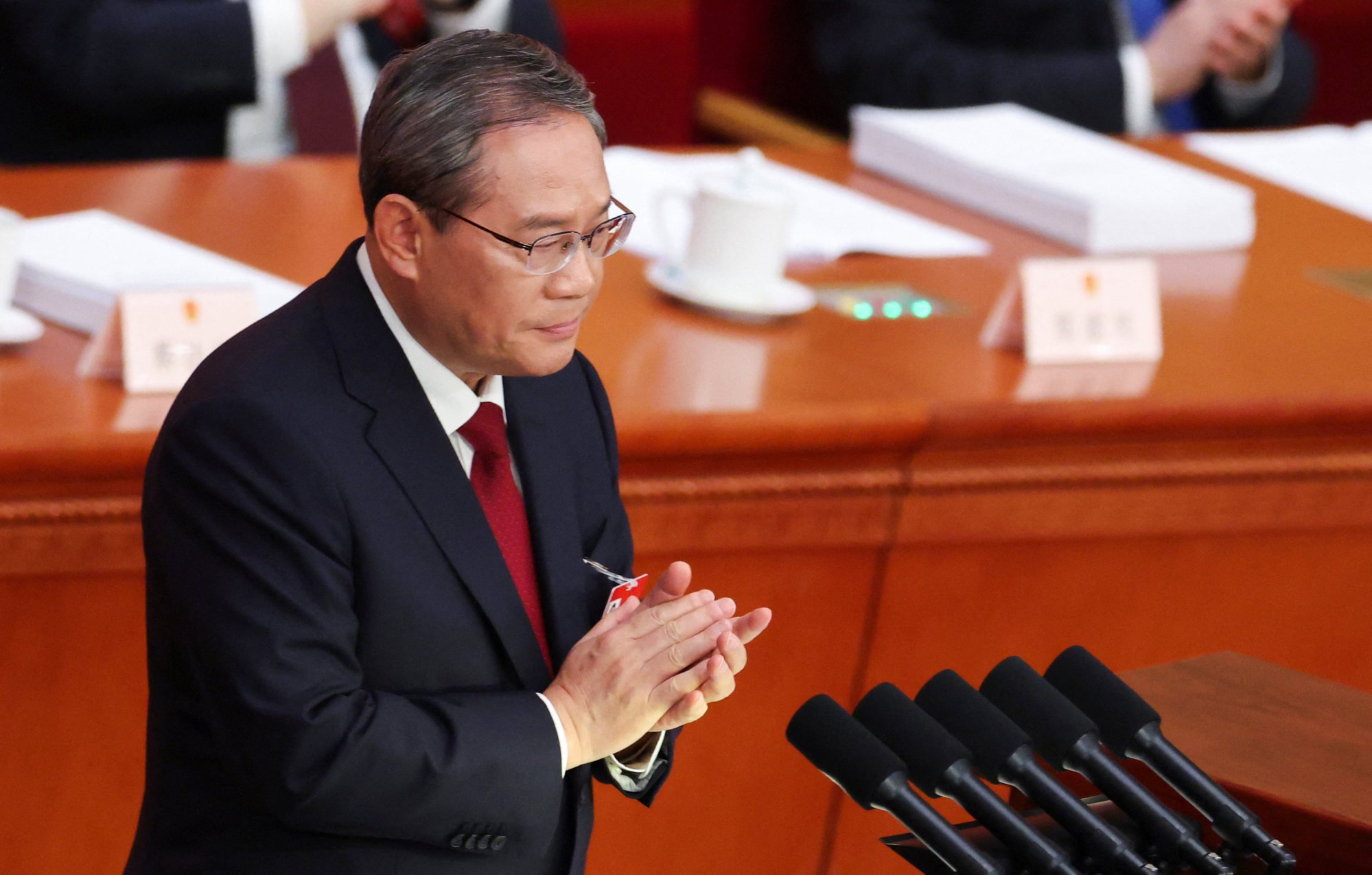
Delivered by Premier Li Qiang at the opening of China’s top legislature, the National People’s Congress (NPC), in Beijing on Thursday, the government work report laid out a list of policy priorities for the economy, scientific research, the military and other areas this year.
In recent years, Beijing has embarked on a wide-ranging campaign to accelerate the development of high-value industries like integrated circuits, aviation and aerospace, biomedicine and the “low-altitude economy”.
Other sectors highlighted in the report include next-generation energy, quantum technology, embodied AI, brain-computer interfaces and sixth-generation (6G) telecommunications. Mechanisms would be established to increase funding and share risks in these fields, the premier said.
Beijing also pledged to provide a broader range of financing options to nurture the next generation of technology “unicorns” – start-ups valued at more than US$1 billion – and strategic industries.
China would “improve full life cycle, whole-of-chain financial services for scientific and technological innovation” and create fast track channels for public listings, mergers, acquisitions and restructuring for companies in key technology sectors, according to the report.
The aim was to ensure that “technology finance truly supports innovation and invention”.
Government investment funds will also be encouraged to act as “patient capital” to help start-ups grow into leading technology companies more quickly. Authorities pledged to make greater use of the National Venture Capital Guidance Fund and step up support for angel and venture capital investment.
The financing push comes as some of China’s tech companies lose access to American venture capital, which previously backed some of China’s most successful technology firms. US investors have been prevented from making similar bets on Chinese semiconductor, AI and quantum computing firms, among others, following new restrictions imposed by US President Donald Trump over national security concerns.
A total of 755 billion yuan (US$109 billion) has been earmarked in this year’s central government budget for investment, alongside 800 billion yuan to be raised through ultra-long special treasury bonds to support major national strategies and strengthen security capacity in key sectors.
Another 800 billion yuan will be mobilised through policy-backed financial instruments to stimulate private sector investment, the report said.
Tian Xuan, head of the National Institute of Finance at Tsinghua University and an NPC deputy, said the success of “hard tech” start-ups depended heavily on venture capital funding, as those firms tend to have no cash flow, monetisation or clear business model in their early phases.
“So investing in them as well as nurturing them into leading technology companies is very important,” Tian said on the sidelines of the legislative session on Thursday.
The premier also said in the work report that China would roll out new mechanisms to support small and medium-sized firms specialising in advanced technologies and innovative products, while fostering more technology unicorns.
Li reiterated the strength of China’s “whole-of-nation” innovation system, which “mobilises resources nationwide” to pursue breakthroughs in core technologies across key sectors. -- SOUTH CHINA MORNING POST


