SOUTH-EAST ASIA (Bernama): The ongoing conflict in the Middle East risks widening fallout as involvement of proxy forces further escalates the situation.
Geopolitical and security analysts have raised grave concerns about the consequences of the latest conflict, triggered by the United States (US)-Israel coordinated strikes on Iran on Feb 28 and Tehran’s retaliatory attacks on US assets in Gulf states, which is already spreading beyond the region.
Adjunct professor Datuk Dr Ilango Karuppannan from Universiti Malaya warned that involvement of proxy groups could cause the situation to spiral rapidly, opening multiple fronts and increasing the risk of miscalculations.
"The real danger is not only the fighting itself, but the possibility that the conflict gradually widens beyond anyone’s original intentions,” he said.
Groups aligned to Iran in Lebanon, Iraq, Syria and Yemen, including Hezbollah and Houthis, he said, possess the the capability to target military installations, commercial shipping and energy infrastructure.
"History shows that once multiple actors and proxies are involved, wars in this region become far harder to contain. The conflict can evolve from a bilateral confrontation into a wider regional security crisis,” he told Bernama.
Axis Fuels Prolonged Conflict
Ilango said the current confrontation, driven by the deeper strategic objectives of the US, Israel and Iran, makes resolution increasingly unlikely.
"The US and Israel are pursuing strategic goals, including weakening or potentially changing Iran’s leadership structure, while Iran aims to ensure regime survival and raise the cost of the war for its adversaries,” he said.
US President Donald Trump declared that the military operations could last for at least four weeks, while Tehran signalled it is prepared to sustain the conflict as long as the US and Israel choose to pursue it.
"As long as those objectives remain incompatible, the conflict risks becoming prolonged rather than quickly resolved. Historically, wars in the Middle East rarely remain confined to their initial battlefield.
"Instead, they tend to expand gradually as additional actors become involved. We have seen this in Iraq and Afghanistan," Ilango said.
The nuclear standoff also remains a major flashpoint in the conflict, with Washington demanding that Iran halt uranium enrichment entirely.
However, Ilango, who had served as Malaysian ambassador to Lebanon and High Commissioner to Cyprus, said the demand was unrealistic, noting that Iran maintains it has the right to pursue peaceful nuclear energy and has repeatedly stated it does not intend to develop a nuclear weapon.
"I think the US wants a new regime that would be pliable.
"But the problem is what kind of regime change? What if it becomes worse? What if the army or the IRGC (Islamic Revolutionary Guard Corps) takes over? A militarised Iran could be even more dangerous,” he said.
Trump reportedly said that he must be personally involved in selecting Iran’s next leader. He rejected Mojtaba Khamenei, son of Supreme Leader Ayatollah Ali Khamenei, as ‘unacceptable’ and warned that if a leader who "continues Khamenei’s policies” is selected, the US will be forced to return to war within five years.
Mass Evacuation, Economic Strain
The exchange of military strikes over the past week has caused widespread disruption across the Middle East, including airspace closures across parts of the region that sparked travel chaos and prompted governments to evacuate their citizens from affected areas.
Israeli and US forces struck Iranian military and nuclear infrastructure, as well as killing several top Iranian leaders - including Ali Khamenei - and over 1,000 civilians.
Iran’s retaliatory strikes across the Gulf also forced the shutdown of energy refineries in several countries, including Saudi Arabia, Qatar and Bahrain.
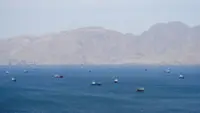
At the same time, the IRGC moved to block the Strait of Hormuz - a critical chokepoint for global oil shipments - further disrupting the global energy supply chain.
Ilango said the impacts were significant, noting that large-scale evacuations could have immediate economic consequences as many Middle Eastern economies rely heavily on expatriate workers in key sectors such as energy, finance, logistics and construction.
In several Gulf countries, foreign workers make up between 70 and 90 per cent of the labour force, including millions from Asia.
"This means any sudden departure of expatriates could significantly disrupt essential economic activities.
"The impact would not remain confined to the Middle East. Disruptions could translate into higher energy prices, increased shipping costs and delays in global supply chains, which would in turn contribute to inflationary pressures in the wider global economy,” he said.
Shockwaves Loom Over South-East Asia
Meanwhile, Associate Vice President at The Asia Group, Asrul Sani, said the Southeast Asia is already feeling the effects of the conflict and its consequences would be far-reaching.
He said ASEAN is facing a "triple squeeze” of rising energy prices, shipping disruptions and the risk of a remittance shock if migrant workers in the Middle East begin returning home.
"ASEAN is no longer watching a distant crisis. It is already dealing with the economic consequence.
"This is no longer just about diplomatic posturing; it is about the domestic economic impact across the region,” he told Bernama from Singapore.
He added that in such a situation, governments’ fiscal capacity will determine which economies can cushion the impact and weather the disruption.
Asrul also weighed in on what he described as a "cultural clock” factor, referring to how religious and cultural timelines in Muslim-majority societies could shape public reactions to the conflict.
"If the conflict stretches beyond the Eid and Haj season, domestic pressure could build in Muslim-majority countries across Southeast Asia, testing bilateral relations with Western partners,” he said. -- BERNAMA