



KUALA LUMPUR: If trying to secure a tour to visit the active, oft-restricted Joint Security Area (JSA) in the Korean Demilitarized Zone (DMZ) sounds too stressful for your Seoul holiday plans, fret not.
As the crow flies, just a few kilometres away, visitors can get a vivid recreation of the site at the JSA Experience Museum.
The facility is located in the Unification Village area of the Civilian Control Zone (CCZ), a buffer zone just south of the DMZ itself.
While currently more accessible than the actual JSA area, tour bookings are still recommended due to strict security clearance needs.
Foreign visitors must hand over their passports at a military checkpoint before entering the CCZ; the documents are only returned upon exiting through the same checkpoint.
Over 40 journalists from 30 countries attending the World Journalists Conference (WJC) 2026 recently toured several CCZ sites in Paju, located roughly 30km from the capital.
Describing its site as a “place where history holds its breath”, the JSA Experience Museum curators make it clear that the space does not centre on war.
Instead, it is a museum about what war leaves behind, and paints a powerful picture of the toll inflicted on a people divided.
Beyond photo exhibits and multimedia selfie spots, the immersive exhibition space recreates the famed blue conference rooms, historically used as a meeting point between North and South Korean officials.
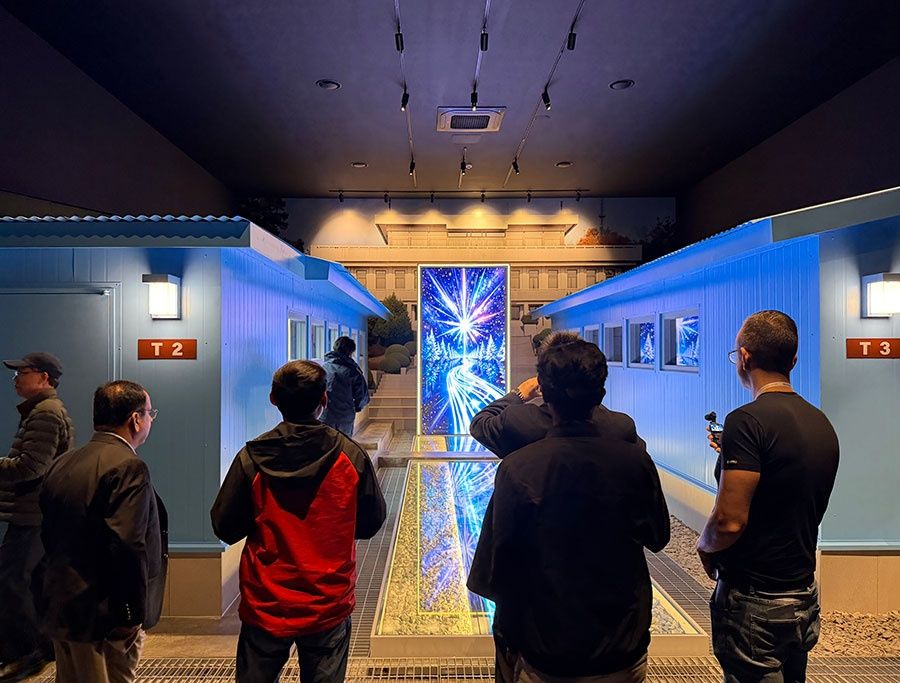
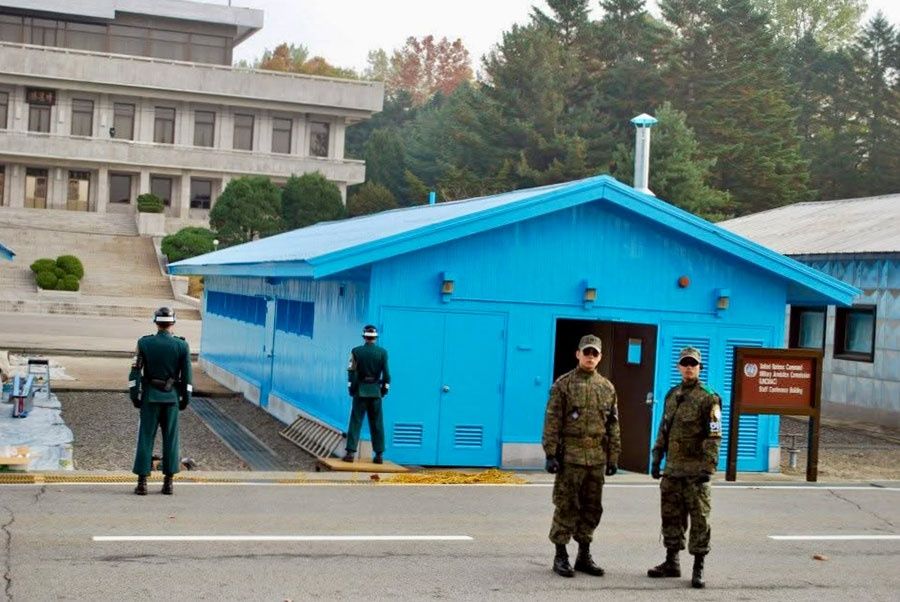
The original rooms sit along the Military Demarcation Line (MDL) within the actual JSA.
They are situated between North Korea’s Panmungak and South Korea’s northernmost facility in the DMZ, Freedom House, which famously hosted a 2019 meeting between US President Donald Trump and North Korean leader Kim Jong-un.
For this writer, who previously visited the actual Freedom House — where, under strict instructions to keep cameras pointed only north, members of the press looked upon soldiers from both sides of the divide standing just steps apart at the MDL — the museum experience available at the CCZ is arguably better suited for visitors of all ages.
At the museum, visitors can also interact with rotary phone exhibits and listen to sound clips, including the testimonies of Korean War veterans reflecting on their life-changing wartime experience.
While museums usually memorialise the past, the Korean War is not actually over, but merely put on hold: under the armistice agreement, the two Koreas agreed to withdraw their respective armies by 2km to the north and south.
This move created the 4km-wide, 250km-long DMZ buffer zone which splits the Korean peninsula to this day.
After viewing this suspended conflict through the museum’s lens, those wishing to witness the present-day reality can take a short trip to the Odusan Unification Observatory.
Perched at the top of Odusan Mountain, the observatory was established to comfort dispersed families and provide an educational site for unification efforts.
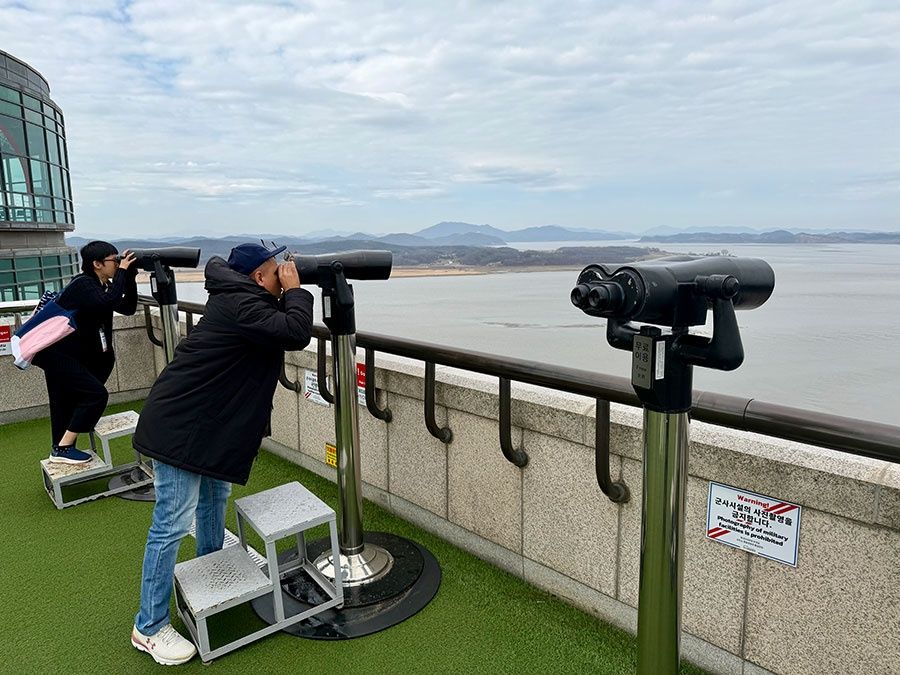
It offers a panoramic view of several structures in Hwanghae-do, North Korea, and on a clear day, visitors looking through the powerful binoculars provided can even catch a glimpse of residents just across the river.
It was fascinating to see North Korean citizens in dark clothing walking near seemingly empty buildings, and even cycling through the landscape.
Also of particular note is Camp Greaves, which served as a US Army camp base for 50 years after the ceasefire agreement of the Korean War.
More recently, it gained fame as a filming site for the hit K-drama series, Descendants of the Sun.
Located 2km from the Southern Limit Line of the DMZ, it boasts the first youth hostel to be located within a restricted area for civilians in Paju city.
The sprawling camp offers several key attractions, including Gallery Greaves.
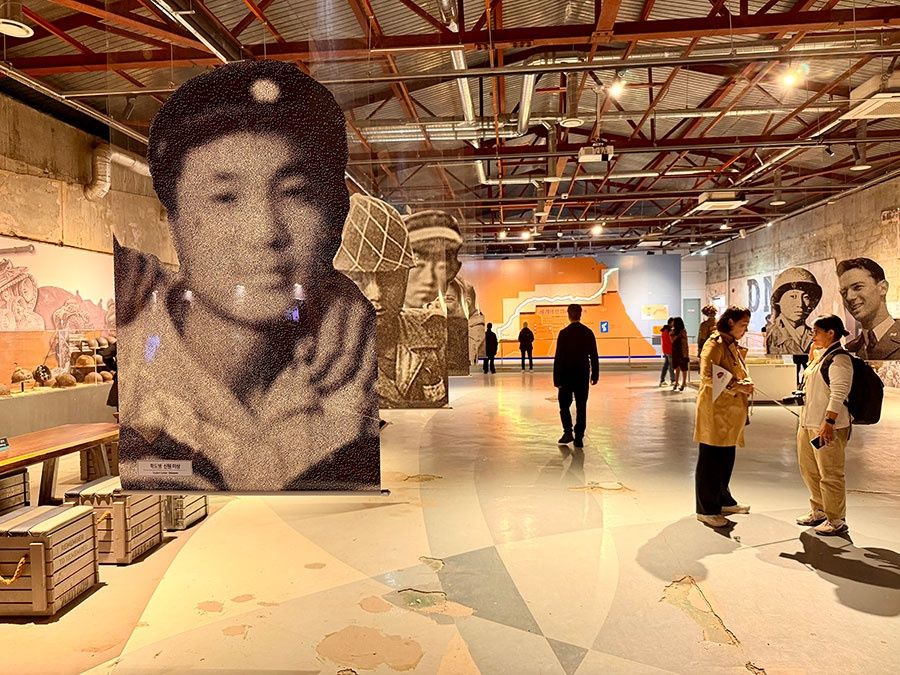
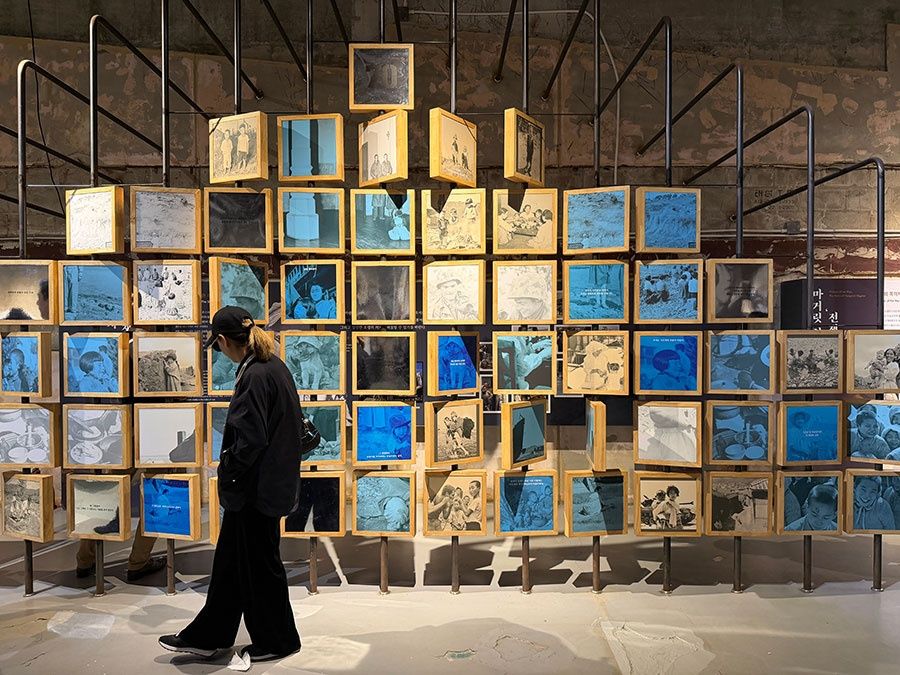
The moving “Portraits of the Days of Youth, Days of Our Youth” exhibit there reexamines the stories of student soldiers who participated in the Korean War, overseas-deployed troops, and wartime correspondents.
Among the materials showcased is student soldier Lee Woo-geun’s emotional ‘Unsent Letter’, which reflects his fear of war and longing for his mother — a stark reminder of the very real human cost of conflict.
With war-related exhibition halls, a studio site used for music videos and K-dramas, contemporary art installations, and a Peace Garden showcasing plants that have maintained their own ecosystem through decades of division, there is plenty to see and do for visitors here
While the camp has an on-site cafe, visitors to the CCZ attractions can also opt for restaurants specialising in the area’s local produce, such as the Tongilchon Jangdankong Maeul tofu eatery.
As the WJC 2026 attendees lunched on clean-tasting Jangdan beancurd dishes, Paju mayor Kim Kyung-il shared that the area also produces the highest-quality ginseng in the country.
Despite its proximity to North Korea, and possibly the world’s most heavily-guarded border, the proud local describes life in his hometown as slow-paced and peaceful.
“Paju is just next to Seoul, but people aren’t rushing about for everything here,” he said through a translator, praising its pristine natural surroundings.
However, Kim acknowledged the geopolitical reality of living in the borderland: “The situation here depends on the politics.”
Still, despite occasional tensions, the people of Paju keep peace at the forefront of their minds:
“We don’t want tensions to rise, so we are continuously sending messages of peace. The people’s place is here, so they should live,” said Kim.
While reminders of the Korean War dot the Paju landscape, what truly stands out is the resilience and optimism of the people who call this borderland home.
If the area’s concerted efforts for unification education are any indication, the dream of a peaceful, unified Korea is not a relic of the past, but a hope that remains very much alive.
The Journalists Association of Korea, headed by president Park Jong-hyun, organised the WJC 2026 with the support of Korea’s Culture, Sports and Tourism Ministry, Foreign Ministry, and the Korea Press Foundation. -- The Star / Asia News Network
