A new trend known as the “Storm Bath Spa” is gaining traction in major cities across China, uniquely merging wellness and innovation by creatively simulating storms and incorporating mild electric shocks. This experience offers both emotional and psychological healing, attracting an increasing number of enthusiasts.
Chinese bathhouses boast a rich history spanning thousands of years.
Beyond serving basic hygiene needs, they have long functioned as spaces for social connection, allowing people to relax, recharge, and indulge in high-end amenities – such as saunas, massages, and diverse dining options – at relatively affordable prices.
In northeastern China, public bathhouses become especially vital during the harsh, dry winters, providing much-needed warmth and comfort.
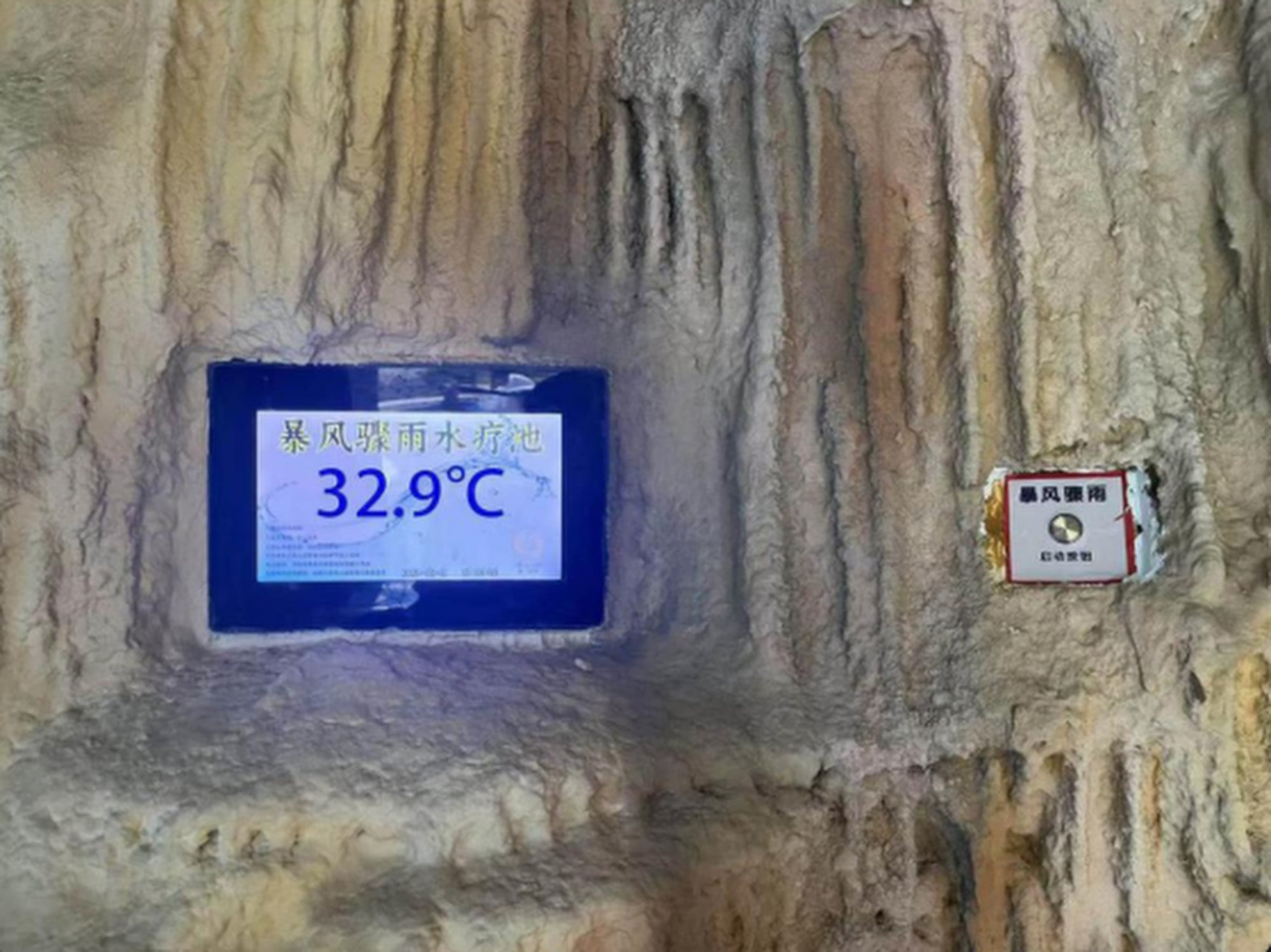
Many modern, luxurious bathhouses now operate 24/7, offering all-in-one entertainment experiences that include dining, mahjong, spa treatments, body scrubs, herbal soups, and late-night porridge sessions.
These establishments present a cost-effective and rejuvenating escape for overworked urbanites and have begun attracting a wave of foreign visitors amid the social media trend of “wanting to embrace Chinese culture.”
“Russian bathhouse sessions typically last two to three hours, during which you can soak, receive massages, and enjoy the sauna. Extending your stay incurs significantly higher costs. However, in Shanghai, spa visits can extend much longer, often allowing overnight stays,” noted Russian vlogger Alina Lasina in an interview with The Paper.
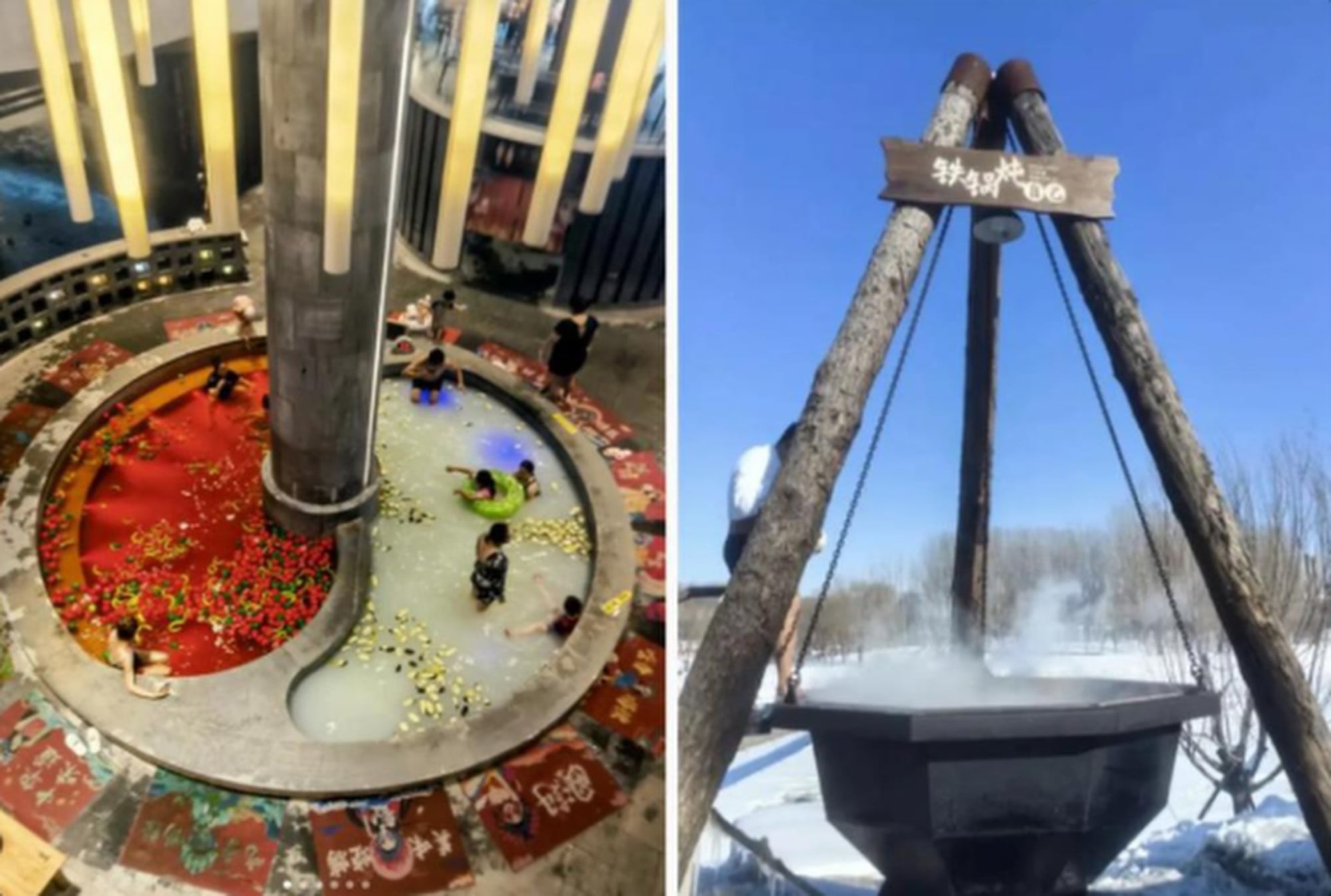
An exciting addition to this trend is the “Storm Bath Spa” experience.
Originating in Italy, it became popular among Chinese students studying abroad, who would travel all the way to Milan, spend nearly 1,000 yuan (US$140), and wait in line for a chance to try it.
Now, this imported trend has crossed oceans and arrived in China, rapidly gaining popularity not just in major cities like Beijing, Shanghai, and Guangzhou, but also in places like Shijiazhuang in Hebei province in northern China and Baotou in Inner Mongolia.
It has quickly transformed into a stress-relief sanctuary for office workers and an ideal venue for corporate team-building, becoming a new attraction for bathhouses and hot spring hotels.
According to viral online videos, the Storm Bath Spa offers overhead water jets that cascade into the pool, while surrounding electronic screens display dynamic visuals of scenes such as lightning storms.
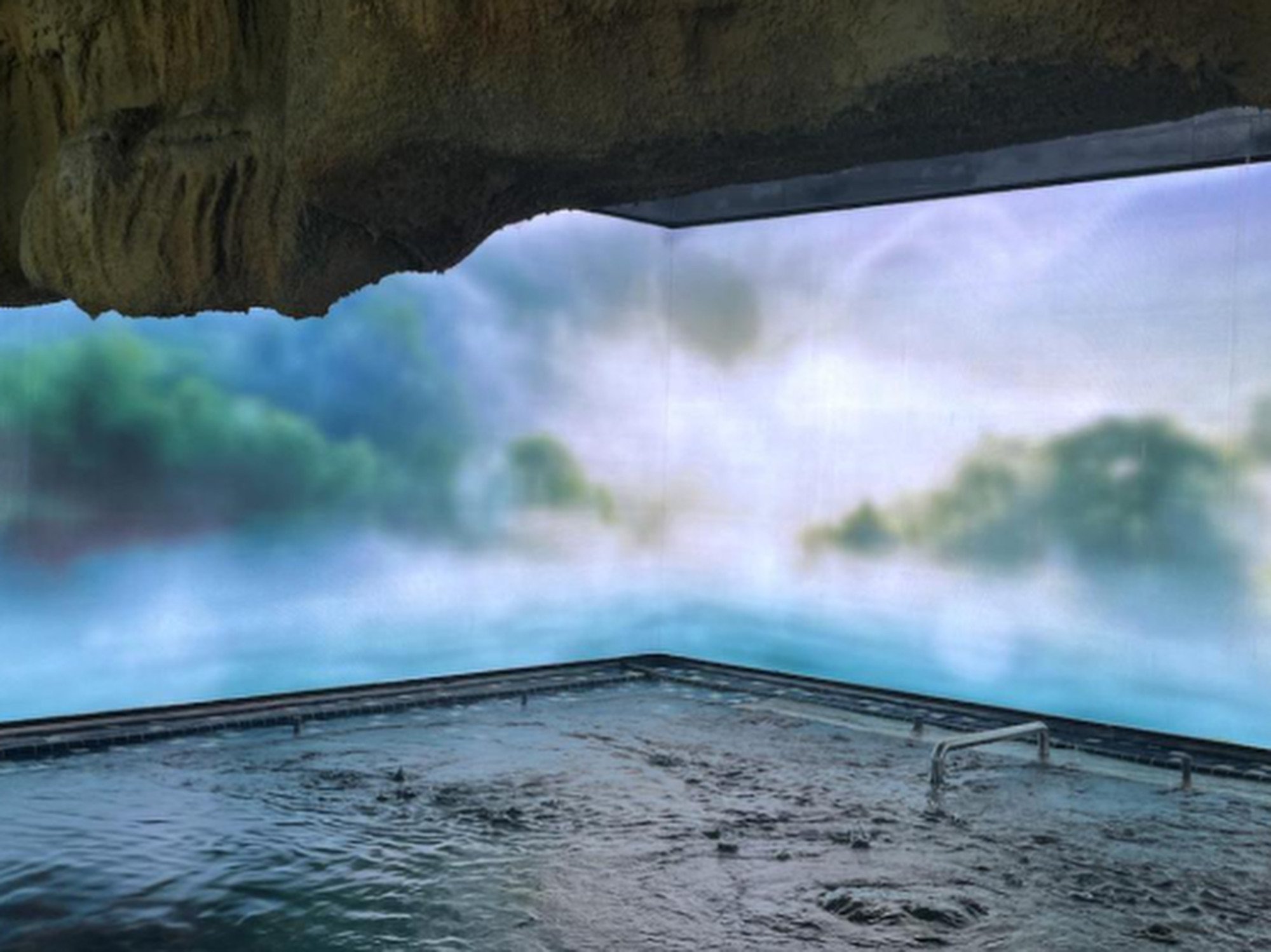
Accompanied by simulated thunder and realistic heavy rain sound effects, the immersive atmosphere feels vividly lifelike.
Visitors can bathe in an environment characterised by “thunder, lightning, and torrential rain,” creating a surreal experience that some liken to “undergoing a heavenly trial.”
One netizen jested: “Northeast bathhouses truly know no bounds – if you can envision it, they can create it. They’re even introducing a ‘tribulation-crossing’ package now.”
Another commenter humorously remarked: “With pouring rain and flashes of lightning, I felt I’d experienced a life-altering lesson right there in the bathhouse in just four minutes.”
A third added: “That’s essentially a Titanic-level bathing experience.”
A staff member at a spa in Shenyang, Liaoning province, in northeast China, shared with Jimu News that tickets for their bathhouse are priced a little over 100 yuan (US$14).
“Visitors must wear swimsuits, each session lasts about five minutes, and around 30 people can partake simultaneously. The water is only knee-deep for adults, so even non-swimmers can enjoy it,” the staff member explained.
The bathhouse craze has inspired even more captivating variations.
The Qinghe Peninsula Hot Spring Centre in Shenyang, famously dubbed the “ceiling of luxury bathhouses,” has created an “ice-and-snow world” within its premises.
In outdoor temperatures ranging from minus 20 to 30 degrees Celsius, it features a 168-metre pool and ice slides that allow visitors to glide directly from snowy slopes into hot springs.
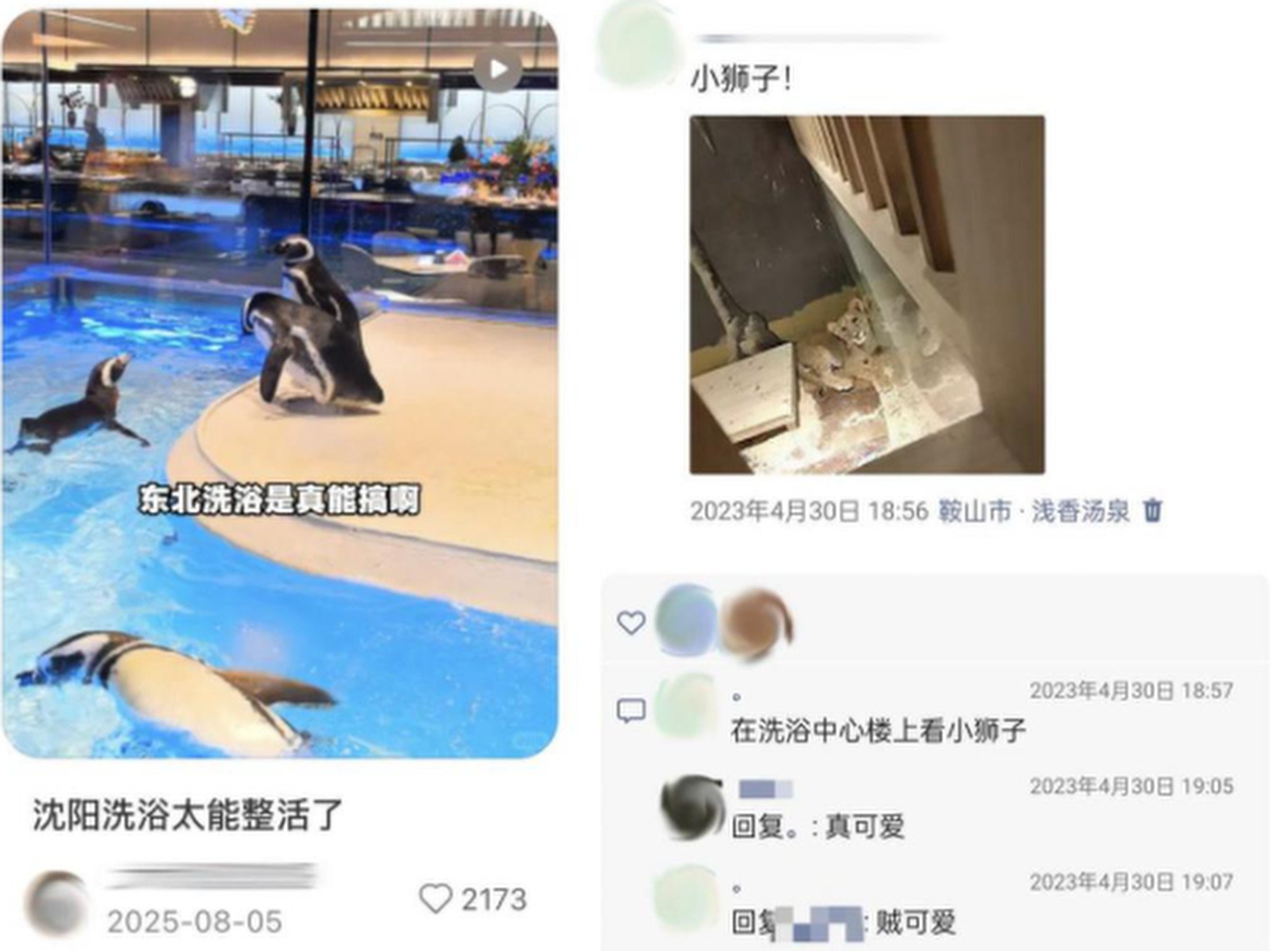
Some venues have even incorporated animals into the bathing experience; reports suggest guests have encountered penguins, lions, and lizards alongside them.
One Shenyang bathhouse, the “Magpie Water Club,” has famously brought penguins indoors, while netizens claim to have spotted parrots, rabbits, lizards, and even lions at various other bathhouses. -- SOUTH CHINA MORNING POST