Hong Kong must stay vigilant in times of peace and embrace innovation, according to a prophecy drawn by the city’s top rural leader during an annual Lunar New Year ritual.
Kenneth Lau Ip-keung, chairman of powerful rural body the Heung Yee Kuk, drew a “neutral” stick for Hong Kong at Che Kung Temple in Sha Tin on the second day of the Year of the Horse on Wednesday and offered his interpretation of the prophecy.
The No 22 fortune stick read: “Do not get close to a woodcarver husband; judge people by their good and evil deeds. Never forget righteousness when seeing benefits and beware of non-benevolence in the midst of benevolence.”
The prophecy referred to a story from The Twenty-Four Filial Exemplars about Ding Lan, an orphan from the Han dynasty (206BC-AD220) who carved wooden statues of his parents and served them as if they were alive. Later, his wife burned the statues, or in another version she pierced the statues with needles, and an enraged Ding divorced her.
Lau offered his interpretation of the prophecy after the ceremony, calling on the city to remain vigilant amid complex geopolitical tensions.
“We need to be more meticulous and careful in our work. We can only achieve good results by thinking with our hearts,” Lau said. “We must always stay vigilant, even in peacetime, because the international situation is complex.”
He added that Hong Kong must avoid being fusty and conservative, urging the city to embrace innovation, particularly with the Northern Metropolis megaproject.
“The Northern Metropolis is entering a golden decade of development, which will have a significant and lasting positive impact on Hong Kong,” Lau said. “We cannot stick to the old ways; we must be innovative.”
Lau also stressed the need for prudence and the importance of balancing conservative ideas with forward-looking ones for more thorough consideration.
The ritual is a part of an annual ceremony at the temple, where community leaders draw fortunes from a cylinder containing 96 numbered sticks. Each one bears a prophetic message, 35 of which bode well, 17 are ill-omened and 44 are neutral.
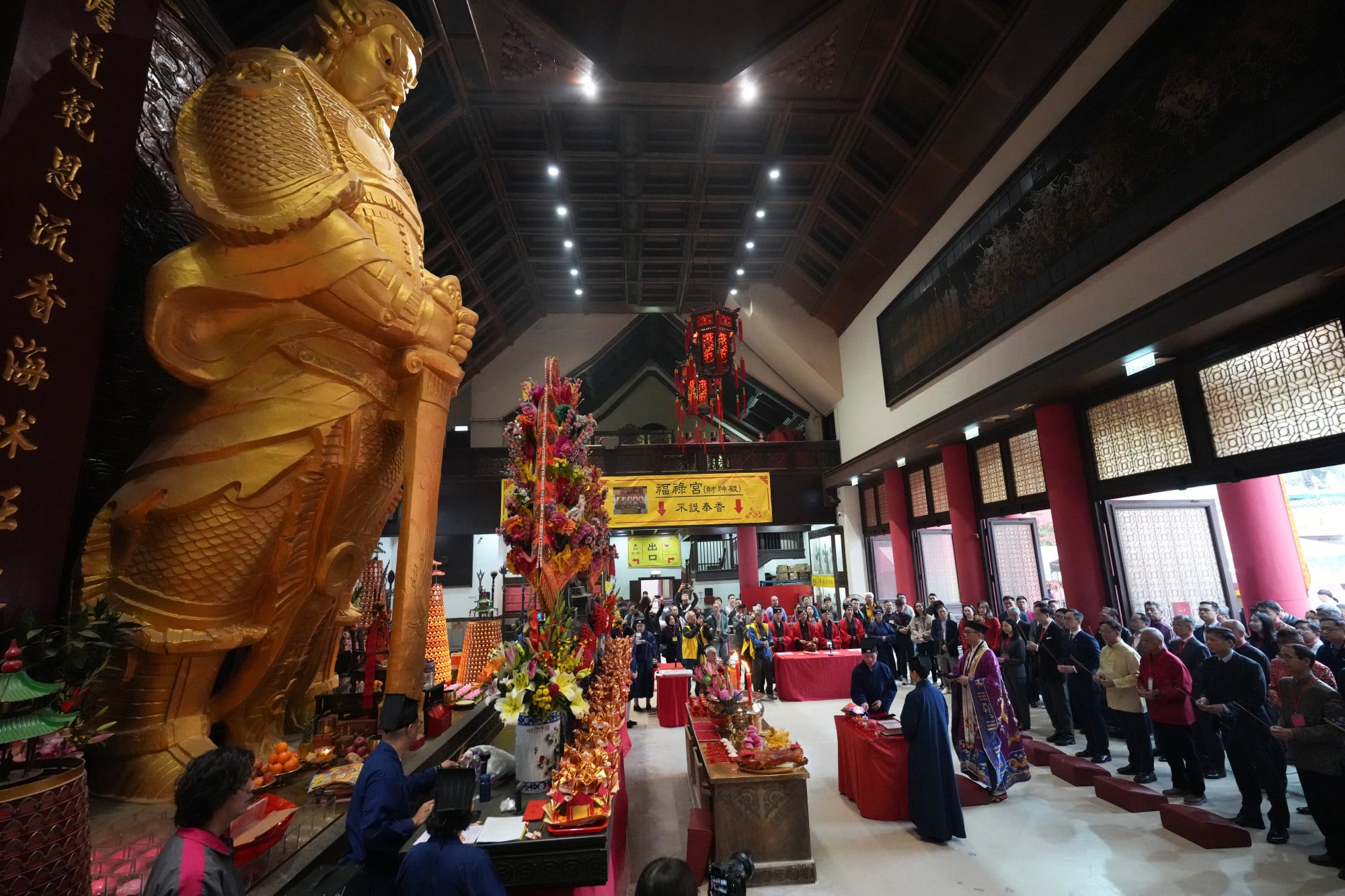
Participants shake the cylindrical container until one stick falls out, ensuring the prophecy is drawn by chance.
Fortune-teller Chan Tin-yan said the prophecy indicated “moderate to good fortune”, foretelling a possible economic revival in the second half of the year, along with stronger progress in the city’s infrastructure and more job opportunities.
“Looking ahead to the economy, the fortune stick suggests it will be extremely promising this year,” he said. “I hope the government will prioritise infrastructure development and create more jobs.
“I also hope the government can offer more ‘sweeteners’, ideally a cash handout of several thousand dollars to help residents get through this difficult period.”
Chan added that the government should introduce new policies only after thorough consideration, citing the fortune stick’s advice to think carefully before taking action.
He pointed to the recent repeal of the mandatory bus seat belt rule after public backlash, saying: “The government should not impose such harsh penalties and should consider lighter fines instead.”
Meanwhile, Sha Tin Rural Committee chairman Mok Kam-kwai drew the No 83 stick for the district, one of the worst possible omens.
“Hoist the sail and ride the favourable current to Yangzhou; endure waves halfway and pounding head-on. Exert all your strength, yet struggle to advance. Lower the oar and drop the anchor, but the water still does not flow,” the stick said.
It was the same fortune stick drawn by then home affairs chief Patrick Ho Chi-ping in 2003, the year Hong Kong was hit by the severe acute respiratory syndrome (Sars) outbreak, which left hundreds dead.
Chan warned that the district could see a spate of restaurant closures, urging Sha Tin residents to remain vigilant “in all aspects”, particularly regarding traffic and fire safety.
“Everyone needs to be more careful, not only Sha Tin residents, but all Hongkongers should take extra caution,” Chan said.
It was Lau’s 11th year drawing the fortune stick for the city in the annual ritual. The businessman inherited his position from his father, Lau Wong-fat, in 2016, a year after the influential rural patriarch stepped down due to poor health before dying in 2017.
The kuk represents the interests of indigenous villagers in the New Territories.
Lau last year drew the No 24 neutral stick, which said: “Do not do anything wrong during your life or cause trouble because of your greed. Unless you have a noble person helping you, you should not waste your efforts.”
The chairman interpreted it as a reminder for the government to spend within its means and not to raise taxes.
The temple, built about 300 years ago, is dedicated to Che Kung, a Southern Song dynasty (1127-1279) military commander who had a reputation for quashing not only uprisings but also plagues.
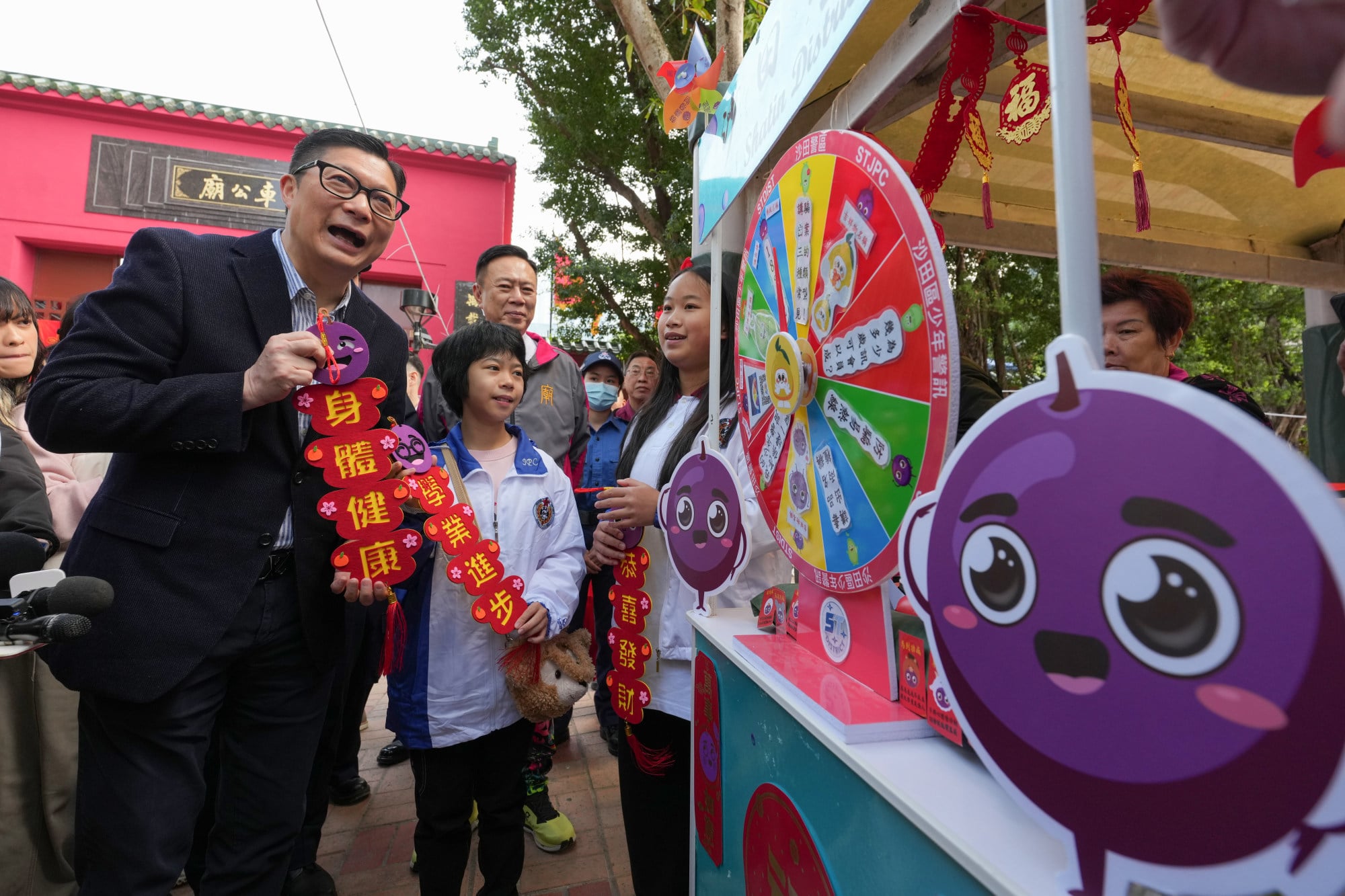
Secretary for Security Chris Tang Ping-keung visited the temple to show support for disciplined services officers on duty and to extend Lunar New Year greetings to worshippers and stall owners.
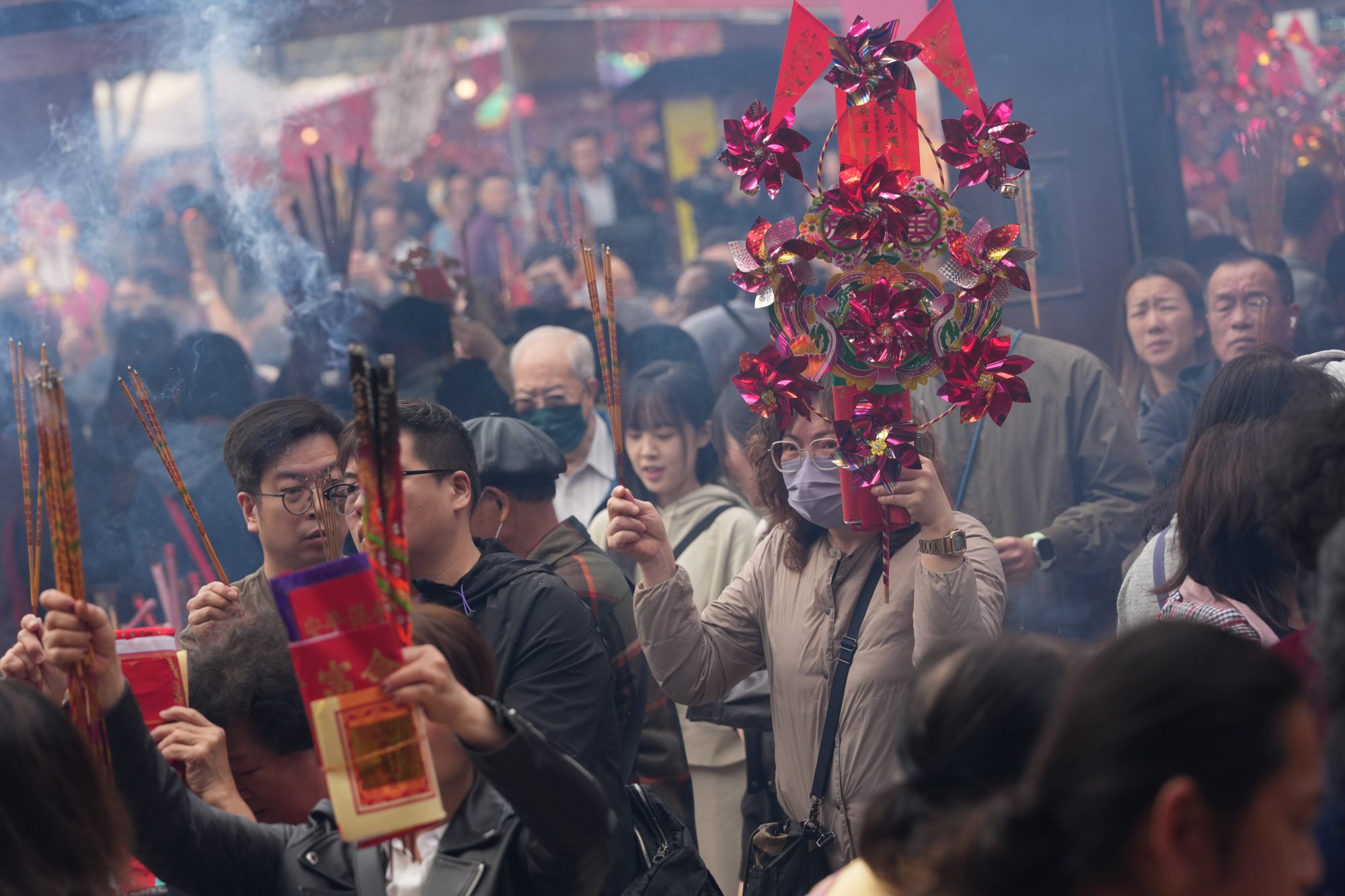
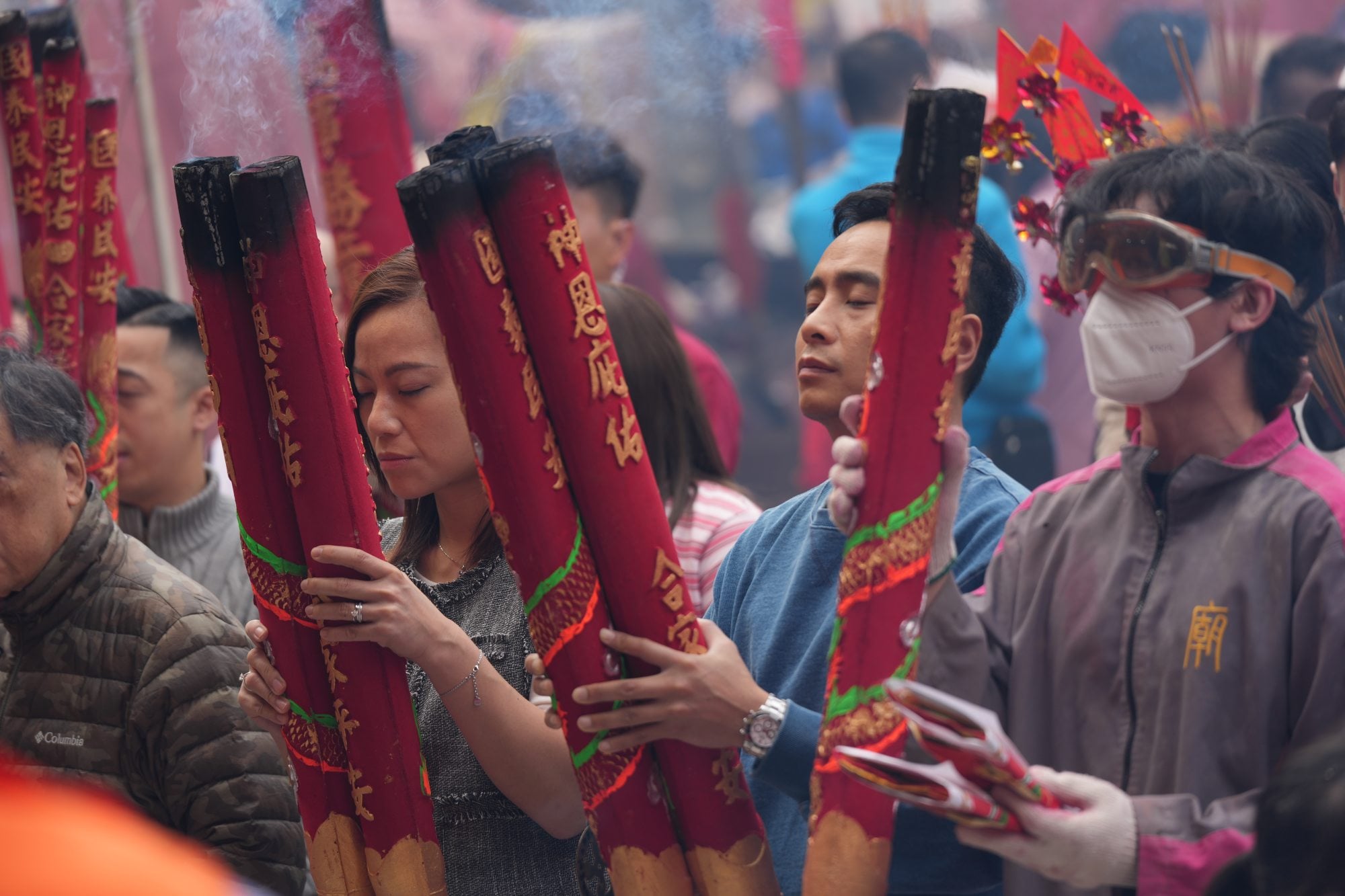
Thousands of residents flocked to the temple for the Che Kung Festival, forming long, snaking queues outside.
Vanessa Ng, 52, was among the worshippers at the temple, praying for career success. A regular visitor, she said that foot traffic was heavier this year and the atmosphere more vibrant, praising the smooth arrangements that kept waiting times short.
Primary school pupil Jaden Kwok, 11, visited with his family for the first time to experience traditional Chinese culture.
“I enjoy spinning the pinwheel the most because it’s fun,” Jaden said. “I wished to Che Kung that I can do well in my studies.” -- SOUTH CHINA MORNING POST