




Beijing came under sharp criticism on Tuesday at a highly contentious US Congressional hearing on the influence of foreign funds in US politics – but so did US President Donald Trump.
The hearing by the powerful House Ways and Means Committee, which shapes tax and tariff legislation, comes amid deep partisanship and Trump’s declining popularity ahead of a November midterm election.
“Tax-exempt organisations funded by foreign donors are exploiting very lucrative US tax benefits to incite violence and unrest in our communities and destabilise our political process,” said Jason Smith, chairman of the committee, a Republican from Missouri. “Many of these tax-exempt groups also have documented ties to hostile foreign governments, like the Communist Party.”
Republicans called out, among others, the “Singham Network”, an informal complex of non-profit organisations, media outlets and think tanks funded by Neville Roy Singham, an American millionaire and former software entrepreneur based in Shanghai.
Specifically, they accused it of donating US$20 million to the People’s Forum, a New York-based civic group, to support protests and support left-wing causes and push pro-Beijing narratives and anti-US propaganda. The Forum did not immediately respond to a request for comment.
Democrats countered that removing malign foreign influence was desirable, but Tuesday’s hearing was more about targeting progressive groups selectively, rather than dealing with more obvious targets.
“It’s impossible to talk about non-profits in America without acknowledging those who are tied to the president,” said Representative Richard Neal of Massachusetts, the committee’s most senior Democrat at the hearing on “Foreign Influence in American Non-profits: Unmasking Threats from Beijing and Beyond”.
Neal pointed to Trump’s decision to accept through his non-profit presidential library foundation a US$400 million aircraft for his personal use, a gift from Qatar “apparently linked to several deals with the administration”.
Neal and others also pointed to a US$142 billion arms sale Trump negotiated “in a deal for AI chips” that could potentially be diverted to China; and how he collected hundreds of millions of US dollars for his inauguration and White House renovation project from unknown sources.
“The administration has put up a for-sale sign, and many countries apparently are responding,” said Neal. “We can’t be party to another performative effort that continues to ignore the president’s abuses.”
Witnesses and Republican lawmakers charged foreign millionaires with channelling vast sums using US non-profit structures, donor-advised funds and subsidiary companies to fund environmental and other progressive causes and “hold riots across the United States featuring intimidation and violence”.
They further accused foreign countries of exploiting non-profit structures to sway US elections and criticised the Internal Revenue Service, America’s tax-collecting agency, for failing to investigate abuses.
In particular, they cited Syngenta, a US-based subsidiary of China’s Sinochem, for its partnership with the National Future Farmers of America, a youth development group.
“It helps create the future agriculture leaders of tomorrow,” said Smith. “We do not need to allow our kids to be infiltrated by Chinese propaganda.”
Democrats, however, immediately cried foul.
So-called foreign-funded rioting, including the massive anti-Trump “No Kings” demonstrations last June and October, was constitutionally protected, they said, adding that the IRS could hardly expand audits after the Trump administration slashed 27,000 agency employees.
Republicans concerned about funding from companies like Syngenta, they added, might note the US$250,000 that Trump accepted from the company, along with US$1 million from Chinese battery-maker Gotion and US$50,000 from TikTok for his inauguration.
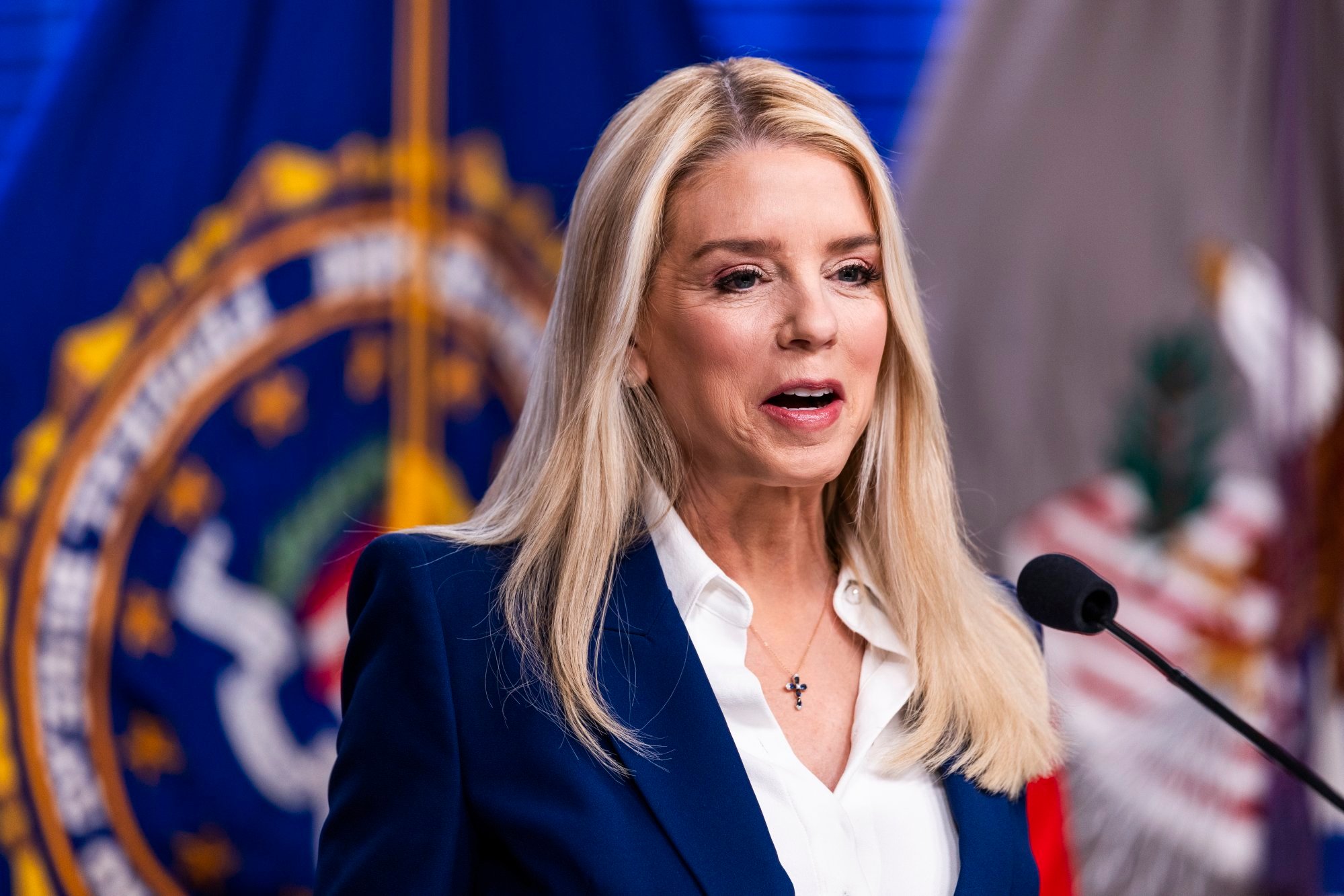
They also pointed to US Attorney General Pam Bondi’s move to significantly weaken enforcement of the Foreign Agents Registration Act on her first day in office after lobbying for Qatar in 2019 and 2020.
“Most of these organisations, which are based or have affiliates in China, have funnelled huge amounts of money directly into President Trump’s inauguration committee,” said Linda Sanchez, a Democrat from California. “If we’re going to have a plea for transparency and for oversight and for stopping the malign influence of foreign money in our politics and our government, then we have to start from the top down.”
The Chinese embassy in Washington did not immediately respond to a request for comment.
China has had its own long-standing campaign against foreign-funded non-profits, which it fears will promote “universal values” and spark a “colour revolution” that undermines national security.
Trump’s job approval rating has fallen five percentage points to 36 per cent, the lowest of his second term, while disapproval has risen to 60 per cent, according to a recent Gallup poll.
The US civic sector is massive, with over 1.8 million registered non-profit organisations, employing some 10 per cent of the US private workforce and collecting US$3.5 trillion in contributions annually. As the Trump administration has slashed funding to USAID, universities and other groups, however, the industry has come under serious pressure.
“The committee is absolutely right to be training at sites on improper foreign influence. However, there’s no need to be searching for dark conspiracies,” testified Robert Weissman, co-president of civic group Public Citizen, citing two causes.
“First, the fundamental failure of the Trump administration to enforce the existing tools we have to exert influence and to actively undermine them,” he said.
“And secondly, the president’s business and donor relationships that compromise him in a way that probably has no parallel in American history ... Our democracy needs a complete reversal.” -- SOUTH CHINA MORNING POST


