
Hong Kong’s rail operator has apologised after items from a maintenance vehicle and damage to track equipment caused a 1½-hour partial suspension of the MTR Island line, throwing Wednesday’s morning rush hour into chaos.
Train services between Sheung Wan and Quarry Bay stations were suspended as soon as the Island line began operating at 6.07am. The disruption lasted until 7.30am, triggering complaints from passengers about poor contingency arrangements after they were left waiting in long queues for alternative transport.
The MTR Corporation only notified the media about the disruption at around 6.40am, with management meeting the press almost five hours after operations resumed and apologising to the public for the inconvenience caused.
“The incident is very rare. We attach great importance to it and will conduct an in-depth investigation,” said Lee Kim-hung, deputy director of operations engineering maintenance at the MTR Corp.
Lee said engineering staff on the maintenance vehicle, which is deployed most nights for routine inspections, heard “unusual sounds” as it passed along the tracks near Wan Chai station at 5.30am after completing their tasks.
An inspection revealed that some of the vehicle’s components had become displaced and equipment near the tracks had also been damaged.
Objects, including vehicle components and signalling equipment, were found on the section of track between Wan Chai and Causeway Bay stations.
Asked if the incident was the result of human error or ageing equipment, Lee said: “At this early stage, I cannot answer this question because we still need to investigate in detail.”
He added that staff would inspect the vehicle and repair the tracks after service hours.
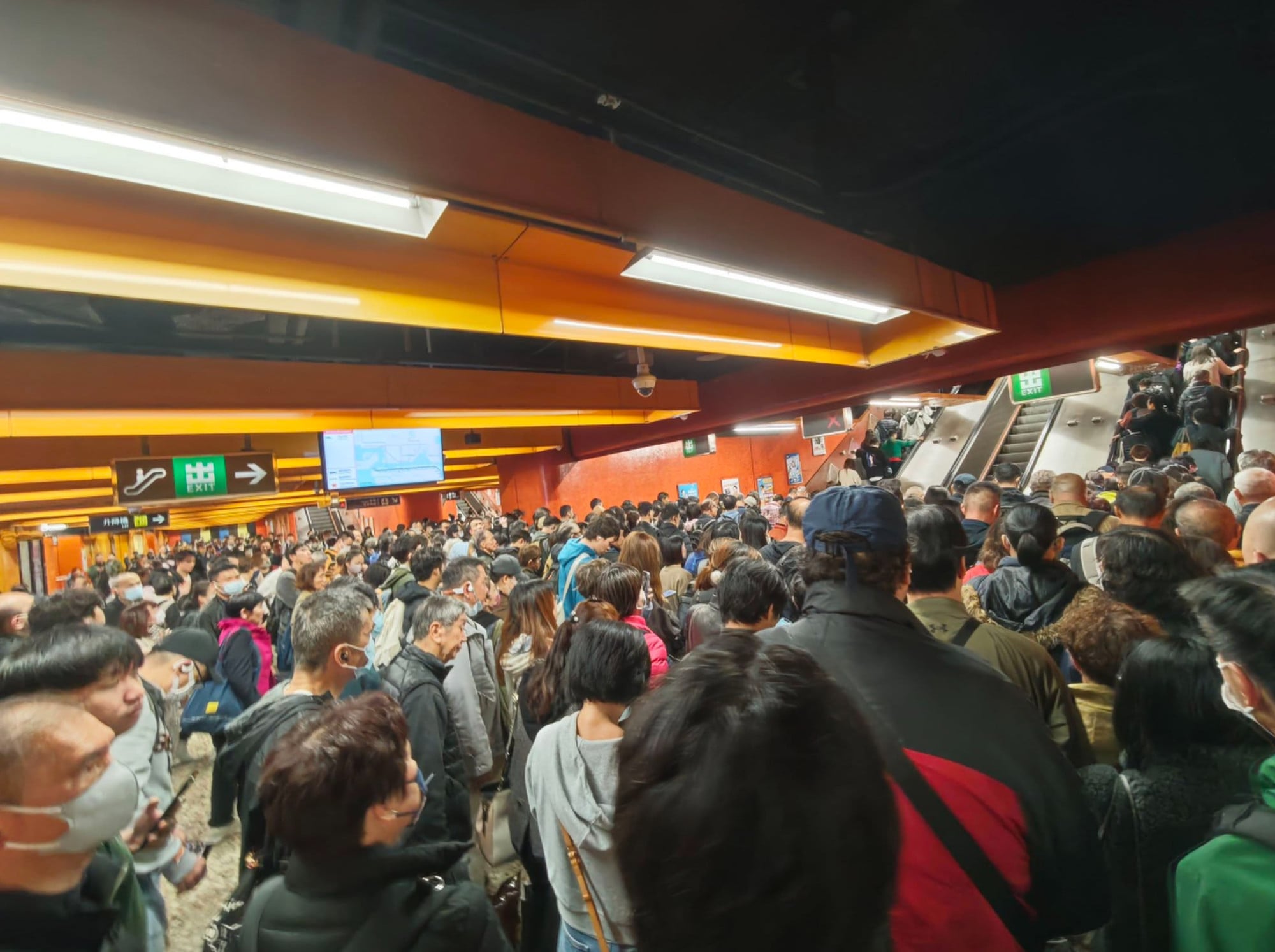
Asked why it took hours to disclose the cause of the suspension, Cheris Lee Yuen-ling, deputy director of the operating and metro segment at the MTR Corp, said the company had detected a signalling equipment failure at 5.30am, but it took time to remove the objects from the track.
Lee said workers had to fix the signalling equipment and conduct tests before services could resume between Quarry Bay and Sheung Wan stations at 7.30am.
Secretary for Transport and Logistics Mable Chan earlier demanded that the MTR Corp disclose details of the incident as soon as possible and submit a report to the government within a month.
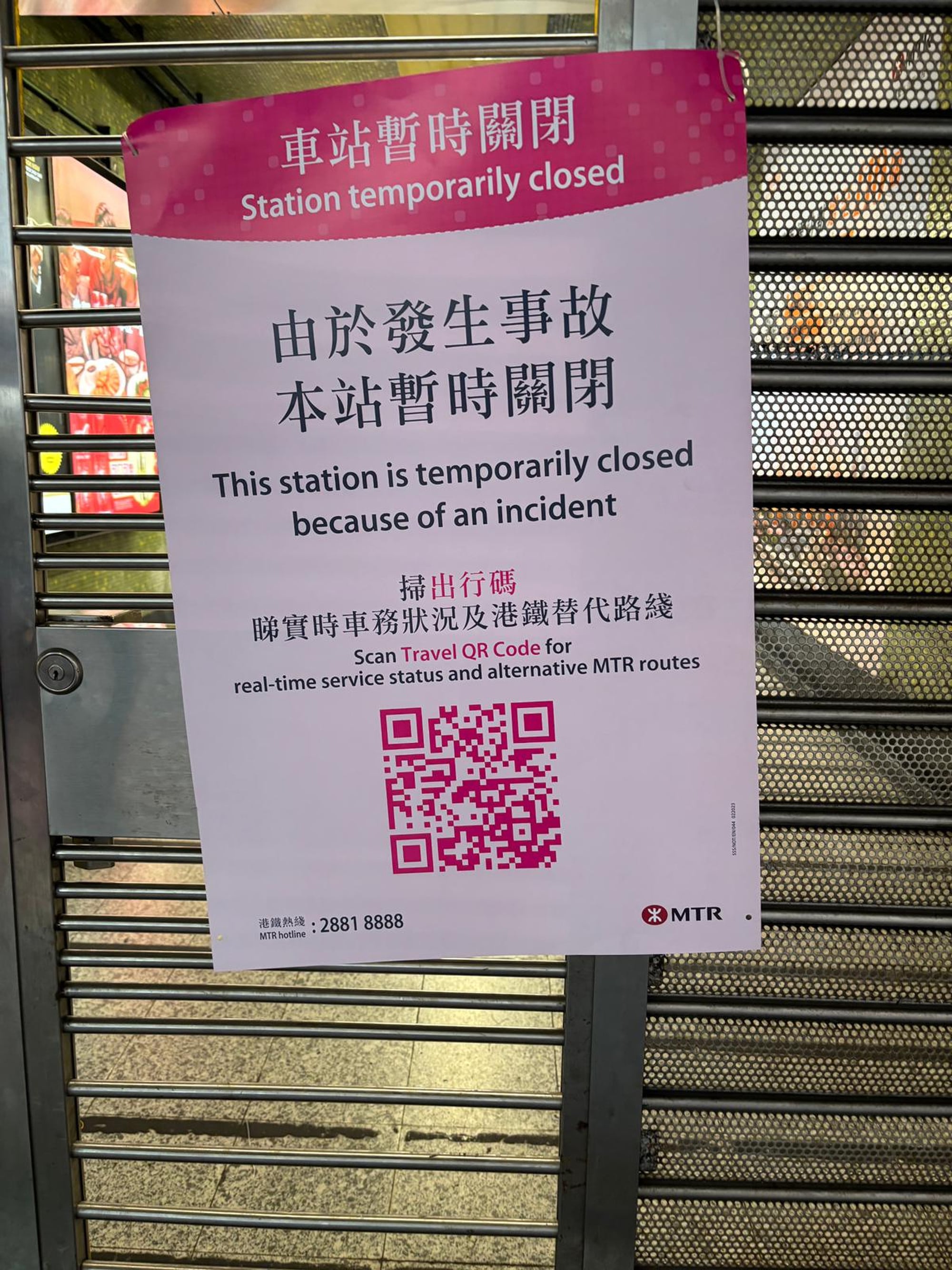
During the service disruption, signs were posted at station entrances reading: “This station is temporarily closed because of an incident.”
Trains ran at 10-minute intervals between Kennedy Town and Sheung Wan, and also between Quarry Bay and Chai Wan.
A social media user who took the first train on the Island line said an MTR broadcast initially told passengers to wait for 10 minutes because of signalling issues, before extending the time to 20 minutes.
The user, who did not specify which station she was at, described the information provided as “extremely chaotic”, saying the MTR later announced that passengers had to wait half an hour before eventually suspending operations.
The company deployed 30 free shuttle buses to carry passengers between Sheung Wan and Quarry Bay.
Another social media user complained that the MTR’s mobile app only announced the service suspension and shuttle bus arrangements at around 7am.
“Groups of passengers from the northwest New Territories had already arrived on Hong Kong Island when the service resumed. Many shuttle buses were empty. It was too slow,” the user said.
A number of passengers opted for buses and trams instead. One commuter, Tony Cheung, who works in public relations, said he took a bus from Wan Chai to Admiralty MTR station so that he could travel on the Tsuen Wan line and continue his journey to his office on Lantau Island.
“I spent 10 to 15 minutes longer than usual,” the 42-year-old said, adding that his son’s school in Wan Chai granted pupils a late attendance exemption because of the suspension.
Gary Zhang Xinyu, a former MTR engineer and lawmaker, said the maintenance vehicle might have had loose or unstowed components that were dragged along the tracks and damaged equipment.
“The MTR Corp should probe whether it was human error or an unprecedented mechanical failure,” he said.
Zhang said the operator required additional time to resolve the issue as the signalling equipment had also been damaged.
While some questioned the need to suspend services at multiple stations, Zhang said that finding a section of track that allowed trains to reverse direction was involved.
Under a penalty mechanism for service disruptions, the MTR Corp sets aside funds for incidents lasting at least 31 minutes that are caused by factors within its control and offers fare rebates to passengers.
For service disruptions lasting over an hour to two hours during non-peak periods, the company can be fined HK$2 million (US$255,836). The penalty rises to HK$2.4 million during peak hours, defined as 8am to 9am and 6pm to 7pm on weekdays.
Zhang said that apart from setting aside funds for future rebates, the MTR Corp could consider compensating affected passengers with free tickets, given that electronic payments had made tracing regular commuters easier.
The MTR Corp has pledged to invest HK$65 billion between 2023 and 2027 in railway asset renewal and maintenance. -- SOUTH CHINA MORNING POST