

PHNOM PENH: At a crowded displacement site inside a Buddhist pagoda in Banteay Meanchey province, 73-year-old Kim Sophat waits for what she says matters more than aid or donations: peace that will allow her family to return home.
Sophat, a vendor at a local school in Techo village, O Beichoan commune, O Chrov district, fled her home following Thai military attacks that erupted along the Cambodia–Thailand border in early December 2025.
Nearly a month later, she remains at Wat Samithi Moni Saphon, also known as Wat Svay Thmey, in Serei Saophoan town, too afraid to go back.
“I don’t want war,” Sophat said, her voice steady but tired. “Please, Samdech, help bring peace so I can return to my home. Life as a refugee is very hard.”
She arrived at the camp with her widowed daughter and two young grandchildren after clashes intensified on Dec 8.
Like many others displaced by the fighting, Sophat says the ceasefire has not eased fears on the ground.
“We still don’t dare to return,” she said on Saturday (Jan 3). “We are all women. I have no sons. If something happens, who will protect us?”
Before the fighting, Sophat earned a modest living selling snacks and small goods at a local school. The income was small but stable, enough to feed her family day by day. Displacement ended that routine overnight.
“Since coming to the camp, I have had no income for a month,” she said. “I don’t have a single riel.”
Her situation has been worsened by illness. Sophat was discharged from hospital only days earlier, while one of her grandsons remains hospitalised.
With no proper transport, she says she has been forced to borrow a motorbike to pull her belongings on a cart between the camp and her house.
“When I arrived here, the motorbike was taken back,” she said. “If I need to move again, I don’t know how. I have nothing to pull my belongings. It is very miserable.”
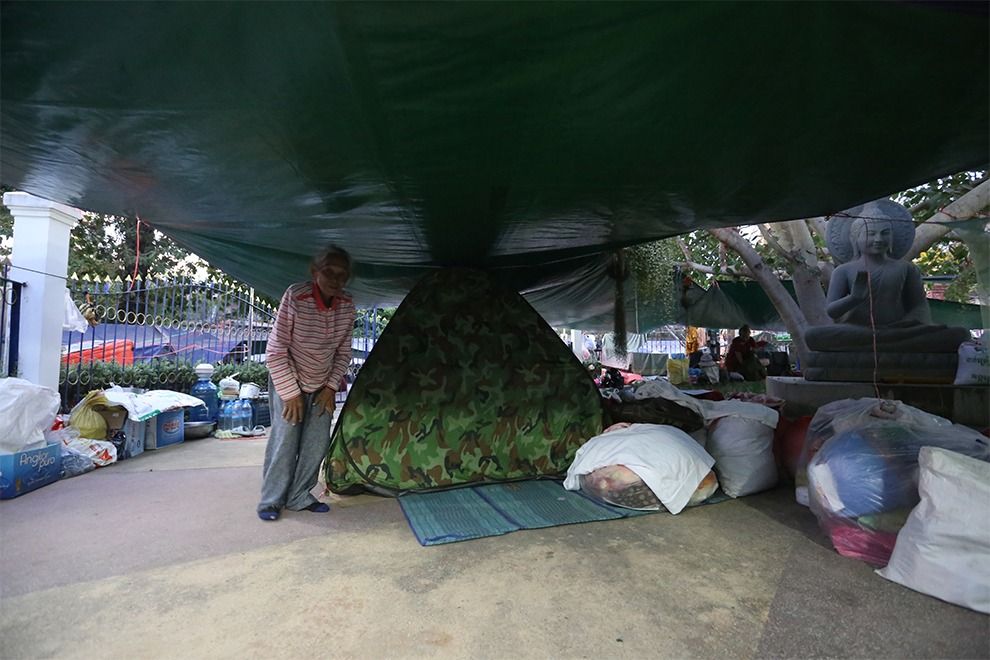
Though monks and volunteers at the pagoda provide rice, water and shelter, Sophat says displacement has stripped her family of dignity and choice.
“There is rice and water, but children still cry for snacks and other food,” she said. “When I have nothing to give them, it breaks my heart.”
Her grief is also tied to what she left behind. Sophat says her home, land, livestock and crops near the Boeung Trakuon area were abandoned when she fled.
According to her, nothing remains.
“I kept thinking about my house, my chickens and ducks,” she said. “Everything was stolen. Nothing was left.”
Inside the pagoda, Sophat finds some comfort in seeing monks arrange informal lessons so displaced children do not fall behind in school.
“I am very happy they can still learn,” she said. “I don’t want my grandchildren to forget how to read and write.”
But her appeal remains simple and urgent. She says she does not seek compensation or revenge, only safety and the chance to live quietly again.
“If there were peace, we would not have to run, crawl or evacuate,” she said. “We could just live and support ourselves day by day.”
“I am old, and I can endure it,” she said. “But my grandchildren are still young. I don’t want this generation to see war or suffer like this.”
Sophat’s experience mirrors that of thousands of residents displaced by border violence in Thma Puok district, where local authorities say Thai military activity damaged homes and pushed civilians from their villages between December 7-27, 2025. - The Phnom Penh Post/ANN


