
Hundreds of lawyers have signed up to provide free advice to residents left homeless by Hong Kong’s deadly fire in Tai Po last month, as they try to understand their legal options and file insurance claims.
Some residents have said they are at a loss over whether any criminal prosecutions will affect their legal cases and if they should pursue civil claims against those held responsible.
The volunteers come from the Bar Association, the Law Society, non-governmental organisations Equal Justice Hong Kong, SidebySide and Pro Bono HK, and law students from the University of Hong Kong’s clinical legal education programme.
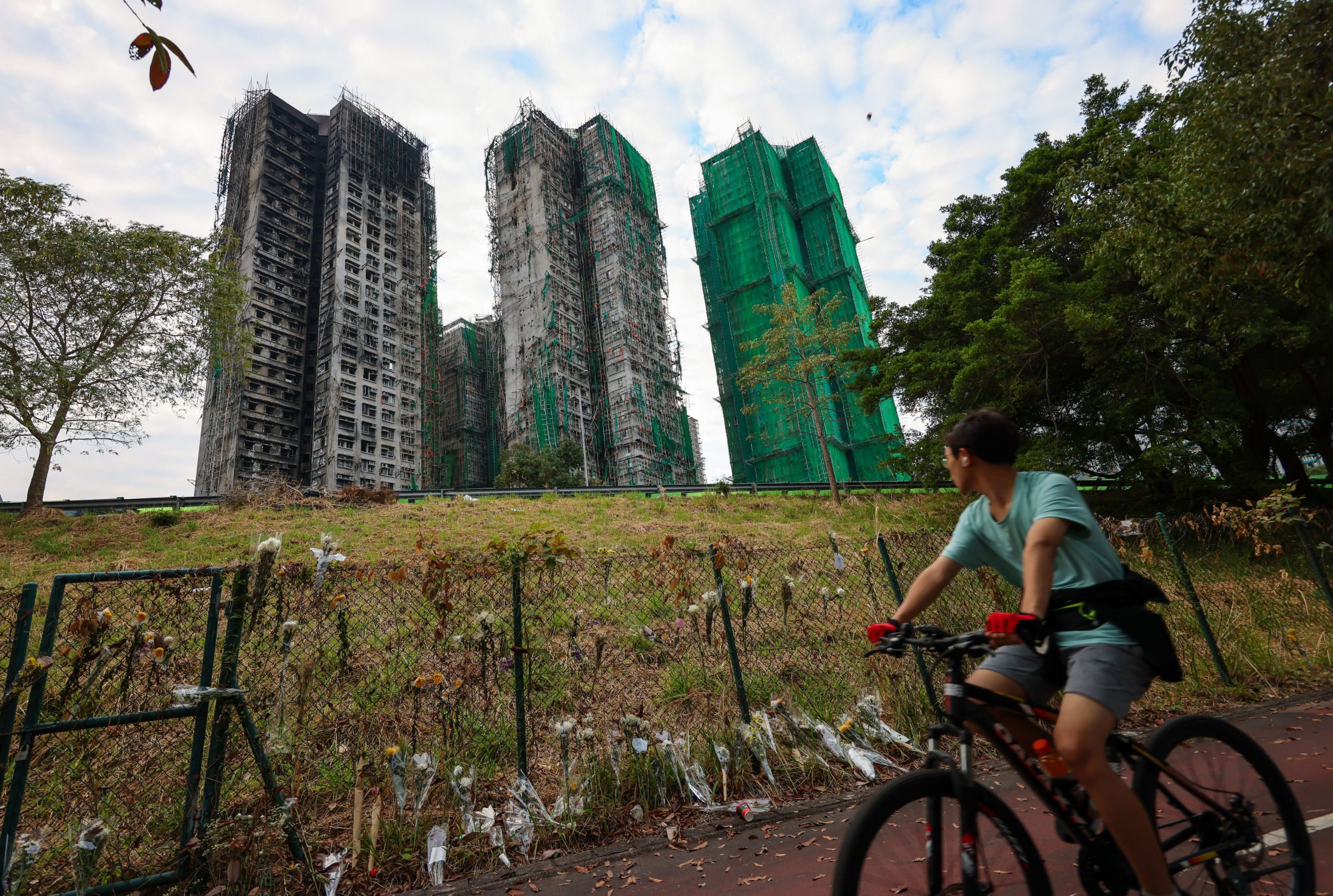
The legal practitioners are among about 1,000 people, including IT experts and psychologists, offering free help to affected residents. The fire that broke out on November 26 at the Wang Fuk Court housing estate killed at least 161 people and displaced nearly 5,000 residents.
Patrick Lau, 45, was among those who lost their homes and is now struggling to rebuild his life, step by painful step.
“We are not familiar with anything legal. We do not know what rights and obligations we have,” Lau said.
“We are not quite sure whether we can only make insurance claims to be compensated or whether we would be further compensated if the government decides to prosecute [the contractors].”
The estate had been under renovation since July last year, with scaffolding and nets covering its eight blocks. Authorities later found substandard net samples had failed fire-retardant tests and flammable foam panels had been used to seal windows.
Lau, a merchant in the clothing industry, said he was struggling to sort out the claims for his home at Wang Shing House, where he had lived since he was a child.
He said his family remodelled their flat last year as they thought it would be a good time given the block was undergoing renovation.
But he was unsure if he could only list the loss of valuable items on the insurance claim form or whether remodelling costs could be included.
Lau said he believed someone should be held accountable for the fire, and he felt unsure whether justice could be served by taking civil action.
“I have no idea whether we should resort to class actions,” he said.
Law Society president Roden Tong Man-lung told the Post on Friday his organisation was handling 80 cases so far, with the inquiries covering mortgages, tenancy issues and loss of documents, among other concerns.
Tong said that some issues could be resolved if the relevant government departments provided special treatment.

Residents were unsure of their next move and the volunteer lawyers were there to give them advice, he added.
Davyd Wong, founder of Pro Bono HK, said the team of more than 500 lawyers had set up a website to address frequently asked questions within two days of the blaze.
The solicitor said the NGO had so far taken on 21 cases, with a third of the inquiries relating to the responsibility of incorporated owners and the property management company.
“There have been many inquiries about suing the contractors and the incorporated owners for compensation,” Wong said.
The anti-corruption watchdog arrested the current and former chairmen of the owners’ corporation, the Post reported earlier.
Wong said the role of the volunteer lawyers was to give the residents “options” about what to do next.
“For those who had made insurance claims, they may have to wait for the government to complete the investigation, which would reveal who is responsible for which part,” he said.
An independent review committee has been tasked with investigating the blaze and is expected to finish its work within nine months, with all findings set to be made public.
While Hong Kong law does not provide for class actions of the type filed in the United States, for example, groups of plaintiffs who share an interest can band together for what the local legal system calls representative proceedings in specific circumstances.
Complications include group members being required to show that they share the same contract, the same relief and other factors.
Wong said he would be surprised if the courts allowed such proceedings for the Tai Po blaze.
If residents decided to go down the road of civil litigation, the lawyers would have to explain the legal complications, including the need to prove negligence against either the contractor or building management, he said.
Each household would have to be an individual plaintiff to file a separate action and to hire legal representatives and experts to prove the case.
Wong also reminded them of the legal fees involved and the possibility of losing in court.
Most residents were still in the early stages of processing what had happened and could not think about lawsuits as they were unsure of their legal rights, he added.
But those determined to pursue legal action should contact the Legal Aid Department for further information, he added.
A 73-year-old man, who only wished to be identified by his surname Wong, said he had been too busy with daily demands, such as where to obtain aid and buy essential goods, to think about legal action.
The retiree owned two flats at the estate and had lived in Wang Shing House for more than two decades.
He said the right thing to do now was to “focus on the present” and wait for the findings of the government’s independent review committee.
“Even if I go to find a volunteer lawyer now, they at best would just tell me to wait ... it does not really help much to seek legal advice now,” he said.
“Focusing on handling what’s in front of me gives me a sense of stability. I do not think about next month or things in the distant future.” -- SOUTH CHINA MORNING POST