TOKYO: A Japanese atomic bomb survivors group that won the Nobel Peace Prize has strongly criticised US President Donald Trump's surprise directive to begin nuclear weapons testing, calling it "utterly unacceptable".
More than 200,000 people were killed when the United States dropped two atomic bombs on Japan's Hiroshima and Nagasaki during World War II, the only time nuclear weapons have been used during warfare.
Survivors - known as "hibakusha" - have battled decades of physical and psychological trauma, as well as the stigma that often came with being a victim.
After Trump said Thursday (Oct 30) that he had ordered the Pentagon to start nuclear weapons testing to equal China and Russia, Nobel laureate Nihon Hidankyo sent a letter of protest to the US embassy in Japan.
The directive "directly contradicts the efforts by nations around the world striving for a peaceful world without nuclear weapons and is utterly unacceptable," the survivors group said in the letter, a copy of which was obtained by AFP on Friday.
The Mayor of Nagasaki also condemned Trump's order, saying it "trampled on the efforts of people around the world who have been sweating blood and tears to realise a world without nuclear weapons".
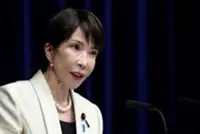
"If nuclear weapons testing were to start immediately, wouldn't that make him unworthy of the Nobel Peace Prize?" Mayor Shiro Suzuki told reporters Thursday, referring to Japanese Prime Minister Sanae Takaichi's intention to nominate Trump for the award.
Hidankyo, a grassroots movement of hibakusha, won the Nobel Peace Prize in 2024, and while accepting the prize, called on countries to abolish nuclear weapons.
Two other atomic bomb survivor groups based in Hiroshima issued statements of protest, saying: "We strongly protest and firmly demand that no such experiments be conducted."
"In a nuclear war, there are no winners or losers; all of humanity becomes the loser," said Hiroshima Congress against A-and-H Bombs (Hiroshima Gensuikin) and the Hiroshima Prefecture Federation of A-Bomb Victims Associations in a joint statement, which was also sent to the US embassy in Japan.
"The inhumane nature of nuclear weapons is evident from the devastation witnessed in Hiroshima and Nagasaki," it added.
The US dropped an atomic bomb on Hiroshima on August 6, 1945 and then another on Nagasaki three days later. Shortly afterwards, Japan surrendered, ending World War II.
Around 140,000 people died in Hiroshima and about 74,000 others in Nagasaki, including many from the effects of radiation exposure.
Trump's announcement on nuclear testing left much unanswered - chiefly about whether he meant testing weapons systems or actually conducting test explosions, something the United States has not done since 1992.
Takaichi, Japan's first woman premier, this week announced she would nominate him for a Nobel Peace Prize as she lavished the US leader with praise during his visit to Tokyo. - AFP