Everywhere they look these days, Europe’s politicians see chaos.
The United States is helping to trash the global order it built in its image. China is pulling the rug from under efforts to upgrade European industry by weaponising its monopoly on critical minerals. Russia is waging a hot war at the European Union’s borders, with the growing danger that it may spill over.
So tumultuous have things become, some officials have turned to Chinese science fiction to describe it.
“Where we are now, we’re actually in a time of a ‘three-body problem’ which is notoriously unstable and quirky – it can take many shapes,” said Marc Moquette, the special envoy for knowledge on China in the Dutch government, referring to the blockbuster Chinese novel of the same name.
In The Three-Body Problem by Liu Cixin, intergalactic aliens face civilisational extinction because of their uncontrollable cosmic system, in which the chaotic movements of the system’s three suns will eventually destroy their planet.
In a simulated version of that galaxy, scientists on Earth try to solve the “three-body problem”, searching for solutions that do not exist before the simulated world collapses when the three suns move unpredictably again. The more they try to solve the chaos, the more they realise the problem is not solvable, only survivable.
It is easy, then, to see why Moquette reached for the analogy at the Reconnect China conference in The Hague on Thursday. Many in Europe feel similarly hopeless when observing the three powers rattling their world today.
At the Dutch event, policymakers and China experts puzzled over how the EU could reassert some control in its relations with Beijing, which speakers said had gone from bad to worse.
“It’s now been four years that I’ve been doing this job. And it’s not the most fun thing for a diplomat to say that I’ve been shepherding a steadily declining relationship on a daily basis for the last four years, trying to manage decline,” said Dominic Porter, head of the China desk in the EU’s foreign service.
Rocked by Russia’s invasion of Ukraine and Beijing’s perceived support for Moscow, a wildly unbalanced trading picture and a diplomatic dynamic in which the European side feels it is being ignored by Beijing, Porter said it was “hard to disagree” with the suggestion that ties were at an all-time low.
“As the counterpoint to that, I can say what I always say to my Chinese colleagues, which is: we are never going to give up on trying to talk constructively with you,” Porter added.
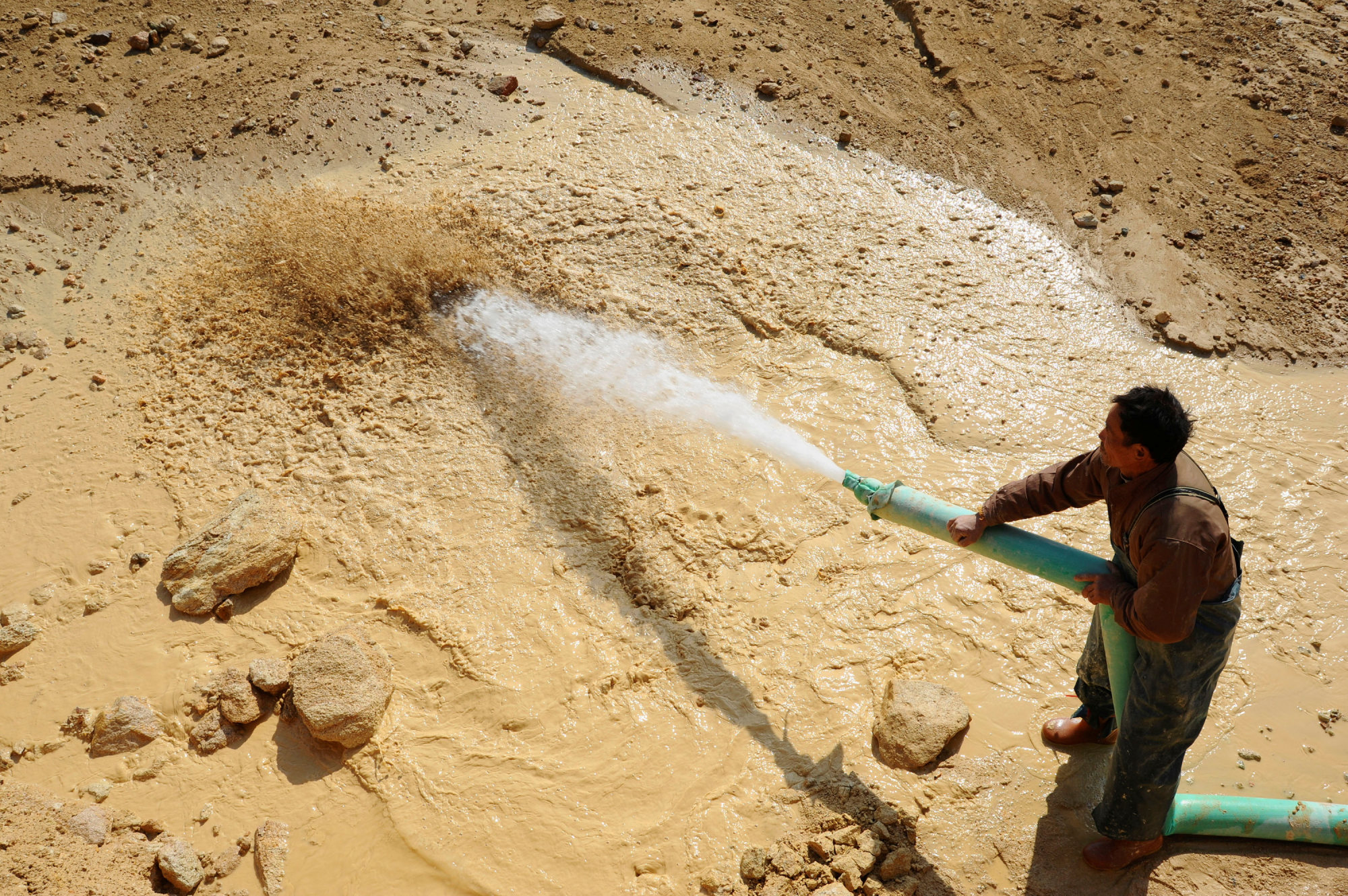
On the morning of the conference, the bilateral problems deepened when Beijing “upgraded” restrictions on the export of rare earths, certain battery-making inputs and “superhard” materials essential for Europe’s advanced manufacturing.
Companies wanting to export equipment used in these areas will now need licences, while goods containing traces of Chinese rare earths will need approval from Beijing – even if they are traded abroad.
EU ambassador to China Jorge Toledo referred to the rare earth issue in his address to the same conference.
“What we are confronted with in China is, first of all, denial that there is a problem. And second, retaliatory measures that are hitting us as collateral damage,” Toledo said.
The impact on EU industry could be crippling, while Kyiv worries what it might mean for their war effort against Russia given that many advanced armaments require the critical minerals.
Writing in his Volt Rush newsletter, battery specialist Henry Sanderson said it “may end the era of ‘de-risking from China’ with Chinese technology”.
“It’s always jarring to visit European start-ups who speak about ‘reducing reliance on China’, while standing in factories filled with machines labelled in Chinese,” Sanderson wrote.
The controls helped dampen an already gloomy mood in The Hague and across Europe. While the challenges are obvious, the solutions are less so.
“Free trade is over, it is dead,” former French finance minister Eric Lombard told a conference in Paris, urging Europe to “wake up” to the fact that the US and China were no longer playing by the rules.
“This new world is a lot more brutal,” he said. “If Europe does not protect itself, between the Chinese dumping and American tariffs, we will disappear.”
So what is Europe to do?
For the past few years, the EU way was to engineer solutions to external problems that may or may not be solvable. Frameworks, strategies and proposals popped up at a rate of knots as the EU tried to impose its own form of order on an ultimately chaotic global picture.
Here too, they may have taken a lesson from The Three-Body Problem: when you cannot stabilise the system, you change your own trajectory.
“I believe we have to switch our thinking from [a] short-term to long-term perspective. We should not expect that we will change China. China can only change on its own, and they are very well aware about their domestic problems,” said Joanna Szychowska, the EU’s director of trade for Asia.
“So let’s stop counting on China changing ... it’s about us thinking longer term so that we are in a different place in 10 years.”
Those proposals are burning in Brussels, as it pivots from outward looking climate-friendly plans to more inward looking schemes, such as a “preparedness union strategy” that encourages medical stockpiling and an economic security doctrine that will give it an inventory of its geoeconomic weaponry.
Regarding China, the bloc has a long pipeline of trade investigations in the works as it seeks to combat the industrial overspill from the world’s second-largest economy. It will add more Chinese state-owned companies to its next package of sanctions aimed at hurting Russia. But on all these fronts, the going is slow.
Mario Draghi, the former European Central Bank chief, said in a recent speech: “Too often, excuses are made for this slowness. We say it is simply how the EU is built. That a complex process with many actors must be respected. Sometimes inertia is even presented as respect for the rule of law. I think that is complacency.”
At an event in Dublin this month, the bloc’s director of economic security, Peter Sandler, raised eyebrows when he said “economic security is not a concept which has been defined in any detail yet by the European Commission” – even though his organisation proposed an economic security strategy more than two years ago.
Many are sceptical that Europe’s talk of “economic security” can translate into action, but there are early signs that this may be changing.
On Sunday, it emerged that the Dutch government had moved swiftly to take control of Nexperia, a Chinese-owned semiconductor maker in the Netherlands, under the obscure Cold War-era Goods Availability Act.
The Hague said it had to act to ensure the car industry had access to semiconductors, sparking rumours that Chinese owner Wingtech could move the manufacturing base to China.
Some fear that without this kind of warp speed, Europe will deindustrialise and, like Liu’s Trisolarians, be condemned to instability.
“When I look at Europe, I see a solar industry which has disappeared, a steel industry under acute pressure, and new industries coming under pressure every year,” said Noah Barkin, an EU-China analyst at Rhodium Group, who named the “chemicals industry, machine tools ... and the car industry” as vulnerable sectors.
“There is a huge amount of concern in Brussels right now about Chinese overcapacities, cheap Chinese exports coming into Europe, and there is a reflection about the need to be bolder, the need to be faster.” -- SOUTH CHINA MORNING POST