KUALA LUMPUR: The conversation in newsrooms has matured.
The most pressing concern is no longer whether artificial intelligence (AI) belongs in journalism, but how to ensure the limitless bytes of AI output do not drown out the human pulse of the press.
At the recently concluded World Journalists Conference (WJC) 2026 in Seoul, South Korea, news practitioners grappled with this very question during the ‘AI in the Newsroom: From Practice to the Next Phase’ segment.
The robust Q&A following a preceding session, titled ‘Democracy and Journalism at a Crossroads: The Role of the Media in Times of Crisis’, had also fielded urgent AI-related concerns.
This revealed how, for many of the 41 journalists from 30 countries in attendance, AI has felt like a seismic shift in time-worn practices, or an upheaval akin to a state of crisis.
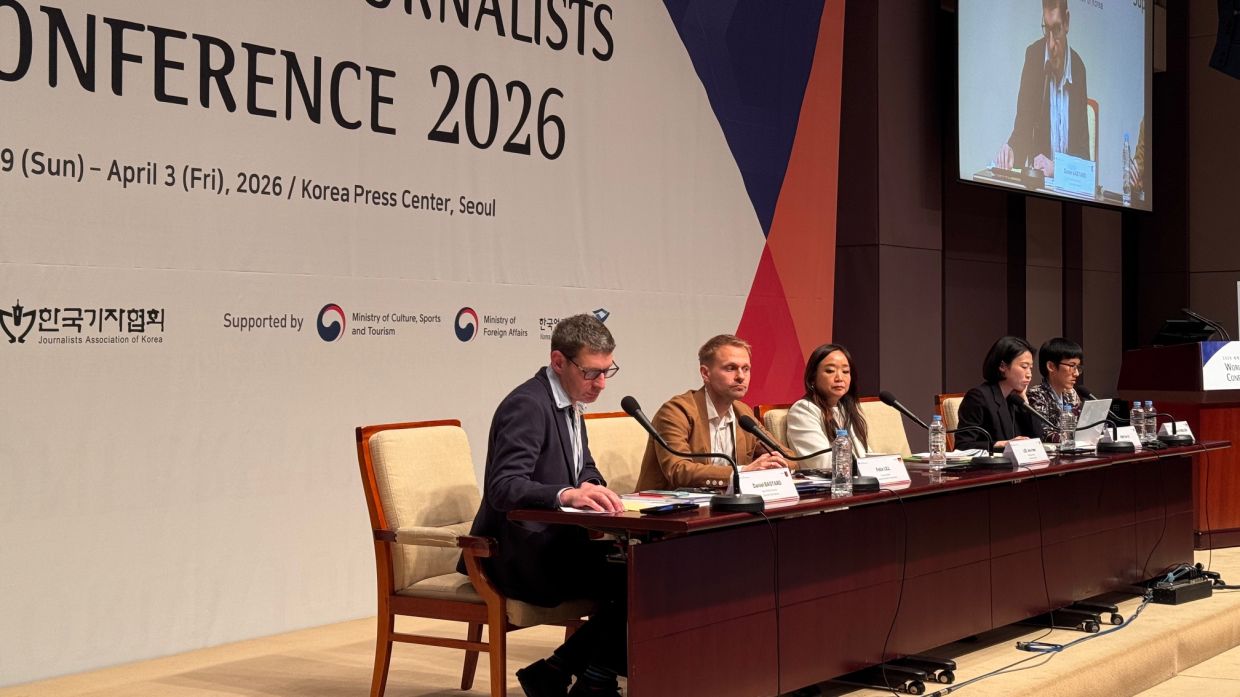
In addressing whether key boundaries once safeguarded by journalists will be overrun by the relentless AI tide, international journalist Dr Felix Lill remained optimistic: “I don’t see established media going down that route of ‘bye-bye journalists’.
“Unlike AI, we dig out new stuff, things that have not been said anywhere else yet. I hope that (unearthed content) is what people will be happy to pay for,” he added.
Courrier International’s Asia-Pacific Editor, Daniel Bastard, noted that as long as journalists remain inclusive of the full spectrum of humanity’s lived experiences, they retain the edge over existing datasets.
“Alternative subjects and fresh viewpoints… deserve to be told. That is something AI is not able to do,” he said.
His conviction was echoed by Zheng Kaijun, social media director of Xinhua News Agency’s international news department, who shared a pearl of wisdom during the subsequent panel on AI in the newsroom.
“At Xinhua, we have a saying: ‘Get our shoes dirty’ so stories ‘carry the scent of the earth and glisten with morning dew.’
“We must be in villages, factories, front lines, meet the unknown people, talk to them, exchange ideas to draw the real whole picture,” he said
To Zheng, there is a crucial difference between the AI approach and the ‘dirty shoes’ approach.
“AI deals in probability, stitching together patterns from the past. Journalism deals in truth, witnessed in the present. AI can paint, it can summarise. But it cannot sit with a local by the fire, smell the smoke, hear the tremor in a voice.
“That act of showing up, of being there, of taking that one step closer (to the truth) — that will always, always be the heart of this work,” he added.
One journalist’s query also shed light on the binary lens through which the disruptive technology is often viewed: Is AI a saviour or an assassin?
To Seoul Economic Daily future and strategy department deputy director Woo Seung Ho, it is a matter of personal agency: “It can be good, it can be bad. You choose.”
According to Woo, the current disconnect between AI engineering and the day-to-day realities of the newsroom stems from most tools being built by technical experts instead of editorial professionals: “The quality of the tool depends on who is developing it.”
“If journalists start building and teaching each other how to use these tools themselves, they can become incredibly helpful to enhance your performance,” he added.
However, the economic threat remains.
His fellow AI panelist, Newsweek Polska journalist Renata Ewa Kim, has noticed a sharp drop in news site visits due to the auto-generated AI summaries on search engine results.
Kim also cautioned that the false impression that ‘AI can do what journalists do’ may lead to layoffs.
“However, there is no way AI can replace actual journalists… We are the core of this profession. AI is fed by our work. AI exists because of our work, not the other way around,” she said, reminding media owners that human talent should come first, as people will always be needed.
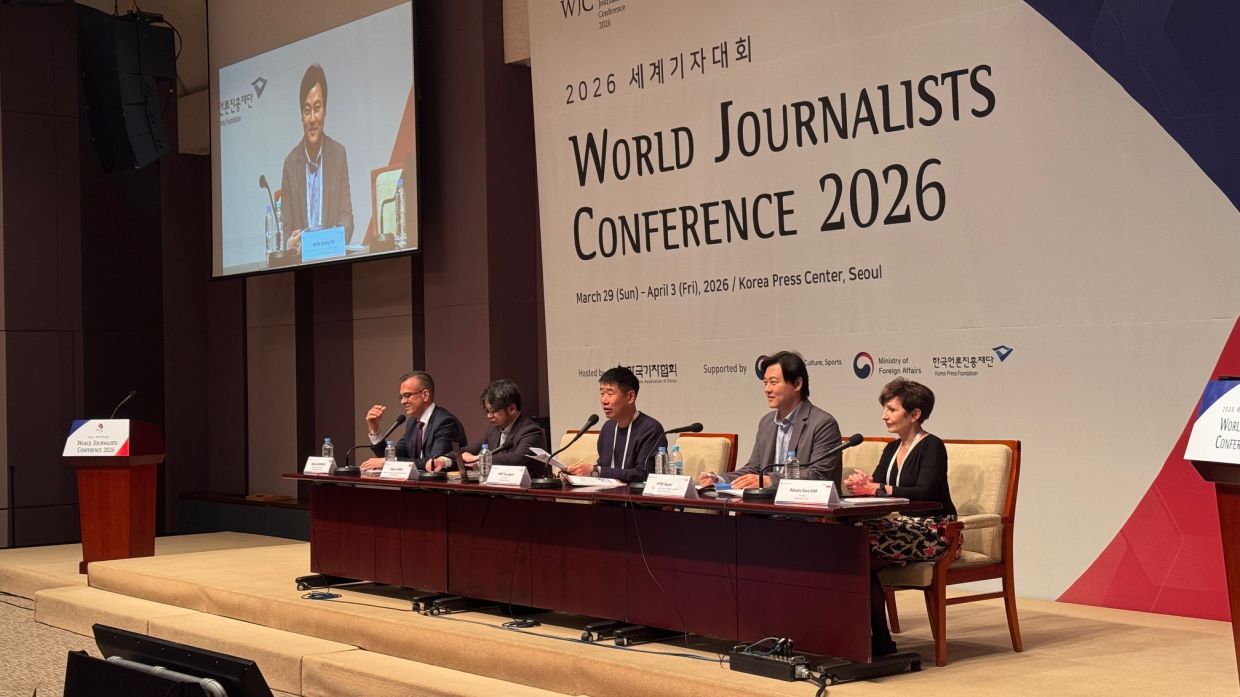
“When I think of using AI in my work, I think it’s a very natural step for every journalist, because our whole work is founded on learning new things every day,” she said.
To her, access to such tools provides the opportunity to evolve, though one must also be armed with the ability to recognise and debunk accompanying dangers like deepfakes and misinformation.
Though questions later arose as to what top global AI companies can and should do to help news outlets boost revenue — as these companies have directly benefited from verified, high-quality reporting to train and refine their large language models — no clear answers were forthcoming.
But such is the nature of the most consequential technology of our time: the use of AI leaves more questions in its wake than existing frameworks are equipped to address.
An informal poll among conference attendees, conducted by Czech science journalist Pavel Kasík from Seznam Zprávy, captured real opinions from over a dozen journalists and editors on how they work with AI.
The questions that persist:
“How do we help people distinguish a human voice from an AI one?”
“Where is the line on using AI-generated content in part of an article?”
And, most pressingly:
“Will human judgment one day be considered inferior to AI?”
While there are no easy answers, the thought-provoking exchanges between passionate newsmakers in Seoul made one thing clear: what matters is that we keep asking each other these hard questions.
If journalists dedicate themselves to these dialogues, the bridges they build — with each other and their audiences — will ensure the profession retains its inimitable, frontline edge to cut through the white noise of machine-produced content.
Ultimately, journalism needs more than just bytes; it needs bite. - Asia News Network
The Journalists Association of Korea, headed by president Park Jong Hyun, organised the WJC 2026 with the support of Korea’s Culture, Sports and Tourism Ministry, Foreign Ministry, and the Korea Press Foundation.