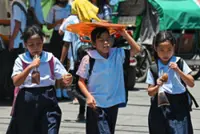
Under the searing midday sun, homemaker Leira Macasero, 35, stood by the roadside in a northern Cebu town, cradling her two-month-old son.
Around her, young neighbours held up cardboard signs that read: “We need food and water.”
“We’re afraid to sleep inside our homes because they might collapse,” Macasero said.
Nearly three days after a 6.9- magnitude earthquake rattled the quiet of northern Cebu in the central Philippines late on Sept 30, thousands of survivors like Macasero and her family remain displaced, desperate and exposed to the elements.
With no money on hand and government aid slow to arrive in this far-flung village of Tinubdan in Daanbantayan town, Macasero and her neighbours have been sleeping in open fields and begging for food on the streets, relying on the kindness of volunteers and passers-by.
Tinubdan village is around 130km from Bogo City, which has emerged as the hardest-hit area in Cebu province, where nearly half of the fatalities were recorded.
At least 72 people have been confirmed dead following one of the country’s deadliest natural disasters in recent years, with nearly 300 injured and more than 170,000 affected across the province.
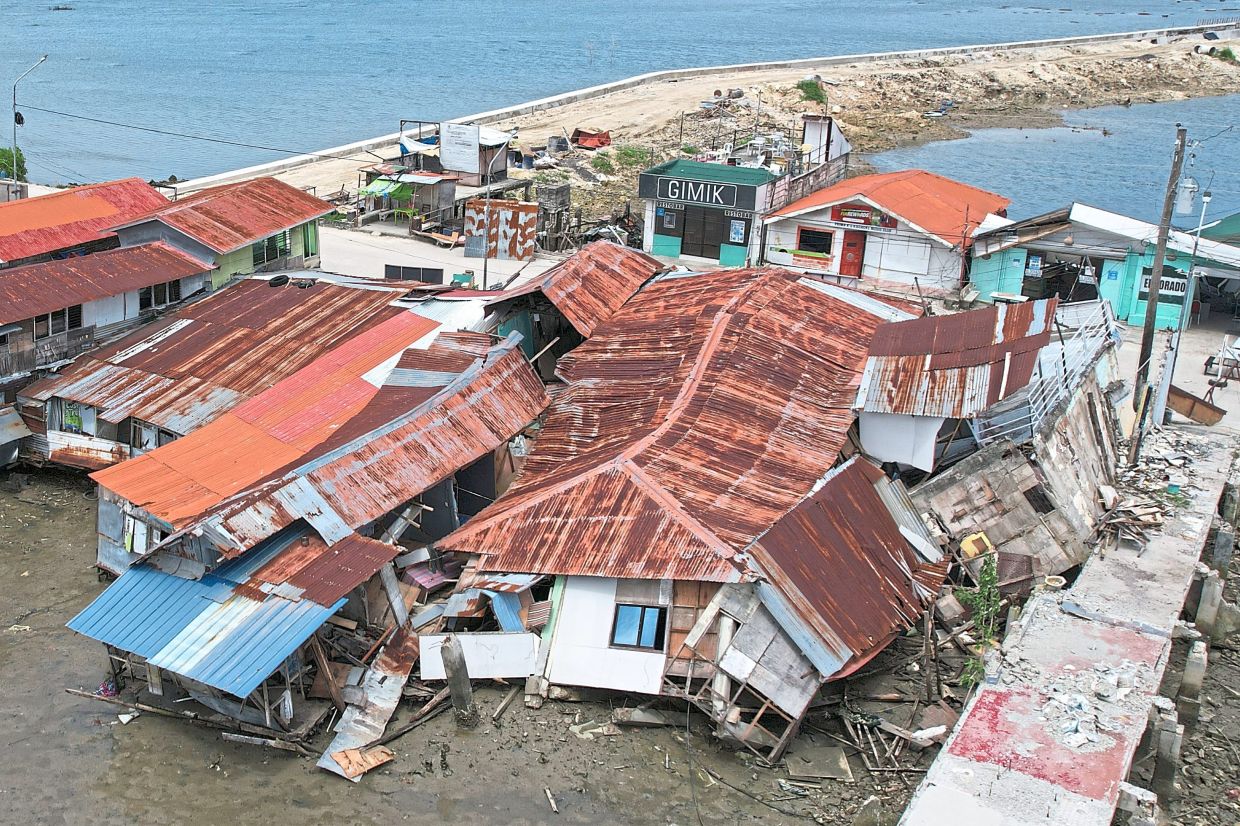
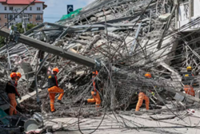
The quake damaged power lines, bridges and several buildings, including a church that was more than 100 years old.
Aftershocks can still be felt, as authorities set up mobile kitchens for hundreds of evacuees and raced to provide temporary power. With homes damaged and official evacuation centres too unsafe to enter, hundreds now stay in open fields, under tarpaulins or borrowed tents.
“We’re sleeping here on this field,” said Tinubdan Village Councillor Rutchia Rosaroso, adding that the town’s two designated evacuation centres – a basketball court and a school building – have been deemed unsafe due to the earthquake.
In nearby San Remigio, one of the worst-hit towns, Mayor Mariano Martinez said nearly a thousand people are now staying in two tent cities – and the number is growing.
“People are not willing to go back to their houses,” he said. “Many of them are coming up with signs asking for help because they feel that the government has not been that responsive.”
With many bridges still impassable and mountainous villages still hard to reach, aid has struggled to arrive in a timely manner.
Local officials acknowledged the logistical hurdles and limited resources, even as survivors remained patient and hopeful that concerted aid will arrive soon.
“My problem here is logistics,” said Martinez.
“Some roads are still not passable by big trucks. Only motorcycles and small four-wheel drives can pass. That’s why we can’t bring in our relief goods”. — The Straits Times/ANN