




Artificial intelligence is at the heart of the US-China tech war, with Chinese firms such as DeepSeek challenging American dominance.
But while China has a growing AI talent pool and home-grown success stories, the country has also lost a handful of leading figures in the crucial sector. The early deaths of these experts – due to accidents or illness – have raised concerns about the personal safety of those in the industry and the stressful research environment they face.
Chinese computer scientist Liu Shaoshan said that while AI researchers might earn huge salaries, they were also under intense pressure.
Do you have questions about the biggest topics and trends from around the world? Get the answers with SCMP Knowledge, our new platform of curated content with explainers, FAQs, analyses and infographics brought to you by our award-winning team.
“The industry is developing too fast and the competition is very fierce,” Liu said, adding that by the time one researcher came up with an idea and made it halfway through an experiment, someone else might have already published on the same topic.
Liu added that practitioners also faced ethical pressures.
“AI can also have a big impact on society as its use spreads, and this unknown potential for a huge change in society can also put them under very high moral pressure,” he said.
The South China Morning Post has compiled a list of top AI scientists who died at a relatively young age, most of whom were in their scientific prime and had made discoveries in key areas such as computer vision, military artificial intelligence and medical AI.
Sun Jian
2022 – computer vision expert
In June 2022, Sun Jian, chief scientist at Beijing-based AI company Megvii Technology, died of a sudden illness at the age of 45. Megvii develops image recognition and deep learning software.
Sun was a renowned figure in the field of AI and computer vision. A former Microsoft researcher with years of expertise in computer vision and computational photography, Sun returned to China and joined start-up Megvii in 2016 as chief scientist and managing director of research.
At Megvii, he led the development of ShuffleNet, a neural network that works on mobile devices, and Brain++, the company’s core AI productivity platform.
He was appointed dean of the College of Artificial Intelligence at Xian Jiaotong University, his alma mater, in 2019.
Sun received a number of industry and academic awards. He was named to the MIT Technology Review’s “Innovators under 35” list in 2010. He also had 35 US patents to his name, 13 of which were registered internationally.
Feng Yanghe
2023 – military AI expert
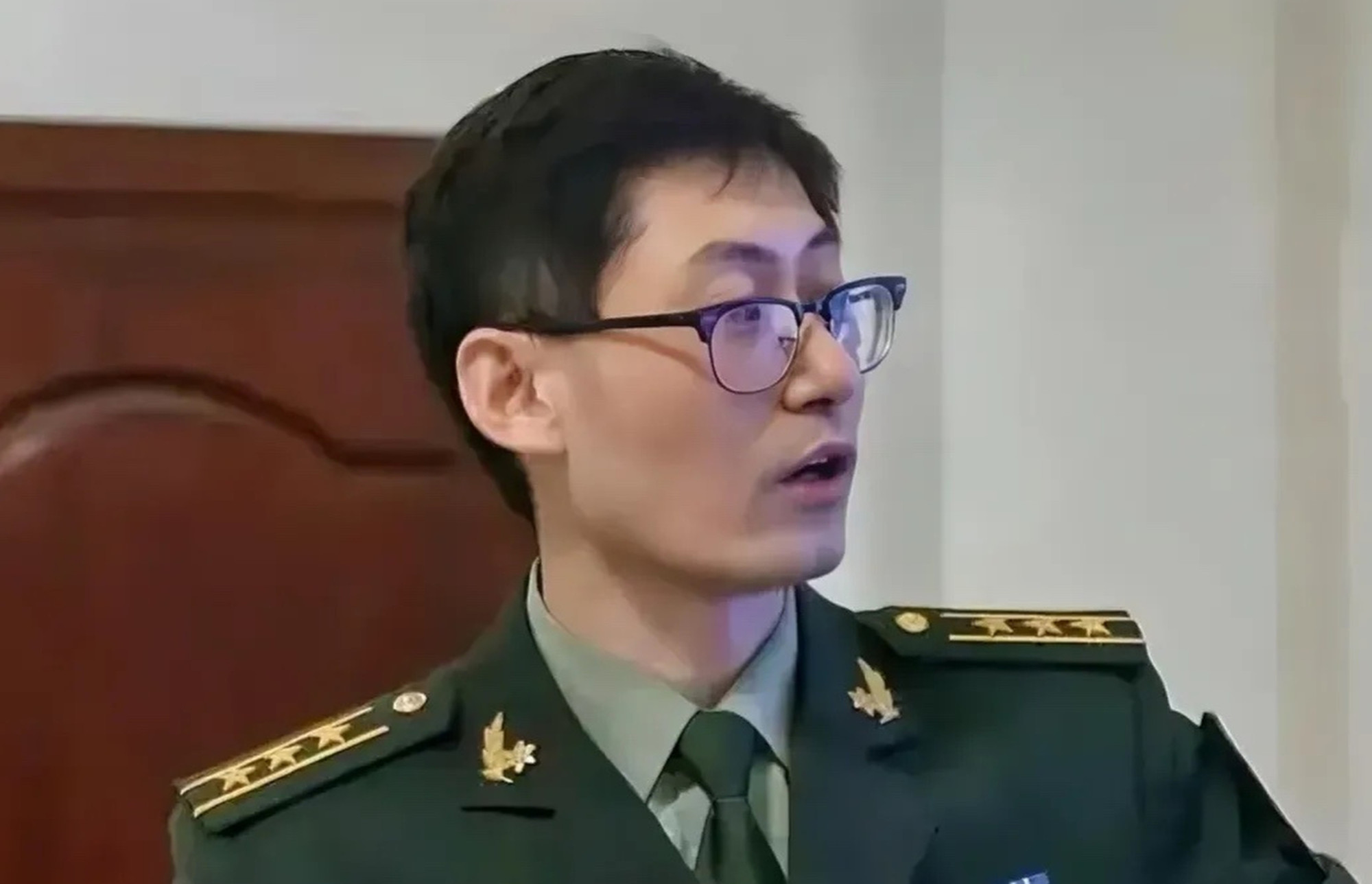
In July 2023, Feng Yanghe, an expert on artificial intelligence for China’s defence sector, died in Beijing on his way to a “major mission” at the age of 38, according to an obituary.
Feng – whose research focused on war games, reinforcement learning and intelligent planning – was an associate professor at the National University of Defence Technology (NUDT) in central China’s Changsha, the capital of Hunan province.
One of the driving forces behind the AI software used in the country’s military simulations, he led teams that developed the War Skull I and War Skull II AI systems used by the People’s Liberation Army to simulate military war games for joint operations.
Before joining NUDT, Feng studied statistics at Harvard University and high-performance computing at the University of Iowa as part of a joint training programme from 2011 to 2013.
Tang Xiaoou
2023 – founder of SenseTime
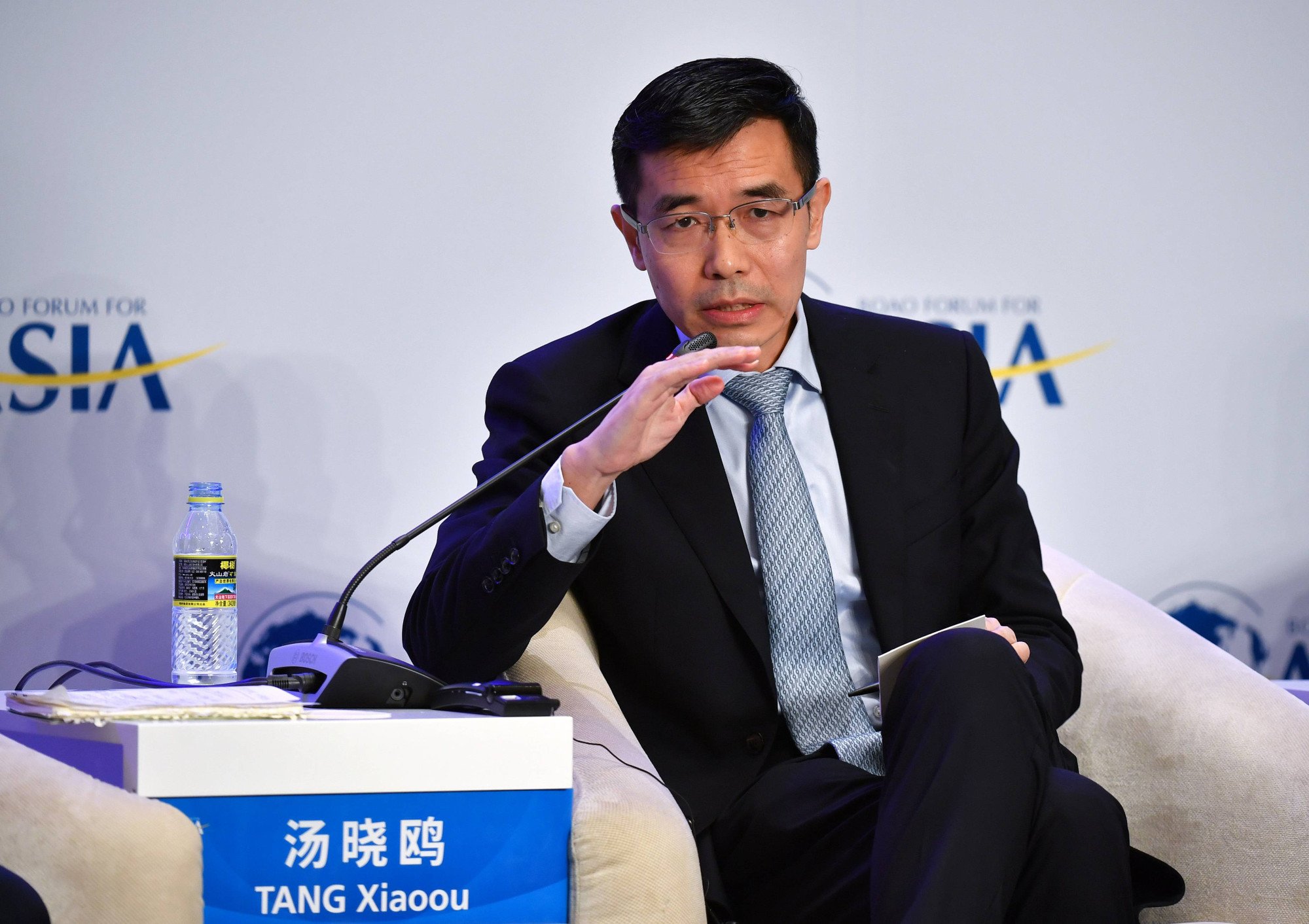
Also in 2023, AI expert Tang Xiaoou, a professor at the Chinese University of Hong Kong and founder of tech giant SenseTime, died at the age of 55. According to his company’s obituary, Tang died after succumbing to an illness, the nature of which was not disclosed.
Tang was born in 1968 in Liaoning province in northeast China. He received his bachelor’s degree from the University of Science and Technology of China in Anhui province in 1990 before moving to the US for graduate studies. He received his master’s degree from the University of Rochester in 1991 and his doctorate from MIT in 1996.
Tang, whose research interests included computer vision, pattern recognition and video processing, promoted the industrialisation of AI vision technology in China.
He was the group manager of the visual computing group at Microsoft Research Asia from 2005 to 2008.
In 2014, he founded SenseTime – known as one of China’s four “AI dragons”.
SenseTime’s technology enables multi-angle facial capture and real-time facial recognition. In some cities, the products are used to monitor crowd density and spot illegally parked vehicles. Using its Ririxin large model, SenseTime has also built generative AI businesses in fields including finance, healthcare and office work.
He Zhi
2024 – co-founder of Yidu Tech
He Zhi, co-founder and chief innovation officer of AI-driven healthcare company Yidu Tech, died in 2024. He was only 41.
He was an “outstanding pathfinder” who led the digitalisation of the healthcare industry, according to an obituary posted on social media. It said He suffered respiratory and cardiac arrest due to altitude sickness while in Qinghai, an inland province in northwest China. He died in the early hours of April 29 of last year after an unsuccessful attempt to save his life, according to the obituary.
His company described him as “an outstanding, consistent entrepreneur in artificial intelligence and big data who devoted all his energy to computer science and life science research”.
In 2000, He was admitted to the department of materials science and engineering at Tsinghua University. He received his master’s degree in electronic communication and engineering from the university in 2009.
From 2012 to 2014, he worked at Chinese tech giant Alibaba – the owner of the South China Morning Post.
In 2015, he joined Yidu Tech as a co-founder, responsible for the company’s innovation and technological development. The Beijing-based company, founded in 2014, is focused on healthcare solutions powered by big data and AI technologies.
Quan Yuhui
2025 – computer image processing expert
Quan Yuhui, a computer image processing expert and associate professor at the School of Computer Science and Engineering at South China University of Technology (SCUT) in south China’s Guangdong province, died of illness on January 14 at the age of 39, according to a university obituary.
“We have lost a great young talent,” the obituary stated.
Born in 1985, Quan worked his way through undergraduate and graduate studies at SCUT, earning his bachelor’s degree in 2008 and his PhD in 2013. After completing his postdoctoral training at the National University of Singapore in 2016, he returned to his alma mater to begin his teaching career, where he has been an associate professor ever since.
Quan, whose research interests focused on the cutting-edge areas of computational photography, unsupervised learning and texture analysis, was a rising star in his field.
He led many national and provincial research projects, published more than 80 high-level scientific papers and served as a reviewer for prestigious international journals and conferences. He was included on Stanford University’s “World’s top 2 per cent scientists” list in 2024.
More from South China Morning Post:
- Was sudden death of top Chinese materials scientist due to ‘insane’ workload?
- Death of Chinese radar scientist Yang Qiang a ‘major loss’ for military research
- Sudden death of top Chinese military drone scientist shocks industry
For the latest news from the South China Morning Post download our mobile app. Copyright 2025.



