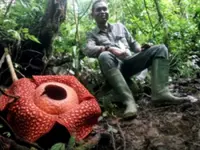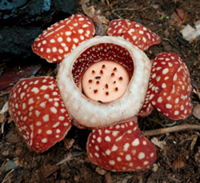
The much loved blooming Rafflesia - The world’s largest – and stinkiest – flower in danger of extinction, says research


Most species of the famously large Rafflesia flower, which has long captured the imagination with its enormous speckled red petals, are now at risk of extinction, a new research has warned.

Rafflesia is actually a parasite, and lives on tropical vines across parts of South-East Asia, producing blooms that are among the largest in the world.

It is something of an enigma, with its flowers emerging unpredictably, and botanists have had limited success propagating it outside its natural environment.

One species of the flower is currently classed as "critically endangered", according to the International Union for Conservation of Nature.

To better understand the plant and its conservation status, an international group of botanists examined 42 known Rafflesia species and their habitats -- primarily Brunei, Indonesia, Malaysia, the Philippines and Thailand.

Based on the rapid disappearance of its forest habitats, as well as insufficient conservation strategies and protection plans, the plant is at far greater risk than previously known, they said.

"We estimate that 60 percent of Rafflesia species face a severe risk of extinction," the researchers wrote in the study, published Wednesday in the peer-reviewed Plants, People, Planet journal.

Some species risk going extinct before they are even known to science, the study said, urging more research into the unusual plant.

"We urgently need a joined-up, cross-regional approach to save some of the world's most remarkable flowers, most of which are now on the brink of being lost," said Chris Thorogood, deputy director of Oxford University's Botanical Garden and a study author.

The research points out that the plant is believed to grow in fairly limited areas, making it particularly vulnerable to habitat destruction.

It also highlights several bright spots in conservation efforts, including successful propagation at a botanical garden in Indonesia's West Java, and sustainable ecotourism around the plant in West Sumatra.

Last year, nations pledged to protect 30 percent of the world's land and seas by 2030 in a landmark deal to slow the disappearance of species and ecosystems.

Repeated studies have warned that the twin threats of climate change and environmental destruction caused by humans are dramatically reducing biodiversity worldwide.

Get 20% OFF The Star Digital Access

Monthly Plan

RM 13.90/month

RM 11.12/month

Billed as RM 11.12 for the 1st month, RM 13.90 thereafter.

Best Value

Annual Plan

RM 12.33/month

RM 9.87/month

Billed as RM 118.40 for the 1st year, RM 148 thereafter.

Follow us on our official WhatsApp channel for breaking news alerts and key updates!
Rafflesia flower , extinct , Research

Next In Aseanplus News

Timor-Leste case offers Unclos roadmap as Cambodia begins maritime conciliation with Thailand
Thailand provides compensation to Malaysian injured in Tak Bai bomb blast
Sixty-year-old Lao National Circus overcomes chequered history to tell nation's story
Myanmar President holds talks with Lao National Assembly President
Storm Maysak in Vietnam set to weaken into tropical depression within 24 hours
Thunderstorm, heavy rain warning in eight states until 6pm today
ICC OKs freezing of Rodrigo Duterte funds but keeps personal keys from prosecution
Indonesia's former education minister Nadiem, prosecutors appeal Chromebook graft verdict
Anwar criticises past leaders for racial divisiveness and self-enrichment
Thailand launches info-sharing platform to combat cyber scams, human trafficking

Others Also Read