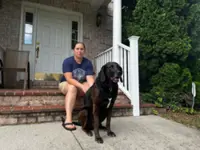
A new niche profession has emerged in mainland China’s big cities — pet detectives, thanks to the growing number of pet owners in recent years.
Most pet detectives work alone or with just a few colleagues and can charge between 3,000 yuan (US$420) and 30,000 yuan per case depending on the level of difficulty of finding and returning the lost animal, the China Youth Daily reported.
Pet detective Yan Zhiyon from Zhengzhou in central China’s Henan province said after receiving an order, he would go to the site with one to two colleagues equipped with headlamps, torches, night vision goggles, nets and cages to help catch the missing pets, which are usually cats and dogs.
Do you have questions about the biggest topics and trends from around the world? Get the answers with SCMP Knowledge, our new platform of curated content with explainers, FAQs, analyses and infographics brought to you by our award-winning team.

“Logical analysis and on-site reasoning abilities are important in our job. There are various ways of searching for lost pets,” Yan was quoted as saying.
Once he received a call from a family who lived on the 7th floor of a residential building and had lost their pet cat. Yan said the first thing for him and his team members to do when arriving at the flat was to judge whether the cat had run away or was hiding somewhere inside the building.
“According to traces left by the cat, such as footprints in the corridor and hair left in corners, we guessed that it could be somewhere between the 7th and 11th floors,” said Yan. “At last, it was found on the 8th floor.”
In another case, Yan’s team found a three-month-old cat trapped in a ventilation area. They rescued it by sending a detective who tied ropes around his waist and crawled through two holes, each with a diameter of 50cm, before reaching the cat.
“The process of looking for pets is interesting. It’s like being a normal detective, and you need to pay attention to many details that are usually overlooked,” said Yan.
Wu Lilei owns a pet detective agency in Beijing. In the past four years, his team has searched and found 5,000 pet animals in cities across China like Beijing, Shanghai and Wuhan.
“For pets of different species or ages, our direction when searching is also different,” Wu said. “The work relies on a detective’s experience, but what’s more important is to be familiar with an animal’s habits and characteristics.”

Wu said they would only charge a “basic service fee” if they could not find a lost pet.
“In many cases, the price of searching for and rescuing pets is far higher than that of buying one. Clients who regard their pet animals as members of their family value the bond with their ‘fur children’,” said Wu.
According to a report by the China Agricultural Publishing House, an estimated 117 million pet animals were kept in urban areas in mainland China at the end of 2022, up 4 per cent year on year.
Consulting firm iiMedia Research said China’s pet economy increased by 25 per cent last year to 500 billion yuan (US$70 billion). The company predicted the market would surge to 811 billion yuan by 2025.
More from South China Morning Post:
- ‘Rent me for 14 US cents’: Chinese woman, 26, charges tiny fee to do ‘happy things’ with 100 strangers in bid to ‘feel alive’
- ‘Accept concubines’: Chinese woman with banner crashes ex-husband’s wedding over US$140,000 unpaid divorce settlement
- China’s ‘folded boy’, 19, takes first surgical step on the road to standing up straight for the first time in 10 years
- ‘Hope our love will not change’: Chinese woman, 23, surprises Taiwan singer Richie Ren at concert by thanking him for saving her life 22 years ago
- ‘Legless warrior’ – from homeless child who lost legs in accident to disability advocate with a passion to climb mountains
For the latest news from the South China Morning Post download our mobile app. Copyright 2023.
Already a subscriber? Log in
Get 20% OFF The Star Digital Access
Cancel anytime. Ad-free. Unlimited access with perks.