




As Sino-India tensions rise in the inhospitable stretches of the Himalayas and some experts warn that future clashes could escalate into a full-fledged war between the nuclear-armed giants, the US is refocusing on the decades-old border dispute – including a more active role in sharing intelligence – as part of its Indo-Pacific strategy to check Chinese activity in the region.
Real-time intelligence provided by the US about Chinese positions along the loosely marked 2,000-mile (3,200km) frontier prepared India to successfully ward off a potential Chinese military “incursion” last year, according to a report in March.
The act “caught Chinese armed forces off guard” and “enraged” Beijing while preventing the crisis from mutating into something more serious, said US News & World Report, which cited anonymous officials aware of the details.
Do you have questions about the biggest topics and trends from around the world? Get the answers with SCMP Knowledge, our new platform of curated content with explainers, FAQs, analyses and infographics brought to you by our award-winning team.
The information provided India with “actionable satellite imagery” and “was more detailed and delivered more quickly”, the report said.
The tip helped troops to better counter China’s “probing and testing phase” on how “the Indians can and will respond and to see what the Indians can detect” and forced a Chinese retreat, it added.
This marked the first time Washington passed on key intelligence on Chinese strength along the Line of Actual Control – or LAC, as the Sino-India border is known – in advance to its Indian counterparts, according to the report.
Hundreds of Indian and Chinese troops wielding spiked clubs and tasers engaged in fistfights on December 9 in the Tawang sector of Arunachal Pradesh, a province in India’s northeast that is claimed by Beijing as Zangnan, or south of Tibet.
On April 4, India rejected China’s attempts to rename 11 places in the region, soon after the US Senate introduced a bipartisan resolution to “reaffirm” its recognition of Arunachal Pradesh as an “integral part of India”.
While giving a speech in the contested state on Sunday, Indian Home Minister Amit Shah said, “Nobody can take even a pin’s tip worth our land”.
The Chinese foreign ministry said his visit “violated China’s territorial integrity” and was “not conducive to peace and tranquillity in the border areas”.
Will US, India benefit from Nepal’s latest political shifts at China’s expense?
The war of words reportedly coincided with US and Indian Special Forces conducting joint war games in India. The Hindustan Times said the exercises, which were scheduled to begin on Monday, would “focus on supporting fighter aircraft operations in forward areas”.
The face-off last December came just days after US-India joint military exercises ended near the Sino-India border.
It was also a grim reminder of the deadly brawl in 2020 that killed at least 20 Indian and four Chinese soldiers in the Galwan Valley in the contentious Kashmir region.
An agreement on geospatial intelligence signed between Washington and New Delhi a few months after the clashes in Galwan became the basis of the new intelligence exchange in December, according to the US News & World Report article. Neither Washington nor New Delhi have confirmed the report.
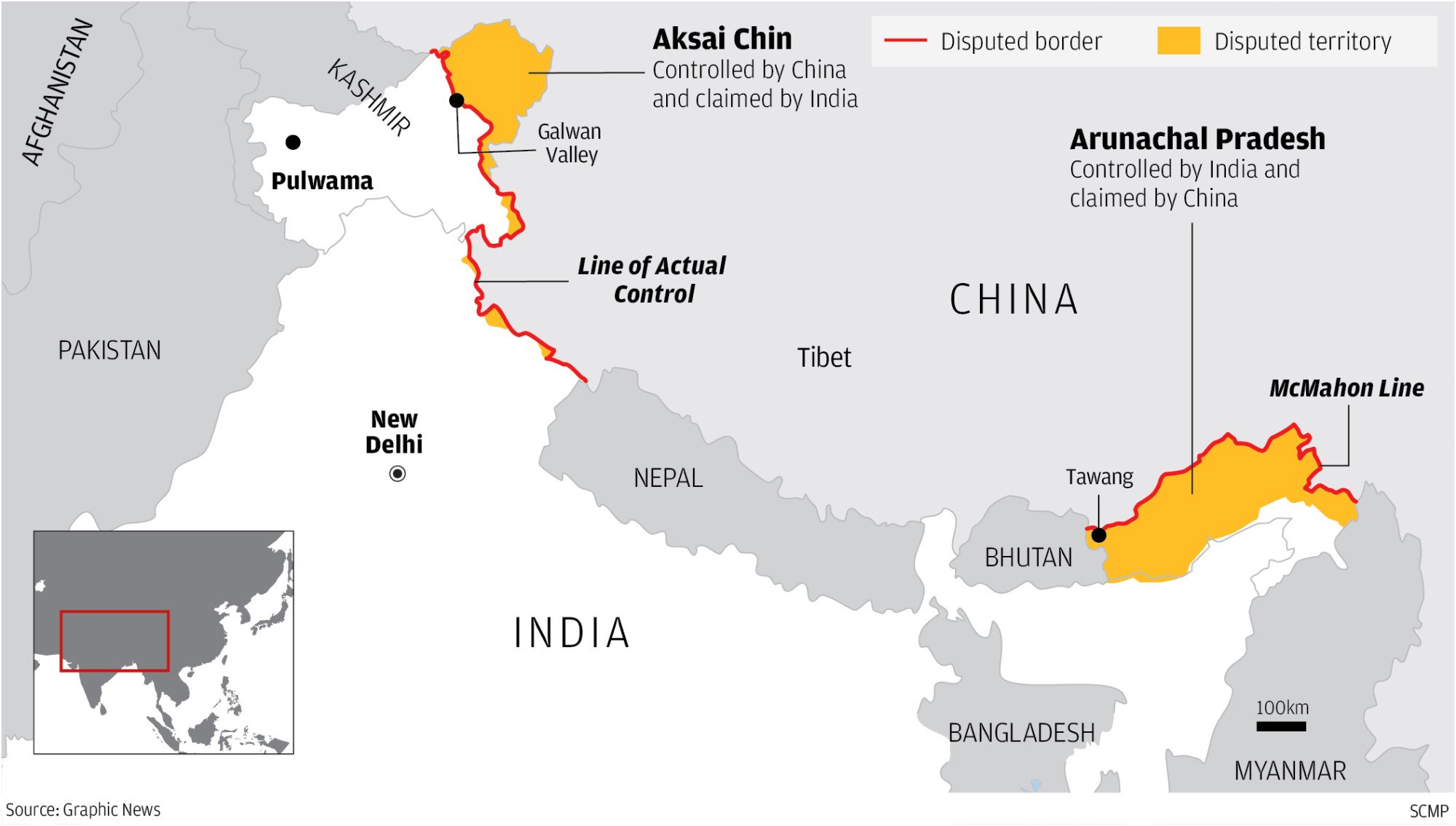
The British-era border between China and India remains the most contentious aspect of their bilateral ties.
A fraught peace prevailed along the LAC in decades after the 1962 Sino-India war. As Washington went on to establish deep trade ties with Beijing and busied itself in the Middle East, Moscow helped India build its military capabilities.
But after years of hesitation, Washington and New Delhi have felt compelled to align more closely as China’s military might and economic influence have grown.
Speaking about the Chinese build-up along the border, General Charles Flynn, commander of US Army Pacific, said on March 30 that “activities [of] what’s called the Western Theatre Army in and along that area have been concerning for a number of months”.
“Nations represented in that part of South Asia have voiced similar concerns as well,” he added.
China’s renaming of places along disputed Himalayan border angers India
Lisa Curtis of the Centre for a New American Security and Derek Grossman of the RAND Corporation, in a March 31 report titled “India-China Border Tension and US Strategy in the Indo-Pacific”, advised that Washington should conduct joint intelligence assessment of Chinese plans and “enhance coordination with Indian officials on contingency planning in the event of a future India-China conflict”.
To reduce India’s reliance on Russian weaponry and to outcompete China, Washington and New Delhi in January began a strategic partnership in the fields of space, defence, semiconductors and cutting-edge technology.
While analysts in India and the US hailed latest intelligence sharing as a new era in the nations’ partnership, those in Beijing blamed Washington for opportunism.
Describing a real-time exchange on Chinese positions along the border as a “milestone in the US-India partnership”, Elizabeth Threlkeld of the Stimson Centre, a think tank in Washington, said it “demonstrates how the two sides can effectively push back against Chinese aggression”.
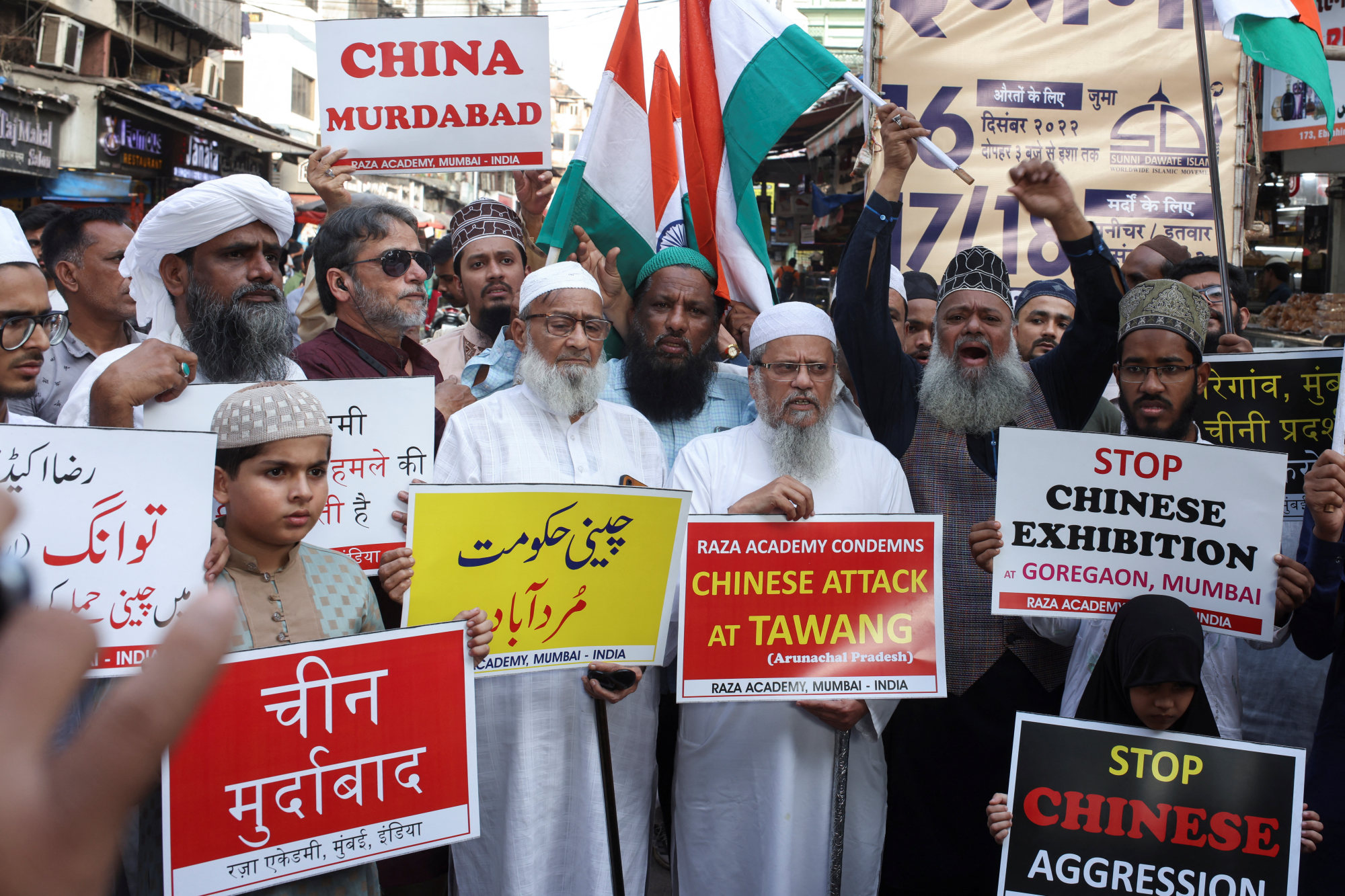
Rajiv Dogra, a former Indian diplomat who served in Pakistan, Italy and Romania, said this showed that India and the US have “built enough trust to be talking about technology transfers and intelligence-sharing – something that is possible only between closest strategic partners”.
Jabin Jacob of the department of international relations and governance studies at India’s Shiv Nadar University said it would be a mistake to assume that Galwan would be the last of the physical clashes between troops that “will turn violent or lead to fatalities”.
“Preventing such situations calls for greater vigilance on all sides, and if that can be achieved by Indo-US intelligence cooperation that is a good thing,” he said.
China remains strongly opposed to any American intervention as it considers border issues with India an internal matter. It also views US-India cooperation in the same light as every other alliance that US President Joe Biden’s administration has promoted to “contain” Beijing.
China and India navies vie for influence in Indian Ocean amid border tensions
In its annual China Military Power Report published in November, the Pentagon said Chinese officials had warned their US counterparts to not interfere in China’s relationship with India after the 2020 Galwan violence.
The US rushed to provide India with supplies, including cold weather gear, munitions and surveillance drones, soon after the lethal clash. And just months later, Washington and New Delhi agreed to intelligence sharing between their armed forces.
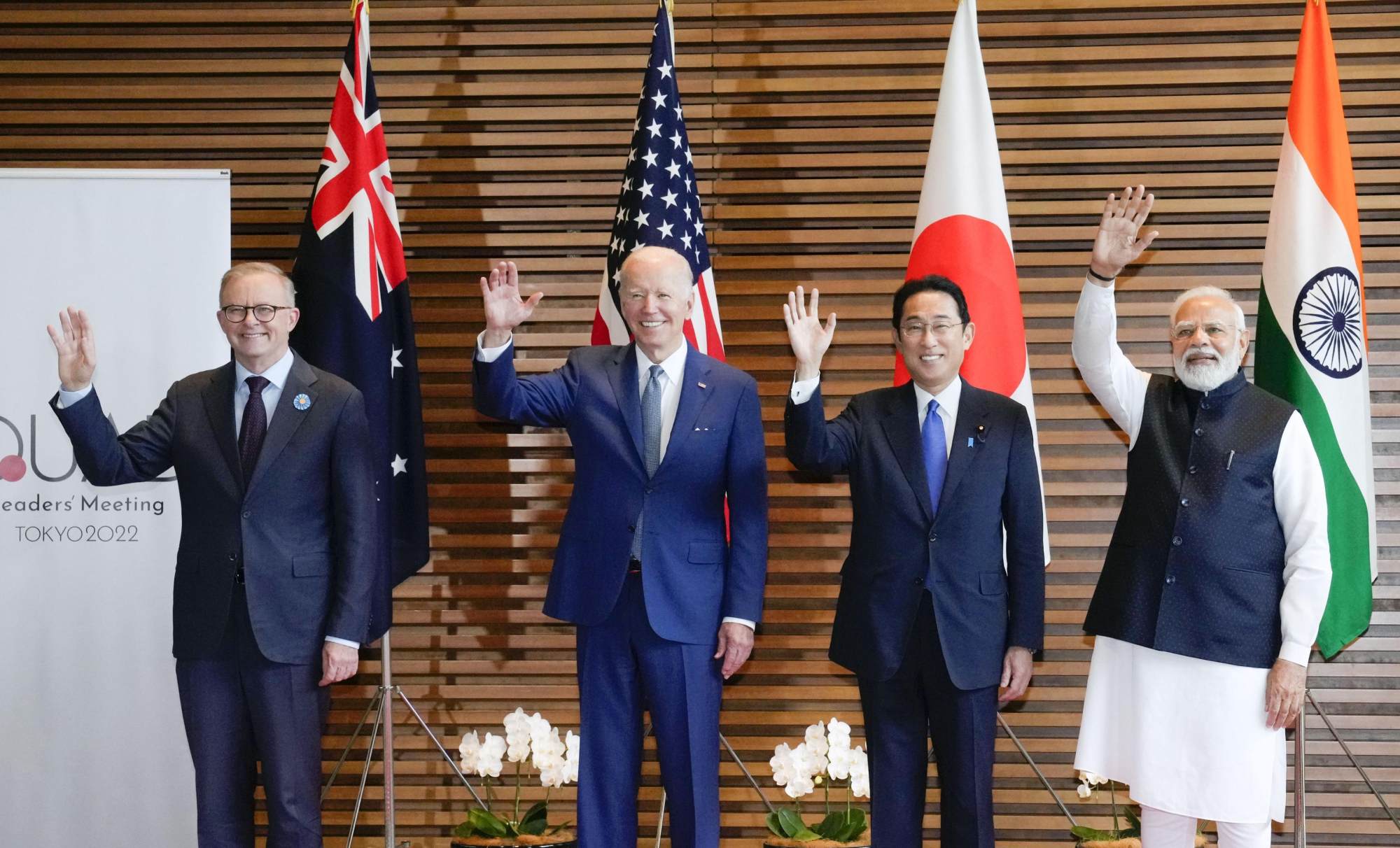
India is also a member of Quad, a US-led security bloc that includes Japan and Australia.
The group is aimed at what the Biden administration calls “maintaining peace and stability” in the Indo-Pacific region. China has criticised it as a “small clique” that is “bent on provoking confrontation”.
India is the only Quad country that shares a land border with China.
The Biden administration’s National Defence Strategy published in October said the US would support allies and partners facing “acute forms of grey zone coercion from the PRC’s campaigns to establish control over the East China Sea, Taiwan Strait, South China Sea and disputed land borders such as with India”.
The following month, the Quad nations conducted an annual joint naval exercise off the coast of Japan.
Dogra, the former diplomat, said the US and India had “moved past the stages of ifs and buts” as their world views increasingly overlapped.
“A practical case in point is the free and open Indo-Pacific. This is essential for US economic growth and for preservation of the rules-based international order,” he said.
India’s army chief recently said that Sino-India ties “do stand influenced by the great power rivalry currently playing out between China and the US”. He added that Chinese “transgressions” remained a “potential trigger for escalation” but that Indian forces were prepared for any contingency.
China’s moves to assert control on border risk further tensions with India
And even though India has for decades maintained a studied silence on Taiwan, a self-ruled island considered a renegade province by Beijing, some experts reckon that a “Taiwan contingency could also be an Indian contingency”.
While Washington does not recognise Taiwan as an independent country, it is legally bound to support its defence capability.
And since taking office in 2021, Biden has several times committed to intervening militarily should China use force against the island, despite America’s long-standing policy of strategic ambiguity.
Taiwan has become a flashpoint between the two global powers over increased US arms sales and high-level political engagement.
Like the US, India does not recognise Taiwan, but has maintained unofficial ties since mid-1990s. Unlike Washington, New Delhi has not officially used the term “one China” since 2008.
There have been conflicting official views about the current situation along the border.
On March 19, Indian external affairs minister Subrahmanyam Jaishankar called it “very fragile” and “quite dangerous”, despite 17 rounds of Sino-India diplomatic and military-level talks in the past two years.
The Chinese side, however, contradicted that statement the following week, with the minister counsellor of the Chinese embassy in India, Chen Jianjun, calling things “overall stable”.
Diplomatically, India has succeeded in maintaining a fine balance. Even as China-US ties have frayed over Taiwan and what is seen as Beijing’s tacit support for Russia in its war against Ukraine, India maintains stable relations with both Washington and Moscow.
In late March, as Indian Prime Minister Narendra Modi addressed the second Summit for Democracy in Washington via video, his national security adviser Ajit Doval hosted a meeting of Shanghai Cooperation Organization (SCO), a regional intergovernmental forum, with Pakistan and China joining virtually.
Hours later, the India-Russia Business Forum was held in New Delhi, where experts called for strengthening India-Russia ties.
SCO’s growing credibility reflects emerging multipolar world order
According to reports, China and India are exploring a meeting between their defence ministers this month, when China’s General Li Shangfu is expected to attend the SCO defence ministers’ forum in New Delhi. President Xi Jinping is also likely to visit India in July for the SCO summit.
Daniel Markey, senior adviser on South Asia at the United States Institute of Peace, described the reported real-time exchange between Washington and New Delhi in December as “a significant new step” since the US supplied India with actionable intelligence.
“The US will have demonstrated the significant strategic utility of closer ties on an issue of intense national interest to New Delhi,” he said, adding that the Biden administration has repeatedly voiced its desire to “peel India away from dependence on Russia, especially with respect to defence trade”.
More from South China Morning Post:
- China, India often clash in border region – but are those skirmishes getting worse?
- China-India border row: two years on, what progress has been made in the conflict?
For the latest news from the South China Morning Post download our mobile app. Copyright 2023.
Already a subscriber? Log in
Get 20% OFF The Star Digital Access
Cancel anytime. Ad-free. Unlimited access with perks.


