




Chinese marine researchers say they have discovered three ancient merchant ships in an unprecedented archaeological sweep of the contested South China Sea.
The wrecks were found in the vast waterway between China’s southern coastline and the Xisha islands – also known as the Paracels and claimed by Vietnam – according to a report on Sunday by state broadcaster CCTV.
The team of scientists and engineers from more than 10 research institutes used mass surveillance technology, which some observers point out could also benefit the Chinese military.
Do you have questions about the biggest topics and trends from around the world? Get the answers with SCMP Knowledge, our new platform of curated content with explainers, FAQs, analyses and infographics brought to you by our award-winning team.
Pottery, porcelain, purple-clay ware, copper coins and wooden planks were among the more than 60 artefacts detected, examined and retrieved from depths of up to 3,000 metres (nearly two miles), the report said.
The scale of the survey – conducted from China’s two largest research vessels – is unprecedented, the team said. Using new sonar technology and hardware, they can investigate 100 sq km (38 miles) each day, detecting objects just a metre (3 feet) long.
Chinese government reveals most significant archaeological finds of 2021
The project’s lead engineering scientist Chen Chuanxu, an associate researcher with the Chinese Academy of Sciences’ institute of deep-sea science and engineering, said the team is delving three times deeper than previous surveys, but with greater efficiency thanks to a close collaboration between robots and humans.
Towed sonar is used to locate objects of interest, which are then photographed by an unmanned underwater vehicle, Chen told CCTV.
“If a sunken ship or suspected cultural relics are found in the photos, a manned deep dive will be arranged for underwater verification, confirmation and the extraction of cultural relics,” Chen said.
Video recordings made by the deep-diving crew and broadcast in the CCTV report showed them taking laser scans of a suspected ship’s hull, collecting sediment samples for later analysis and using a mechanical arm to extract fragile items such as pottery and porcelain.
Deng Qijiang, deputy director of the underwater archaeology institute with the National Cultural Heritage Administration in Beijing, told CCTV further investigation is needed to date and identify the ships.
But the latest survey had “established a complete set of deep-sea archaeological investigation workflows, and it will pave the way for more search and discovery of deep-sea underwater cultural relics in the future”, he said.
A Beijing-based sonarologist who was not involved in the project, but is familiar with the technology, said the archaeological survey techniques would also be able to discover military assets planted on the seabed by other countries.
The sonarologist, who asked not be named because of the issue’s sensitivity, said the US military had developed a number of deep sea devices that could be deployed in contested regions like the South China Sea.
Among them is a device known as an “upward falling payload” which can be planted on a seabed more than 2,000 metres below the surface (6,500 ft) and put to sleep for up to five years.
The six metre (20ft) device can be activated at any time and release sensors, drones or missiles to the surface where they could collect intelligence, act as decoys, or directly attack enemy targets, according to the US Defense Advanced Research Projects Agency, a major funder of the technology.
The sonarologist said other military seabed devices can monitor submarine activities, generate signals for underwater positioning, or act as a charging station to power up drones.
“Detecting and removing these devices can cost a tremendous amount of time and money. To the navy it is usually not cost-effective. But the situation can change if the same region interests underwater archaeologists,” he said.
The Chinese government has an ambitious five-year plan to carry out archaeological surveys across the world’s oceans, tracing the ancient Maritime Silk Road from Southeast Asia to Africa by 2025.
Sunken ships of Chinese origin and their cargoes are expected to shed more light on China’s historical status as a maritime power and strengthen its territorial claims to a number of disputed islands.
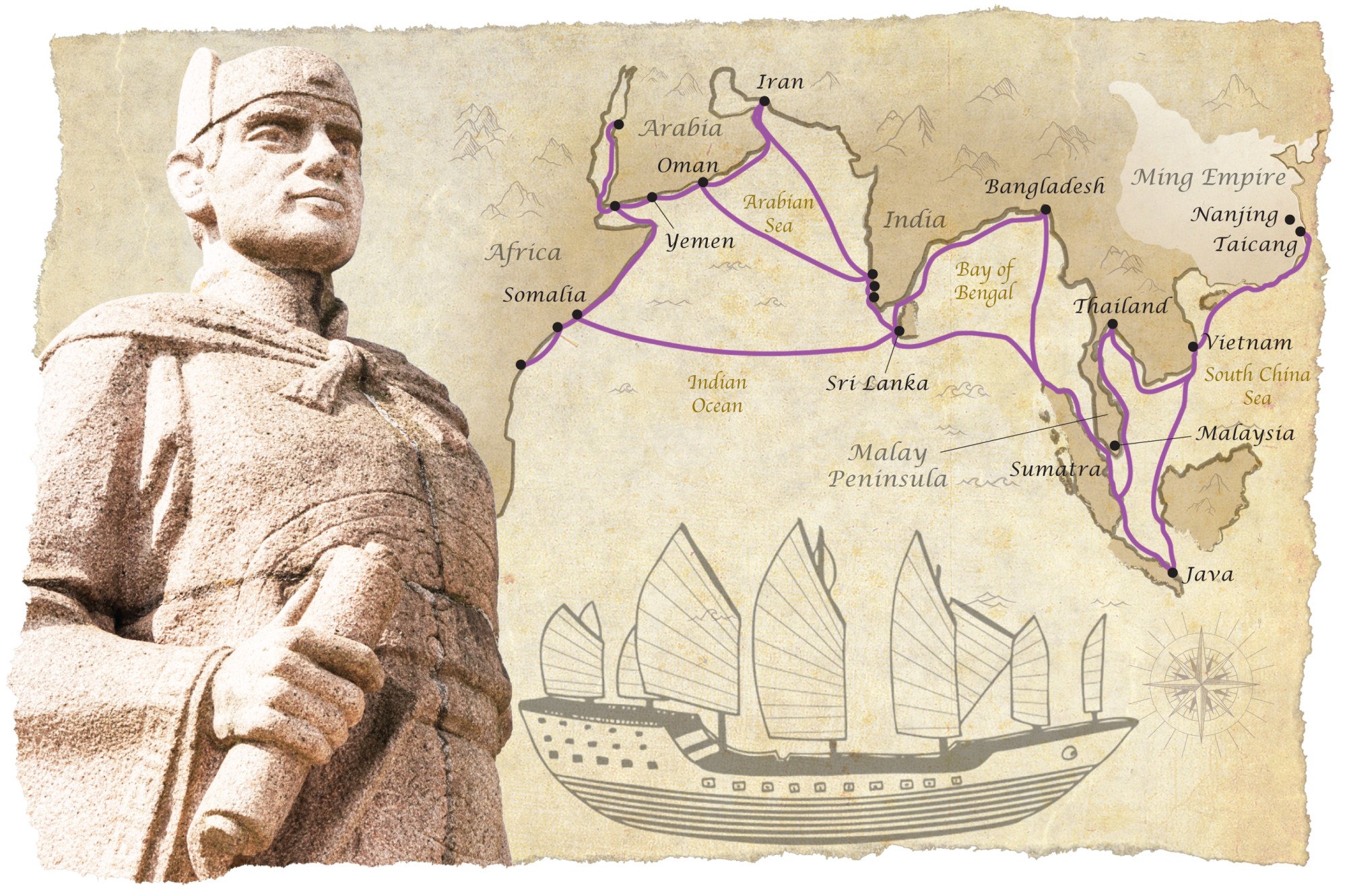
One such project involved a search of Sri Lanka’s territorial waters by Chinese researchers looking for the remains of a treasure ship from the 15th century, part of Admiral Zheng He’s fleet, said to be the largest the world has ever seen.
Zheng conducted seven expeditions to regions as far away as eastern Africa, buying local goods and distributing gifts from the Chinese emperor.
More from South China Morning Post:
- Chinese space designers eye moon base in volcanic caves for long-term stays after 2035
- Hunt for Ming dynasty admiral Zheng He’s lost treasure ship heats up in Indian Ocean
- How China uses shipwrecks to weave a history of seaborne trade that backs up its construction of a new maritime Silk Road
For the latest news from the South China Morning Post download our mobile app. Copyright 2022.
Already a subscriber? Log in
Get 20% OFF The Star Digital Access
Cancel anytime. Ad-free. Unlimited access with perks.


