DHAKA: Bangladesh's vital textile sector was already suffering high energy costs from the Middle East war when a fire at one of its two gas import terminals last month further exposed its energy insecurity and forced industry leaders to look to other fuels.
The textile industry employs some 4 million people out of a total industrial workforce of about 14 million and produces around 80% of Bangladesh's exports and about 13% of its GDP.
But the industry is heavily reliant on gas for its wet processing operations such as washing, dyeing and finishing clothes.
Bangladesh has a longstanding gas supply shortfall due to local production falling and import costs rising.
Qatar, one of the world's biggest exporters of Liquefied Natural Gas (LNG) has said its supply to Bangladesh will be slashed as a result of Iran's near closure of the Strait of Hormuz and Iran's bombing of Qatari LNG export facilities.
A fire at one of Bangladesh's two LNG terminals last month then cut supply to just over a half of demand, according to data from state-owned oil and gas company Petrobangla.
Mohd. Khorshed Alam, a director of the Bangladesh Textile Mills Association (BTMA), said a large number of factories in the industrial belts of Savar, Ashulia and Narayanganj were now operating at up to 40% below capacity.
Some factories have turned to more costly compressed natural gas from roadside filling stations that normally fuel cars, or to even more expensive diesel to fulfil urgent orders.
"The country cannot build future industrial investment on uncertain LNG supplies and repeated supply disruptions. We need energy security, not piecemeal firefighting," said Fazlul Hoque, managing director of Plummy Fashions, one of the country's leading textile producers.
Hoque's factory in Narayanganj employs more 1,000 people and has faced disruptions to its energy supply for years. As a result, he is considering switching to electrification and alternative fuels such as biomass.
Almost all rural households in Bangladesh use biomass for cooking, burning pellets made of agricultural residues like rice husk, rice straw, jute sticks, bagasse and wheat straw, as well as wood residues and municipal waste.
A few textile factories have already begun burning biomass to fuel their boilers.
But the textile sector has an exceptionally large fuel demand relative to the country's biomass base, and would compete with rural households, said Dr. Laxmikant Jawale, regional lead for South Asia and Southeast Asia at the Apparel Impact Institute, a non-profit focused on decarbonising the apparel supply chain.
Bangladesh's logistics and infrastructure for aggregating biomass at an industrial scale is still underdeveloped, while switching to biomass requires investment in boiler retrofitting and changing the way fuel is handled, stored, combusted, and how ash is removed, he said.
"Biomass thus cannot be a sector-wide strategy, rather it works better as a facility-by-facility, case-by-case option," Jawale said.
Other solutions include installing electric boilers and heat pumps that could cut energy use by up to 45%.
But the Apparel Impact Institute said in a report last year that installing heat pumps would require large-scale capital investment and that grid-connected electric boilers could not alone make up the energy deficit if supply were not consistent.
"Urgently improving grid access and reliability for factories across the country will send a clear market signal that grid electricity - and preferably renewable electricity - is what the industry needs," said Jawale.
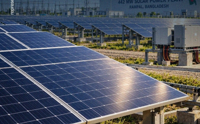
Alam from the BTMA is also managing director of Little Group, a yarn spinning company. He has installed rooftop solar panels and batteries to store power at his plants, as well as energy-efficient motors to cut electricity use.
The government should now step up and remove duty from imports of energy-efficient technologies, provide support to the textile industry to adopt renewable energy and vigorously explore domestic gas fields to boost local supply, Alam said.- Reuters