
When The Blood Of Dawnwalker was released, I was completely sucked (pun intended) into the vampiric adventures of Coen of Laslea as he traversed Vale Sangora in hopes of rescuing his family.
Dawnwalker managed to sink its teeth into me (sorry, I’ll stop now) as I put in 30-plus hours to complete its main storyline as well as additional side quests.
The vampire action role-playing game was definitely a standout in a year stacked with heavy-hitters such as Onimusha: Way Of The Sword, Control Resonant, and Gears Of War: E-Day, all releasing ahead of the titan that is Grand Theft Auto VI.
But what makes Dawnwalker so special? What was the “secret sauce” that kept me coming back to it? I mean, the gameplay is fun, the story is engaging. But I think what really stood out to me is Dawnwalker’s take on the vampire RPG genre and a unique “time” mechanic.
So, join me, won’t you, as I analyse Dawnwalker’s take on those two things and further convince you all to join the vamp side.
Blood-soaked tales of Coen
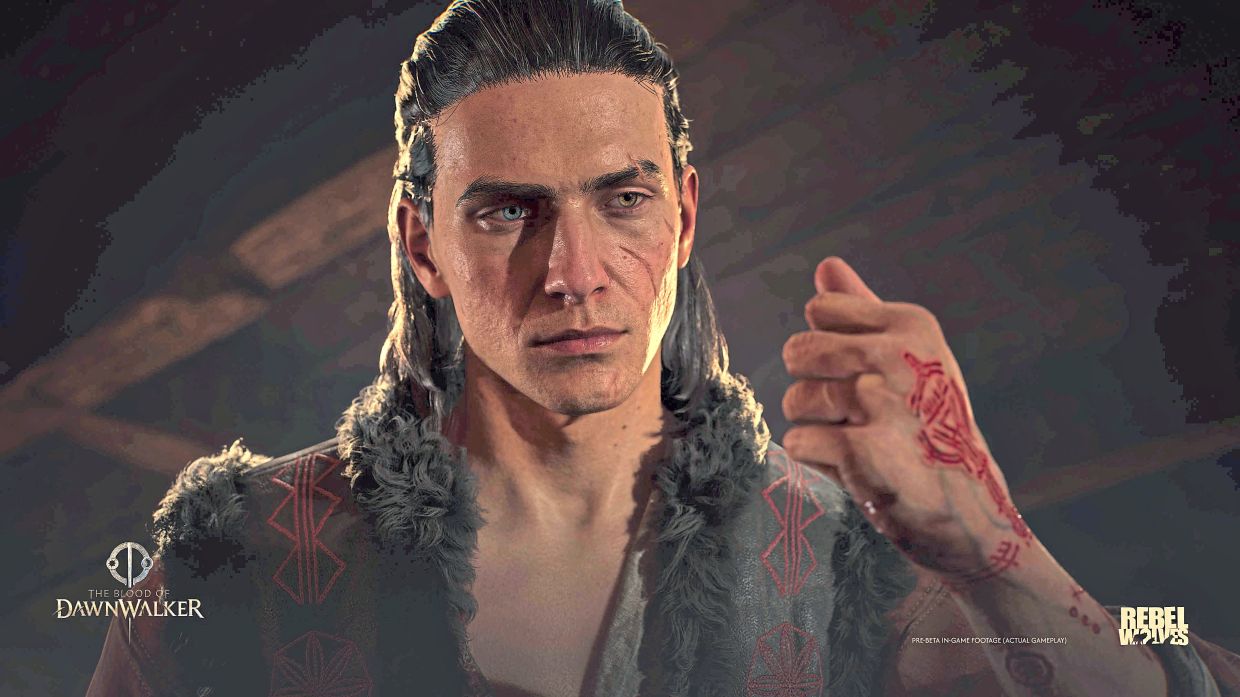
In The Blood Of Dawnwalker, you take on the role of Coen of Laslea, a young man who ended up being a Varkhiri – the game’s nomenclature for vampires – but with the unique affiliation of being able to walk during the day. Hence the Dawnwalker moniker.
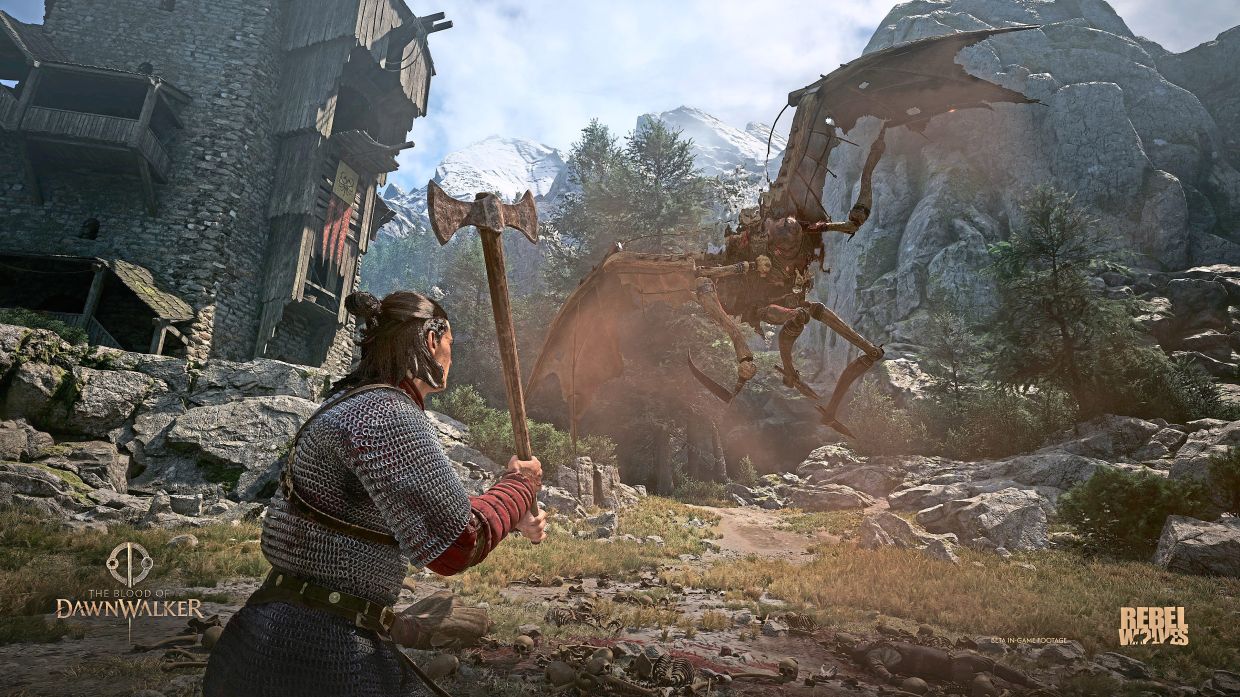
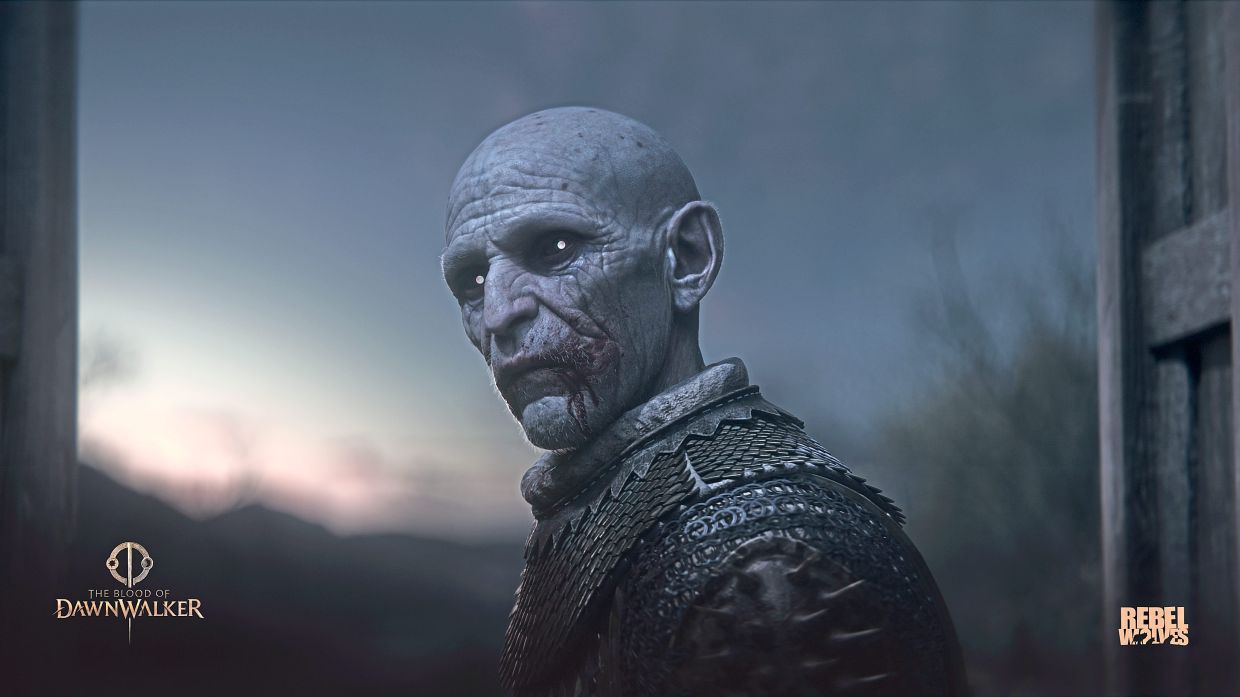
As Coen, you’ll be tasked with saving your family, who were taken by the evil vampire Brencis, before he sacrifices them for his coronation. With 30 in-game days to save your family, you’ll take on monsters, men, and everything in between to either rescue your family or maybe give in to your vampiric impulses and become an evil vampire yourself.
Despite this being Rebel Wolves’ first game, Dawnwalker exudes a level of quality that’s comparable to triple-A titles like Baldur’s Gate III or The Witcher 3. The Witcher 3 comparison is probably more apt given that Rebel Wolves is made up of former CD Projekt Red developers who worked on the massively successful action RPG.
From the lived-in world of Vale Sangora to the branching quests with deep storylines, it’s clear that the developers brought what worked in The Witcher 3 and infused it into Dawnwalker. If you’re a big fan of CD Projekt Red, or action RPGs in general, then Dawnwalker is definitely a title you should pick up. I mean, I certainly can’t recommend it enough.
But enough with me waxing lyrical about Dawnwalker; it’s time to dive deep into the world of..
VRPG: Vampire roleplaying game
There have been plenty of vampire games over the years, from BloodRayne to Legacy Of Kain, but vampire roleplaying games – or “VRPGs” as I like to coin them – hold a special place in the gaming landscape.
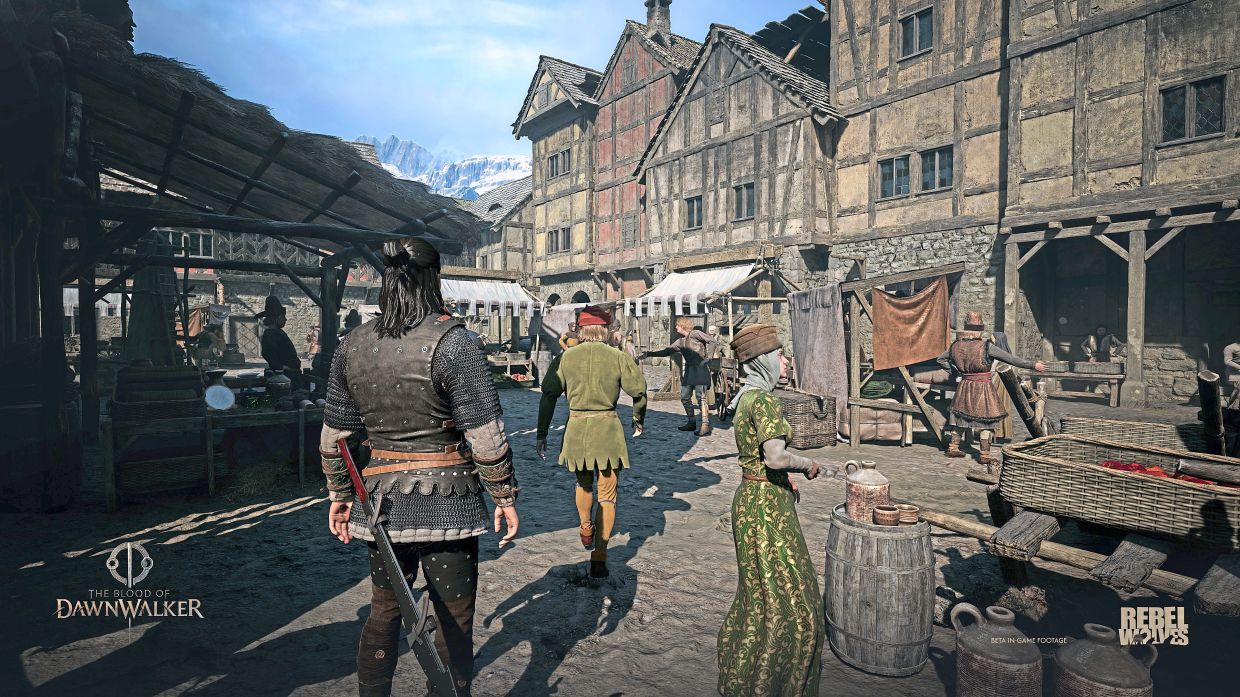
Dawnwalker is definitely a great new entry in the genre, but there were others that came before it that really laid the groundwork for VRPGs.
Now, I know everyone’s opinion is going to differ, but for me personally, the holy grail of VRPGs is Vampire: The Masquerade – Bloodlines. Released on Nov 16, 2004, for PC by Troika Games, Bloodlines was a bit of a cult classic.
While a lot of people sing its praises today (like yours truly), when Bloodlines was first released, it only sold about 72,000 copies, which was far below Troika’s other games, Arcanum: Of Steamworks And Magick Obscura (234,000 units) and The Temple Of Elemental Evil (128,000 units).
It wasn’t until fans started releasing mods to improve the game’s graphics, mechanics, and include quality-of-life improvements, that more people started playing Bloodlines. I was one of those people who played Bloodlines way after its release, and it introduced me to the dark and tantalising world of VRPGs.
From its gothic vibes and deep lore to the branching storylines and clan-specific powers, Bloodlines had a sense of identity that pulled me into its world. While all that was enough to pull me in, what really kept me coming back to Bloodlines is how it let me be the kind of vampire I wanted to be.
If I wanted to be a vampire that charms and seduces people, I could choose the Toreador clan and focus on a charisma build that lets me talk my way out of every situation. Or, if I’m feeling a bit bloody, I could do a melee build with the Brujah clan and just brawl my way through the streets of Los Angeles.
The ability to be a vampire of my own making is what makes Bloodlines one of the great VRPGs, in my opinion. Dawnwalker never really reached those heights, but it proved to be an admirable take on VRPG with the main character Coen.
In Dawnwalker, while the baseline premise remains fixed – saving Coen’s family from captivity by Brencis, the big bad villain – the journey towards that goal is littered with quests and stories that further flesh out Coen as the player sees fit.
It is somewhat similar to Commander Shepard from the Mass Effect series. While Shepard has his (or her) own voice, backstory, and personality, there are bits of customisation in how I react and respond to situations that can build up my own version of Shepard. Whether I lean into Paragon nobility or Renegade pragmatism, Shepard’s core identity holds firm while allowing player expression to shine.
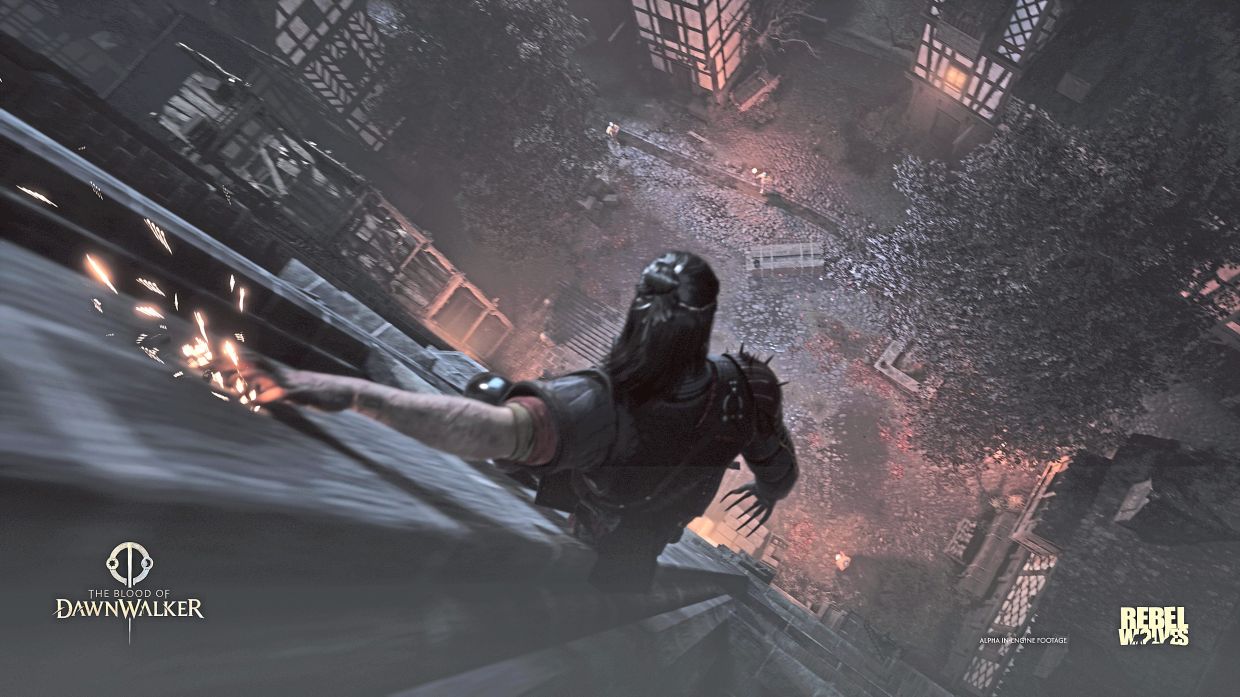
For Coen, how he perceives the world and his general naiveté regarding being a Varkhiri are clearly established. However, certain actions, such as being helpful to random villagers or mercilessly draining an innocent bystander’s blood, are all choices I could make to personalise my version of Coen.
Sure, it’s not as deep as Bloodlines, but it did allow me to create my Coen that I would want to see time and time again. Speaking of time!
Adventures with time
Time is used as both a storytelling device and a gameplay resource in Dawnwalker. The game’s clever usage of time made me think back to some of the more influential games that managed to use “time”, either as a narrative device or a gameplay mechanic, in ways that really left an impact on me.
One example that comes to mind is Chrono Trigger, the SNES JRPG classic that takes the time-travelling concept by the reins and blew my mind with its multi-branching storylines based on decisions made across the past, present, and future. A more recent take on that time-bending formula is The Adventures Of Elliot: The Millennium Tales (read the Aug 24 cover at tinyurl.com/2uwd5wvf), which takes time travel and wraps it up in the aesthetic of The Legend Of Zelda.
Speaking of Zelda, I would be remiss not to mention The Legend Of Zelda: Ocarina Of Time, where players were able to travel back and forth through time as either adult or child Link to alter the world of Hyrule.
Modern RPGs have taken these time mechanics in different directions. The Persona series by Atlus uses a full academic calendar that progresses as I make story choices and build social bonds. Atlus took a similar approach for Metaphor: ReFantazio, where instead of a high school calendar, the ticking clock centres on travelling across the kingdom to claim the throne from the main villain before a fixed deadline.
Take your time... cause you’ll need it
Where Dawnwalker differs from all the other titles is by turning time into a sort of resource that I needed to manage carefully. In order to save Coen’s family, I had 30 in-game days before the evil vampire Brencis sacrificed them for his coronation.
Every major action I took in Dawnwalker cost a certain amount of time measured in action or time segments. A full day has 16 segments, and actions such as completing a side quest could take three time segments, while learning a skill might consume one.
It sounds complicated and a bit overwhelming at first, but once I got into the flow, the way developer Rebel Wolves used time made every decision feel important.
While the countdown mechanic adds a sense of momentum to Dawnwalker’s story, what really caused me to think twice about every single action I took was how time felt like a finite resource. Given that every major action takes up time, I often ended up thinking twice before taking on a quest or levelling up because I was worried I might not have enough time left to save Coen’s family.
Should I spend three segments of time to take down one of Brencis’ outposts, making him weaker, or complete a side quest that will reward me with powerful armour but takes up seven time segments?
I was constantly calculating in my head to figure out which side quests and activities were worth the effort or which abilities I should prioritise, because time – just like in the real world – is a luxury.
Dawnwalking and loving it
Despite having lived through the 30 days of trials and tribulations with Coen, I was beginning to think that being a vampire isn’t such a bad deal after all. Sure, you live through all eternity thirsting for human blood, and people will probably try to kill you once they find out what you are.
However, stepping into Coen’s shoes fulfils a distinct power fantasy that lets me wield dark powers while looking undeniably good doing it – bringing back that same intoxicating feeling I had when playing classic VRPGs like Vampire: The Masquerade – Bloodlines.
With a hit like this on their hands, I cannot wait to see what Rebel Wolves brings to Coen’s next adventure. As the venerable Leslie Nielsen once said in 1995’s Dracula: Dead And Loving It, “Children of the night... what a mess they make.” I, for one, am ready for whatever mess Rebel Wolves cooks up next.