
At the National Archives of Malaysia in Kuala Lumpur, director-general Zaidin Mohd Noor recalls a story involving a village preparing to mark what was believed to be its 100th anniversary.
“It was a significant milestone so some officials from the village had announced to the media that a major celebration will take place,” says Zaidin.
But before the celebrations could go ahead, there was a question over whether the village was, in fact, 100 years old.
“We received a call asking us to establish the fact. So our officers went through the archives, looking for relevant material such as official newspaper reports, government records, photographs and other documents,” he says, adding that the National Archives in KL has some 3.2 million pieces of material with significant historical value to the country in storage.
The painstaking search eventually turned up evidence that challenged the claim.
“We had to break the news that the village was not 100 years old,” says Zaidin.
The planned celebration was subsequently called off, although he says the finding was met with some dissatisfaction in certain quarters.
“That’s the thing about facts. You can decide how you want to react to them, but you can’t dispute it when the records we have at the National Archives show otherwise,” he says.
While the records themselves remain the foundation for establishing facts, the way people find and work with those records could change as the National Archives explores the use of artificial intelligence (AI).
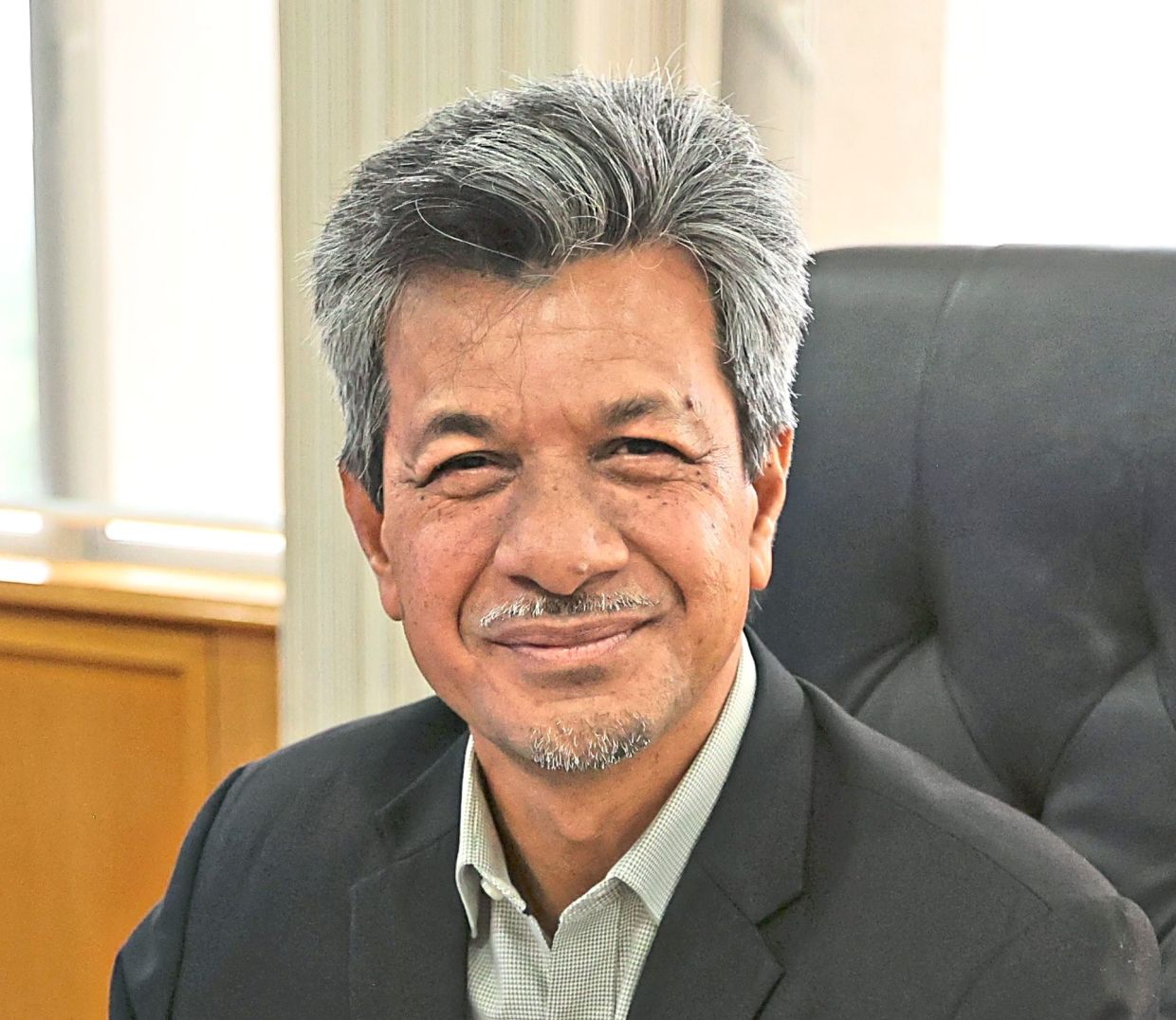
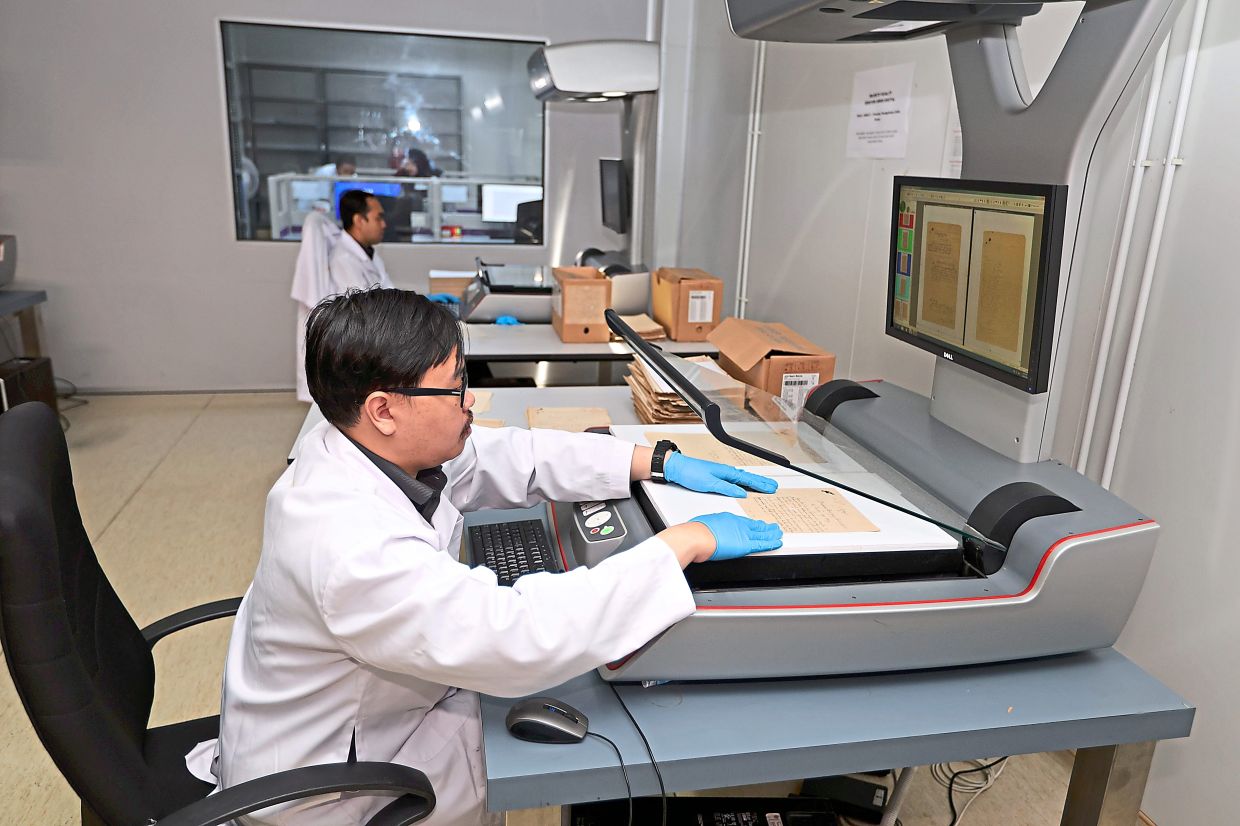
Zaidin says AI is being considered at different stages of the archival process – from restoring and processing old materials, to digitising them and making their contents easier to search.
To support this digital transformation, Zaidin says that the National Archives is looking at how AI can be incorporated into its upcoming Digital Records and Archival Management System (D-reams), a system being developed to improve the management of archival materials.
“D-reams is an integrated and comprehensive system designed with various AI-powered functions to assist with and improve the efficiency of archival materials management.
“The system will draw on the National Archives’ own collections to analyse, generate or summarise information. We’re planning to launch D-reams in 2028,” he says.
Talking about Aina
For researchers visiting the National Archives in person, the Computerised Archival System and Services (Compass) at the Research Hall provides access to approximately 3,220,504 digitised archival materials.
Zaidin says Compass was first launched in 1997, building on years of digital archiving work carried out by its officers since the 1980s.
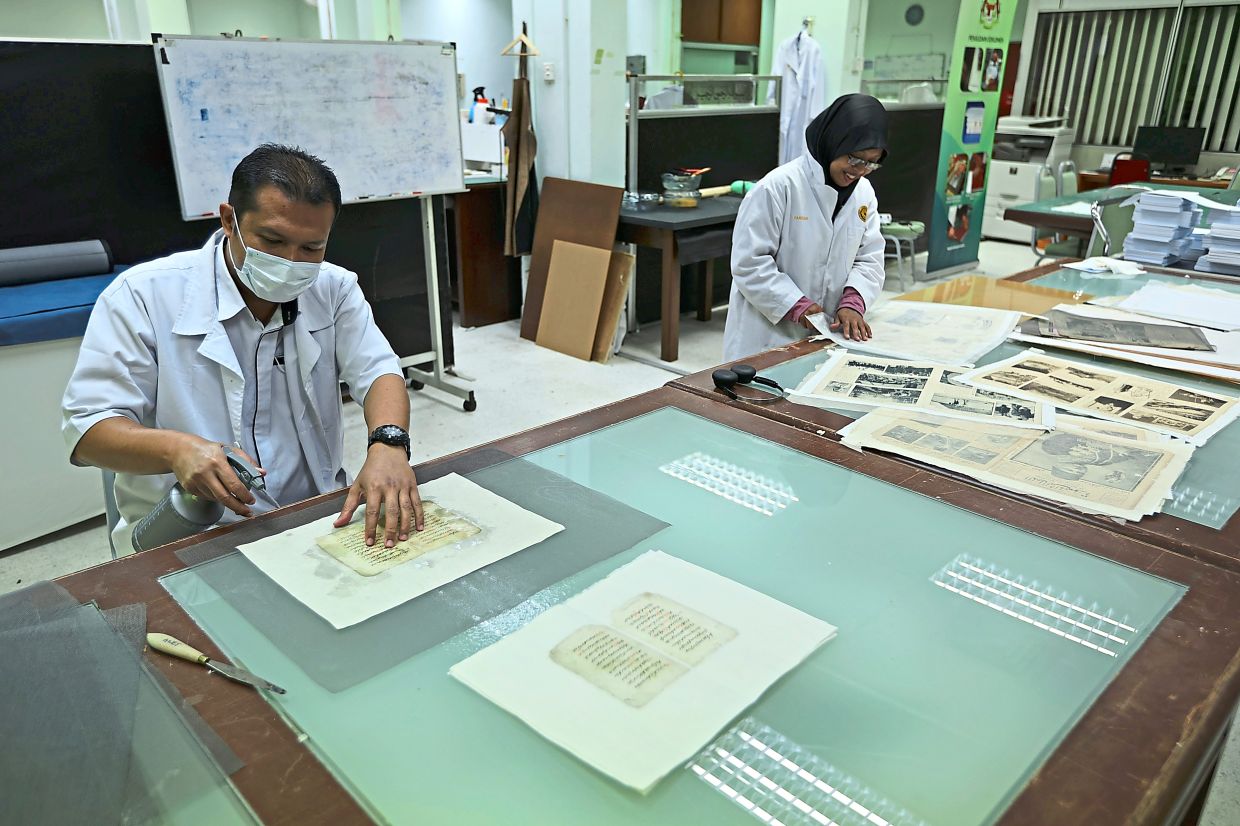
He adds that Compass directs visitors to the location of the information they want on-site, and is only available at the National Archives.
“While Compass is beneficial in helping users locate the material they need at the Research Hall based on keywords, we felt it was time to upgrade the search system to make it more efficient,” he adds.
Users can also search for archival material through the National Archives’ Online Finding Aid (OFA) website that provides information on more than two million archival materials. Compared to Compass, OFA is accessible anywhere and has a newer user interface, but it only provides a limited free preview of the information users are looking for, with additional views and downloads requiring payment.
Information Technology section head Mardiana Sulaiman says a chatbot called Aina is being developed to assist users with their research.
“Aina stands for Artificial Intelligence National Archives,” she says, with Zaidin adding that training the chatbot feels like raising a new “child”.
Unlike a conventional keyword-based search, Mardiana explains that Aina will use semantic search to interpret the meaning and context of a query. This will allow it to better identify archival material that is relevant to what a user is researching, rather than simply matching the words entered.

“The system will also use AI to enhance metadata and provide richer information about each archival item. This will allow Aina to broaden searches and cross-reference records with other relevant materials,” Mardiana adds.
Zaidin explains the difference using a search for “Merdeka” as an example. Under the current system, a keyword search may return a large volume of material, or sometimes very little, without providing any context to help users understand what they have found.
“With Aina, we have a vision of users asking, ‘Tell me about Merdeka in 1957’, and it will be able to explain what happened based on the archival material in the system. Users will benefit from getting a more comprehensive and conversational-style search result based on their query, and it helps us to fulfil one of our core responsibilities which is to provide access to information at the National Archives,” he says.
Enhancing restoration
The National Archives is also exploring the potential for AI to assist in the restoration, enhancement and digitisation of archival materials in stages.
“We’re looking at how it can be used to identify content in the material, extract information, generate voice recording transcripts, analyse images or videos and prepare description or metadata,” says Finding Aids section head Normazlinalaila Bahari.
Zaidin explains that the material at the National Archives comes from various sources including government offices, private donors and even members of the public.
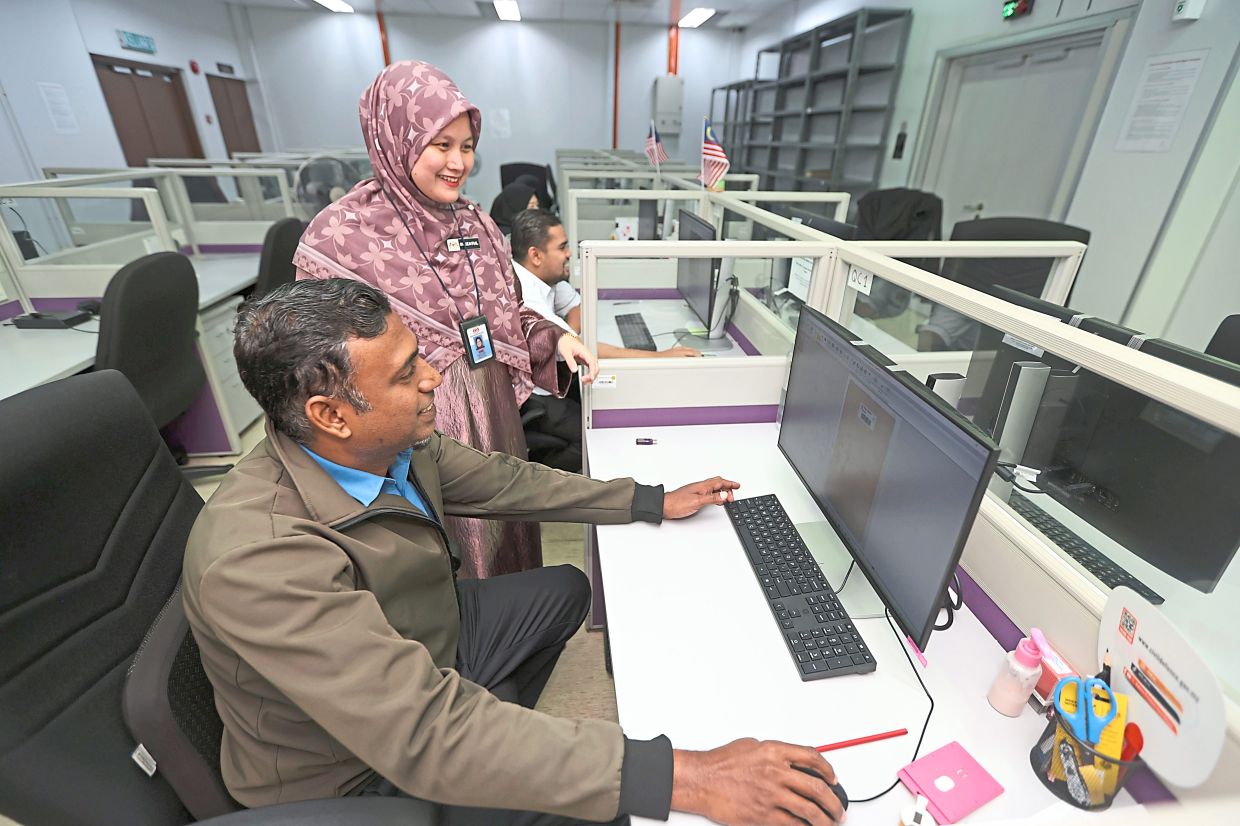
In August, it was announced that the National Archives had gathered more than 309,000 archival materials through community outreach efforts held in 2025, including old photographs, cassettes, documents and family historical records donated by the public.
Zaidin shares that he has also received emails from the public about old photographs with requests for the National Archives to authenticate and preserve the material.
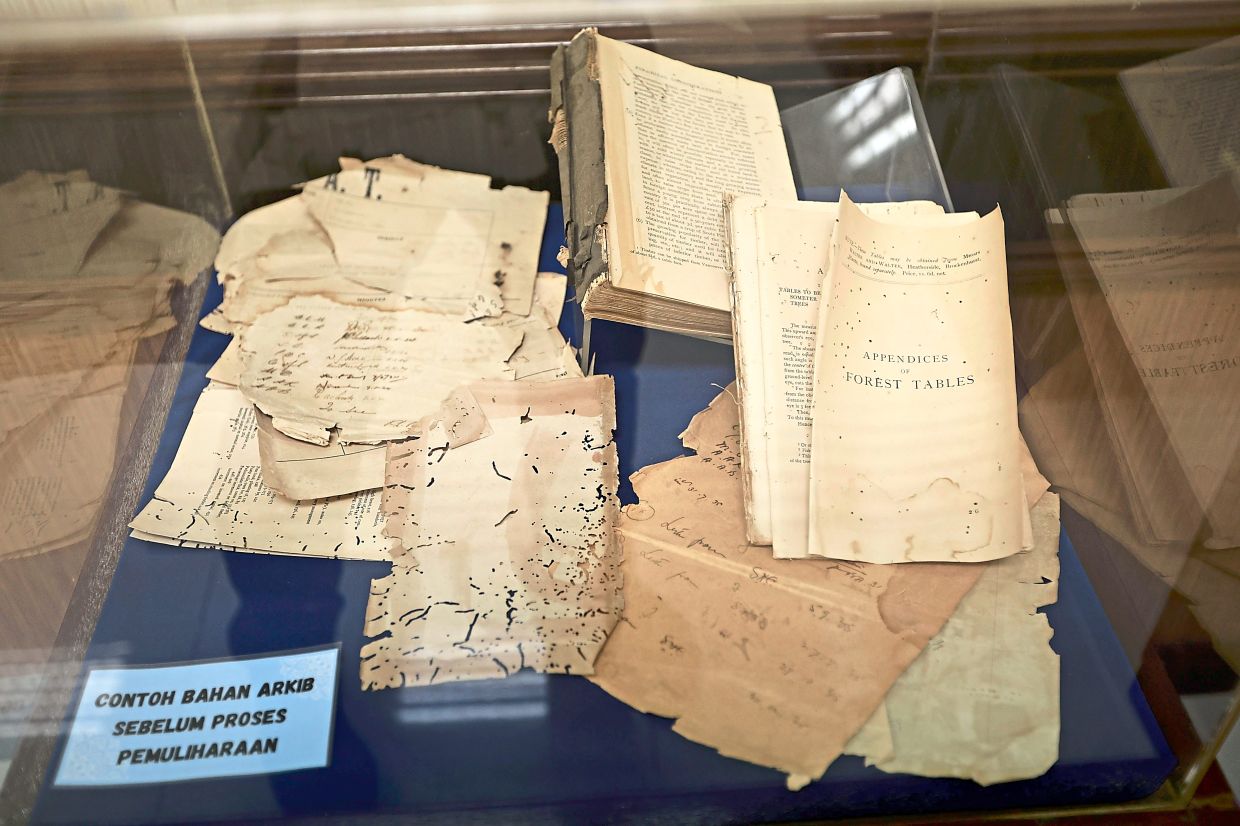
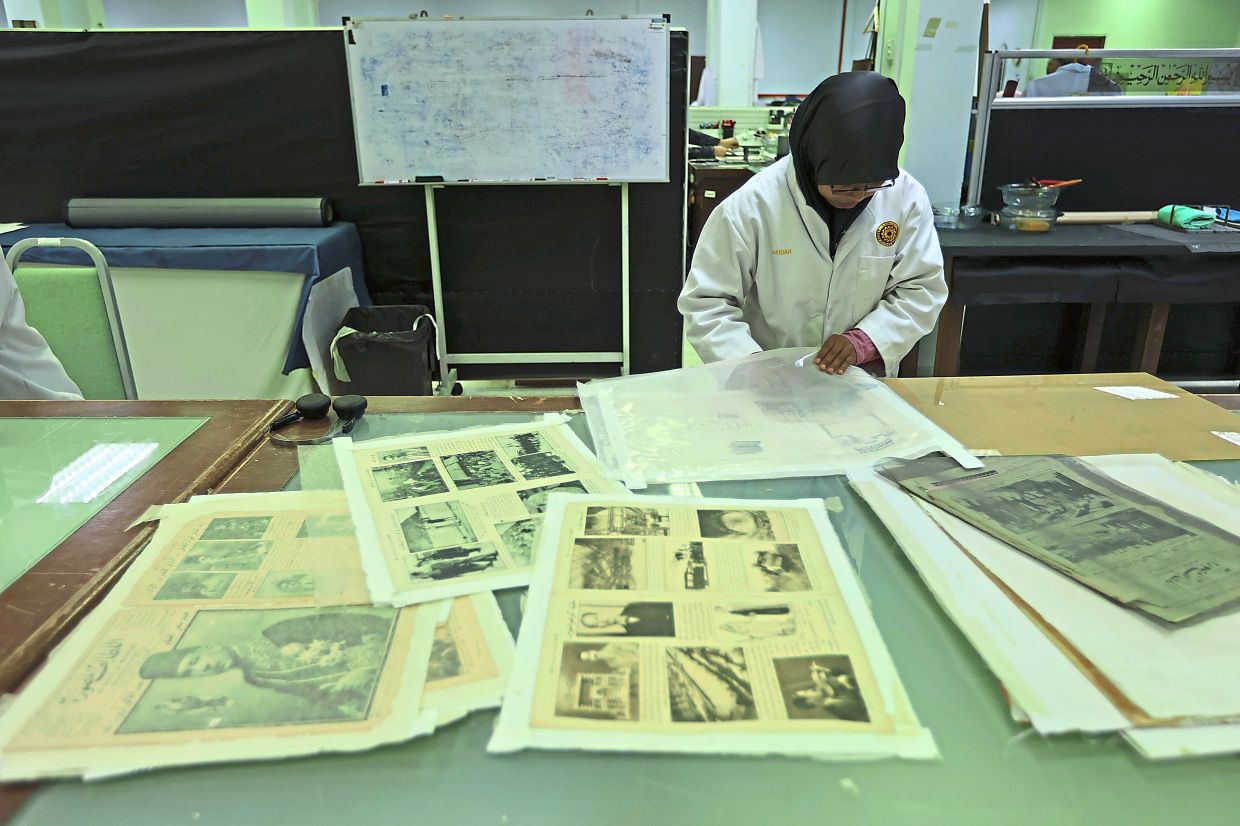
“Our archivists will carefully go through each material to determine its authenticity, study the historical value and then begin the process of restoration in the lab. Then it will be kept in our repositories after cataloguing is done and from time to time, we may take some items out for display,” he says.
For example, Normazlinalaila says the National Archives holds the Malaysia Declaration of Independence document from 1957, tucked away safely in a temperature- and humidity-controlled vault.

“That’s a replica (pointing to a framed display in Zaidin’s office). During Merdeka month, the National Archives will take the Declaration out of the vault carefully for display and it’s a popular item with visitors,” she shares.
The National Archives was first established as the Public Records Office in 1957 where most material at the time was from the pre-Merdeka era.
Zaidin says one of the earliest records they keep came from 1642 during the Dutch colonisation period in Melaka. The archivist can take anywhere from one day to six months to restore or repair an item depending on the condition. Specialised chemicals or solutions may be applied to the material.
“It’s a time-consuming process, particularly for fragile documents that have seen better days due to the passage of time. AI could potentially serve as a supportive tool to improve the readability of some items and even suggest suitable physical treatments, such as mould removal, lamination and controlled drying,” he says.
Some items, such as oral history or interview recordings, can take an officer up to six months to transcribe and determine the context needed for archiving.
To help speed up the process, Mardiana says an assistive AI tool that converts voice recordings into text is currently undergoing user acceptance testing.
“We’re testing its accuracy, particularly how well it can capture speech in Bahasa Malaysia. If the results are good and meet the standards of the National Archives, we plan to have our officers start using it by the end of the year,” she adds.
Another feature in development is Storage Forecasting, which Zaidin says can help with managing inventory at the repositories.
“We want the system to analyse the real-time trend in our inventory and forecast when the space may reach its limit. It could lead to proactive measures to request extra space or migrate more items to the digital archives,” he adds.
Assessing the AI
While the potential of AI is promising, Normazlinalaila says the National Archives is also mindful of its limitations and potential pitfalls.
“As you know, AI can hallucinate or make mistakes and we’re concerned about that,” she says.
For example, AI-enabled handwritten text recognition (HTR) and optical character recognition (OCR) may face challenges when processing legacy materials, particularly deteriorating documents with faded text or old handwriting that is difficult to decipher. Commercially-available AI models are also not trained to interpret local dialects or the way Bahasa Malaysia was written in the past.
“At the National Archives, we have a strict standard to maintain accountability. We won’t treat any AI output as an authoritative source on its own,” she adds.
Normazlinalaila says an AI policy is being drafted to guide the ethical use of AI, including risk management, data quality and safety, in line with the Public Sector Artificial Intelligence (AI) Adaptation Guidelines released by the National Digital Department in 2025.
“We will maintain a human-in-the-loop approach to ensure information generated by AI is verified for accuracy and that its use can be properly accounted for,” adds Normazlinalaila.
She says that an officer must review, authorise and audit any AI-generated information. This includes checking it against archival material, the original document or other relevant official sources.
“Any content that has been enhanced using AI will be clearly labelled as such. We also aim to showcase the original document or file alongside the enhanced version so that the public can compare the two.
“For example, we may adjust the brightness of photographs or newspaper reports for public display, but these will only be copies of the original items. The original will remain untouched and authentic,” she says.
Mardiana says the National Archives will also host the system on its own cloud infrastructure.
Facts first
Other countries are also exploring how AI can improve the management or access to archival material.
The National Archives and Records Administration (Nara) in the United States has an inventory of AI uses on its website including a pilot for AI based on Semantic Search, aimed at solving the problem of “unsophisticated” keyword-based search limitations by implementing semantic search that understands user intent and historical context, enabling researchers to find relevant records without requiring exact term matches.
Nara also has an AI-powered Amelia Earhart search tool that has been deployed to help efficiently retrieve and prepare all government records related to Earhart’s final flight for release, in compliance with the US Presidential directive of Sept 26, 2025.
Across the Causeway, The Albatross File: Singapore’s Independence Classified permanent exhibition – organised by the National Library and the Digital Development Ministry – draws on photographs, oral history interviews and videos from the National Archives of Singapore. The exhibition also features ChatBook, an AI feature that allows visitors to interact with the archival material.
Closer to home, it was reported that the upcoming Sarawak Archives Building will adopt an Advanced Automated Storage and Retrieval System with robotic automation to store and retrieve archival documents.
“The technology is currently being tested and we believe the state is studying a method that has been deployed in Japan. We don’t have plans to adopt similar measures yet as the cost is high,” says Zaidin.
Overall, Zaidin maintains that AI should be seen as a technological tool to support human expertise, rather than a replacement for archivists.
“We value the experience, professional judgment and authentication of our archivists as important elements in ensuring the authenticity, accuracy, context and historical value of archival materials are protected,” he adds.
After all, Zaidin says, one of the National Archives’ key responsibilities is to provide facts as the custodian of history.
“Especially in this age where AI can be used to generate all kinds of material containing misleading information or taken out of context,” he adds.
He encourages the public to turn to the National Archives to authenticate relevant material or consult its records when they need to verify facts.
“But don’t ask us to prove the existence of UFOs! We can only help establish facts based on the records we have,” he says with a laugh.