SAN FRANCISCO: A year ago, Igor Babuschkin left xAI, the artificial intelligence (AI) startup he founded with tech mogul Elon Musk.
Now he is among a growing number of voices across Silicon Valley arguing that AI should not be dominated by any one company. He believes this transformational technology should be controlled by the people who use it, much like a personal computer or a smartphone.
Babuschkin’s new startup, River AI, wants to put a new kind of computer inside people’s homes so they can own and use AI without oversight from anyone else, including River AI.
Backed by US$1bil (RM4.09bil) in funding, the company plans to share its AI technologies as open-source software. This means that anyone – including businesses, independent software developers and consumers – would be free to use and modify these technologies.
“We hope that in the future, AI will be trained to benefit you as the individual, rather than being a centralised thing that is controlled by one big corporation,” Babuschkin said in an interview.
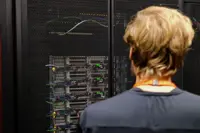
Babuschkin, 35, plans to build a new kind of computer server that would allow everyday businesses or individuals to easily run open-source technologies on their own hardware. That would let them control the private data they shared with AI systems, rather than sending it through machines operated by River AI or another company.
The personal data people share with AI will be enormous, Babuschkin said. He envisions his company’s technology operating as a digital assistant that people can use across multiple devices, talking to it much as they would with Apple’s Siri assistant.
He said he wanted to provide ways for people to “retrain,” or modify, this technology as they saw fit. In this way, they could define how AI behaves and how they can put it to use, rather than following the rules created by companies like Anthropic and OpenAI.
Based in Palo Alto, California, River AI has about 20 employees, and it is still months away from releasing its own open-source technologies. But Babuschkin and his fellow researchers – many of whom previously worked for xAI, OpenAI and Tesla – hope to build systems that can learn new behaviour on the fly as people use them.
He envisions a future where people can change the behaviour of these systems with a few spoken commands. “We want a democratised world where anyone can control and shape AI for their own needs,” he said.
Open-source AI technologies have become a hot topic in recent weeks, after two Chinese startups released open-source systems that are nearly as powerful as the leading US systems.
US companies have not been as aggressive in releasing open-source systems, which many executives, investors and other industry experts believe will slow the progress of US technologies.
Babuschkin and his investors, including several prominent venture capital firms and chipmaking giant Nvidia, hope his new company can fill this void.
“Igor is one of the very few people who can do it – and can do it in way that is competitive with the ecosystem of Chinese open-source companies,” said Hemant Taneja, CEO of General Catalyst, the venture capital firm that is leading the startup’s funding round. “Hopefully, this is America’s answer.”
Over the past several years, companies like Anthropic and OpenAI have spent billions of dollars creating the world’s most powerful AI technologies. But they maintain strict control over how these technologies operate and how people use them.
Executives at these companies argue that AI is too dangerous to be handled in any other way. But others worry that this approach will give Anthropic and OpenAI enormous power over the wider tech industry and perhaps even the global economy.
Critics of those closed systems also argue that if companies like Anthropic and OpenAI limit access to the most powerful technologies, everyday businesses will not have the tools they need to fight cyberattacks.
They also contend that the philosophy favoured by Anthropic and OpenAI will stifle innovation across the industry. Innovation happens far more quickly, they argue, when companies share their technologies as open-source software, allowing anyone to use and modify them for free.
Companies like Meta and xAI have offered open-sourced technologies in the past. But in recent months, they have not kept pace with the leading systems, including the technologies emerging from China.
“What will it take for the American ecosystem to have an open-source infrastructure?” Taneja asked. “We don’t think anyone is doing that well.”
Babuschkin, who has also been a key researcher at OpenAI and Google, said he wanted to build a company that was fundamentally geared toward the open-source philosophy.
“The way that the big AI companies like Anthropic and OpenAI are building AI may not be the way of the future,” he said. “Increasingly, this is just not something the public is behind. We don’t want these AI companies to rule the world and control this superpowerful technology.”
(The New York Times has sued OpenAI and Microsoft, claiming copyright infringement of news content related to AI systems. The two companies have denied those claims.) – ©2026 The New York Times Company
This article originally appeared in The New York Times.